

Yang, et al (2024) Unraveling synergistic mechanisms of enhanced electrocoagulation sludge dewatering using modified sludge-based biocharBiochar is a carbon-rich material created from biomass decomposition in low-oxygen conditions. It has important applications in environmental remediation, soil improvement, agriculture, carbon sequestration, energy storage, and sustainable materials, promoting efficiency and reducing waste in various contexts while addressing climate change challenges. More. Journal of Water Process Engineering. https://doi.org/10.1016/j.jwpe.2024.105697
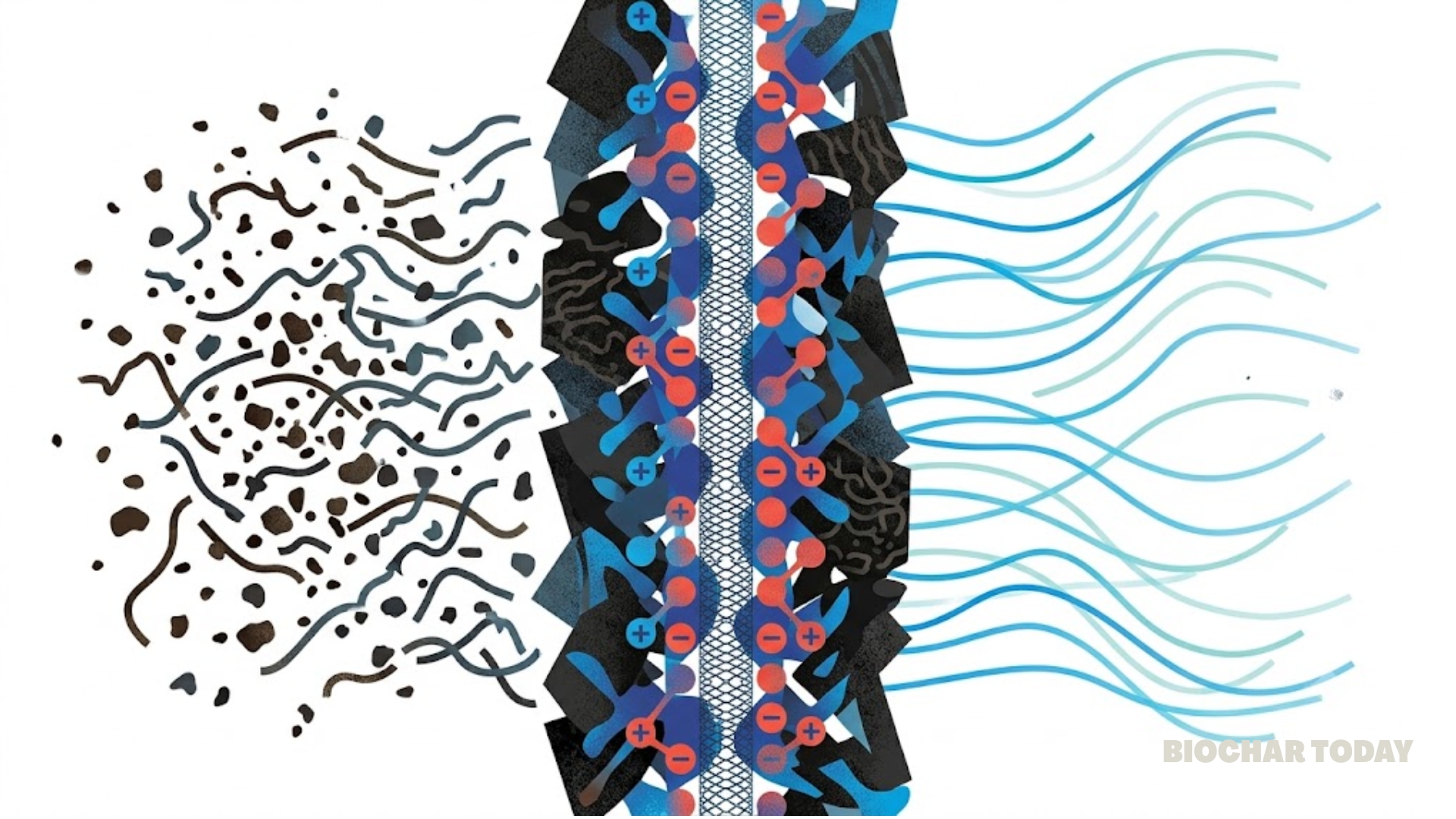
A recent study published in the Journal of Water Process Engineering explores the effectiveness of using KOH-modified sludge-based biochar (SB-KOH) to enhance electrocoagulation (EC) sludge dewatering. Electrocoagulation, a green and efficient method for dewatering sludge, often struggles with breaking down extracellular polymeric substances (EPS) and sludge cells. The study addresses this limitation by incorporating SB-KOH, which acts both as a conductor and a structural component within the EC system.
The researchers, Yahong Yang and colleagues, optimized the EC process by adjusting voltage, carbon dosage, and using enlarged plate areas and alternative anode materials. Their findings revealed significant improvements: specific resistance to filtration (SRF) and capillary suction time (CST) were reduced by 66.29% and 75.71%, respectively, under optimal conditions of 25V and 15% dry solid content. Additionally, the Zeta potential and sludge particle size increased, while the surface roughness of flocs decreased.
Further analysis showed that SB-KOH enhanced the decomposition of aromatic protein-like substances in EPS, aiding internal material transfer or absorption. Scanning electron microscopy and particle size analysis demonstrated stronger flocculation and better solid-liquid separation. The study validates the use of SB-KOH in improving sludge dewatering efficiency, offering a sustainable and eco-friendly approach to sludge management.




Leave a Reply