
Key Takeaways
- Tiny plastic particles are accumulating heavily in farming soils, threatening long-term food safety and crop productivity.
- Common agricultural materials like plastic mulch films and irrigation pipes act as major sources of plastic pollution.
- Supposedly eco-friendly biodegradable plastics can still significantly hinder plant health and lower plant breathing rates.
- These hidden plastic contaminants move deep into the earth and are already widespread in drinking water wells.
- Emerging clean solutions such as using specialized biocharBiochar is a carbon-rich material created from biomass decomposition in low-oxygen conditions. It has important applications in environmental remediation, soil improvement, agriculture, carbon sequestration, energy storage, and sustainable materials, promoting efficiency and reducing waste in various contexts while addressing climate change challenges. More soil amendments can help trap these tiny plastics.
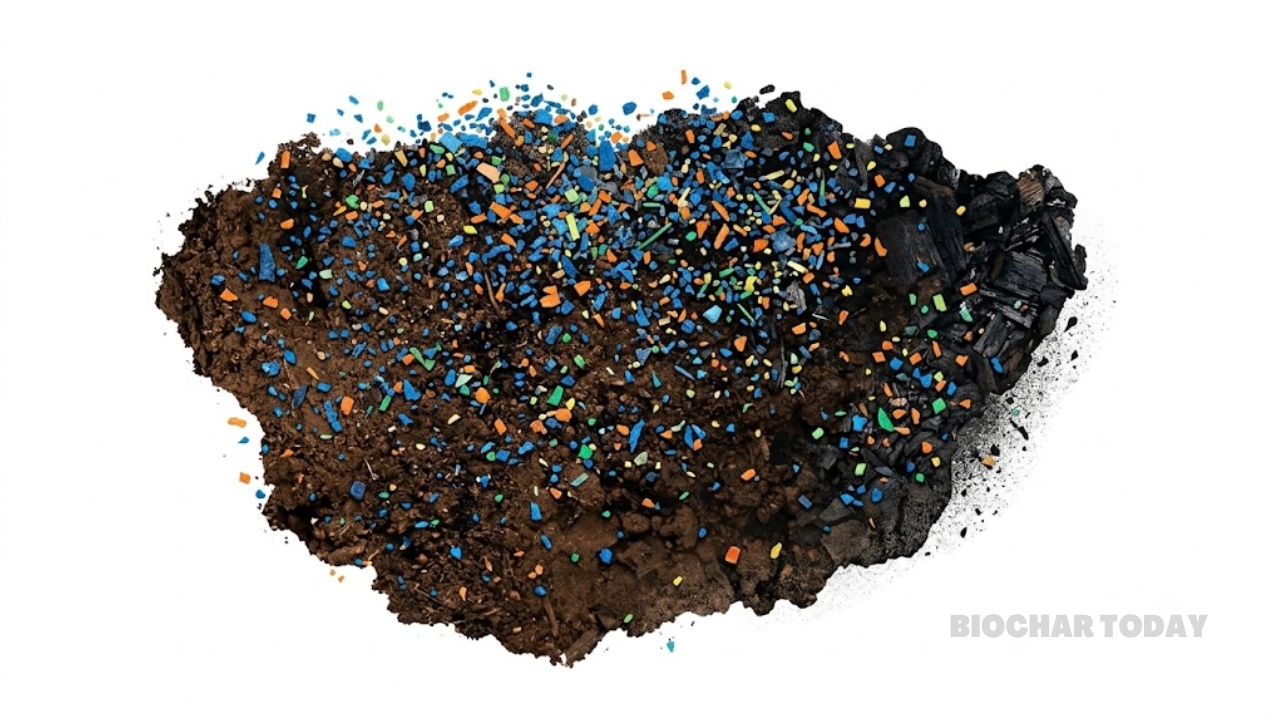
In the Journal of Agriculture and Food Research, authors Munny Chinyo, Kalpana Bisht, Meniari Taku, Tony Manoj Nandipamu, Akash, Shubham Singh, Riya Mehrotra, Sampurna Nand Singh, Hritik Srivastava, Abdul Mazeed, Priyanka Tewary, and Sandeep Kumar report that agricultural soils have become persistent sinks for extensive plastic contamination. The widespread application of modern farming tools, such as protective mulch films, polymer-coated controlled-release fertilizers, and extensive drip irrigation piping networks, introduces massive quantities of synthetic polymers directly into cultivated fields. Over time, physical weathering, solar ultraviolet radiation, and mechanical cultivation practices break these macroplastics down into minute fragments and fibers. The investigation indicates that terrestrial environments, particularly agricultural fields, currently endure microplastic contamination loads that are up to twenty-three times greater than those observed in marine environments. This heavy accumulation alters basic soil characteristics, interrupts crucial subterranean ecosystem functions, and establishes a direct pathway for hazardous synthetic components to penetrate global food webs.
The quantified accumulation levels reveal a profound environmental burden across global topsoils, where microplastic concentrations average roughly five hundred milligrams per kilogram within the upper zero to five centimeter soil layer. This density equates to an astonishing four hundred forty billion plastic particles per square kilometer of agricultural land. These particles alter the physical landscape of the soil by reducing bulk density, increasing porosityPorosity of biochar is a key factor in its effectiveness as a soil amendment and its ability to retain water and nutrients. Biochar’s porosity is influenced by feedstock type and pyrolysis temperature, and it plays a crucial role in microbial activity and overall soil health. Biochar More, and disrupting natural soil aggregation and water-holding capacity. Furthermore, the high surface area of these weathered fragments allows them to rapidly sequester hydrophobic organic compounds, including polycyclic aromatic hydrocarbons, pesticides, and pharmaceutical residues. Soil organisms like earthworms and nematodes regularly ingest these contaminated particles, which causes severe intestinal injury, reproductive dysfunction, and increased mortality. By altering microbial diversity and suppressing vital nutrient mineralization processes, this pollution undermines the biological stability required to maintain fertile, productive crop systems.
Beyond direct crop impacts, the study documents that microplastics exhibit high mobility, translocating downward through the soil profile to contaminate subterranean hydrological networks. A comprehensive global assessment of hundreds of groundwater samples identified widespread microplastic presence across both open and closed aquifer systems, showing median concentrations of over two to four items per liter. Fibers and fragments represent the dominant shapes, while common industrial polymers like polypropylene, polyamide, and polyethylene terephthalate collectively account for nearly eighty4 percent of the detected plastics in these subsoil systems. This ubiquitous dispersion in soil matrices and hydrological networks allows plastics to filter directly into agricultural produce and livestock tissue. For example, plastic-wrapped commercial milk and bottled water contain highly elevated particle counts compared to fresh agricultural options, facilitating direct dietary exposure for human consumers. Internalized microplastics can permeate human biological barriers, including the intestinal epithelium and blood-brain barrier, leading to cellular inflammation and oxidative stress.
The investigation also addresses the performance of biodegradable plastic alternatives, which are frequently promoted as sustainable substitutes for standard polyethylene materials. The findings reveal a significant ecological trade-off, as biodegradable fragments derived from compostable polymers trigger xylem blockages in crops and inhibit plant photosynthetic rates by twenty-eight to seventy-four percent. To mitigate this pervasive threat, the integration of targeted technological interventions and regional policy frameworks is necessary. Applying porous biochar amendments to agricultural soils offers an effective mitigation strategy by entrapping mobile microplastics and stabilizing associated heavy metal pollutants. Simultaneously, global regulatory mechanisms must expand beyond marine environments to manage land-based agricultural sources through extended producer responsibility frameworks. Projections indicate that without these comprehensive policy interventions, microplastic debris will comprise over thirteen percent of all global plastic waste by twenty-sixty, causing irreversible deterioration of terrestrial ecosystems and agricultural productivity.
Source: Chinyo, M., Bisht, K., Taku, M., Nandipamu, T. M., Akash, Singh, S., Mehrotra, R., Singh, S. N., Srivastava, H., Mazeed, A., Tewary, P., & Kumar, S. (2026). Microplastics in agriculture: Hidden soil contaminants, sustainability risks and policy pathways. Journal of Agriculture and Food Research, 29, 103089.



Leave a Reply