

Mitigating salt stress in Zea mays: Harnessing Serratia nematodiphila-biochar-based seed coating for plant growth promotion and rhizosphere microecology regulation. Industrial Crops and Products. https://doi.org/10.1016/j.indcrop.2024.120164
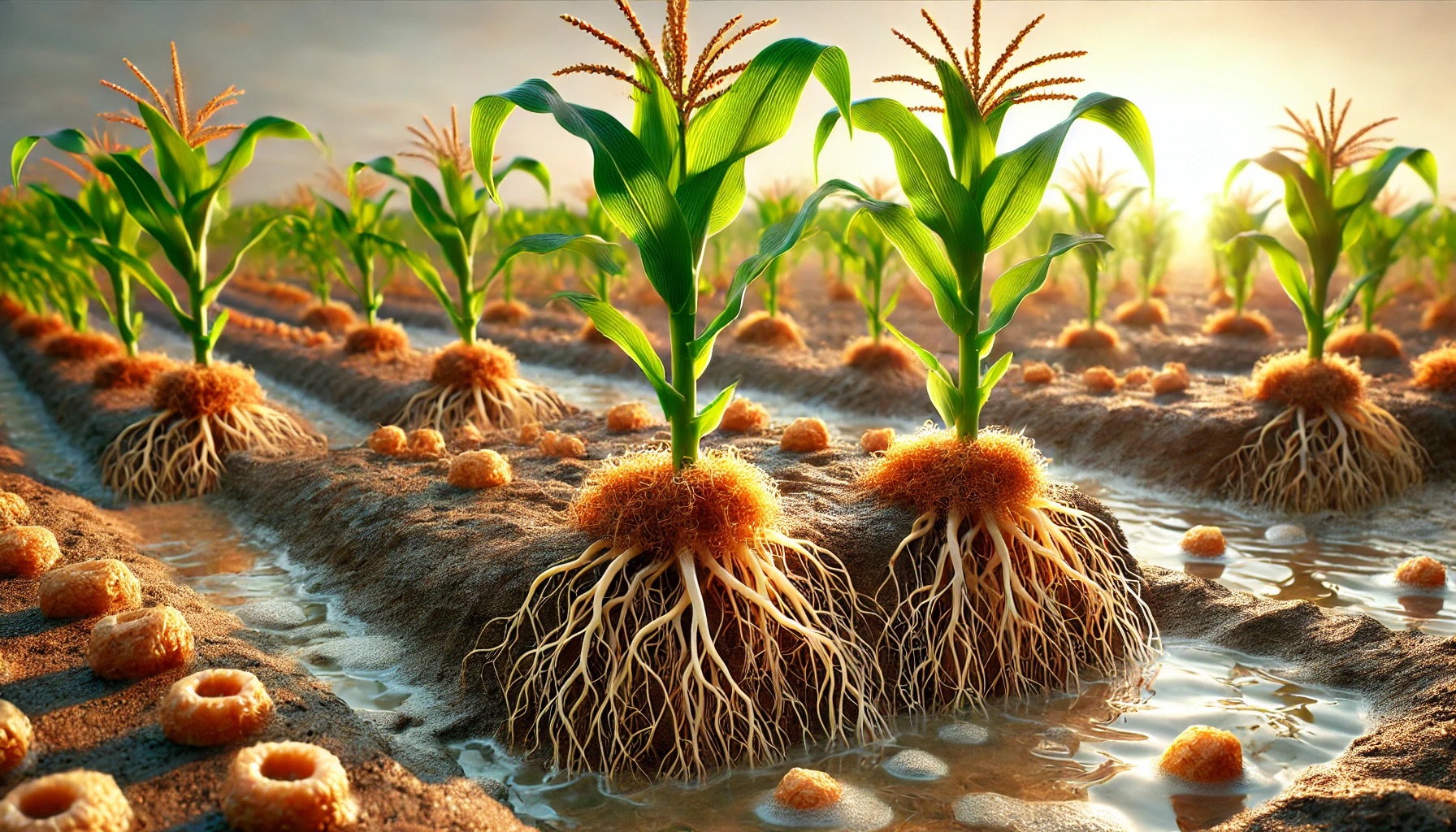
Salt stress significantly hampers crop yields, particularly in maize (Zea mays), which is highly sensitive to salinity. Addressing this challenge, researchers explored a novel biochar-based seed coating incorporating Serratia nematodiphila, a salt-tolerant plant growth-promoting bacterium (PGPB). The study demonstrates how this coating enhances maize’s ability to withstand salt stress by fostering better plant growth, nutrient absorption, and soil microbiology.
The biochar-PGPB seed coating was shown to selectively enrich beneficial microbial populations, such as Proteobacteria and Verrucomicrobiae, in the rhizosphere. These microbes improved maize’s root development, photosynthesis, and biomassBiomass is a complex biological organic or non-organic solid product derived from living or recently living organism and available naturally. Various types of wastes such as animal manure, waste paper, sludge and many industrial wastes are also treated as biomass because like natural biomass these More, even under saline conditions. The treatment also enhanced the plant’s sodium-potassium balance, reducing harmful sodium uptake while increasing potassium levels.
Moreover, the coating boosted the production of key osmotic regulators like soluble sugars and proline, which help plants manage water and ionic stress. Compared to traditional methods, the biocharBiochar is a carbon-rich material created from biomass decomposition in low-oxygen conditions. It has important applications in environmental remediation, soil improvement, agriculture, carbon sequestration, energy storage, and sustainable materials, promoting efficiency and reducing waste in various contexts while addressing climate change challenges. More carrier proved more effective in maintaining microbial viability and functionality, leading to consistent results.
This eco-friendly solution also demonstrated potential for broader soil health improvements by altering rhizosphere microbial community structures and promoting nutrient cycling. These findings highlight a sustainable path forward for improving crop resilience and productivity in salt-affected soils, paving the way for agricultural innovation.
By integrating biochar and PGPB technology, this research provides a promising tool to combat soil salinity, addressing both food security and environmental challenges.




Leave a Reply