
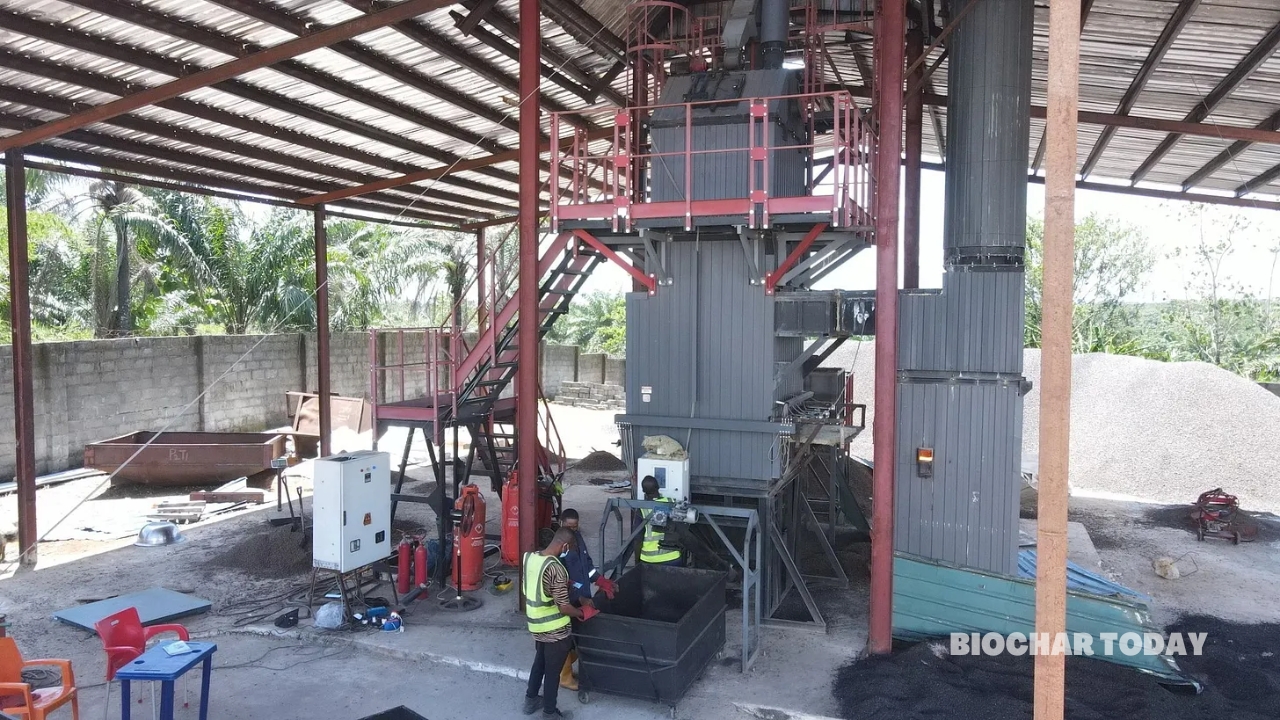
Releaf Earth, a Nigerian climate technology company, has successfully issued the first batch of industrial-scale carbon removal credits in Nigeria. This milestone was achieved through a transaction enabled by the Milkywire platform and its Rainbow protocol, with the credits being purchased by major international corporations, including Salesforce. The project focuses on converting agricultural waste into biocharBiochar is a carbon-rich material created from biomass decomposition in low-oxygen conditions. It has important applications in environmental remediation, soil improvement, agriculture, carbon sequestration, energy storage, and sustainable materials, promoting efficiency and reducing waste in various contexts while addressing climate change challenges. More at an industrial facility located in Iwury, Cross River State. By establishing a verified supply chain for carbon dioxide removal (CDR), the organization is integrating West African smallholder agriculture into the global voluntary carbon market.
The primary challenge addressed by this initiative is the inefficiency and waste prevalent in the Nigerian oil palm sector. Smallholder farmers frequently struggle with low purity rates in nut processing and lack the infrastructure to manage the resulting biomassBiomass is a complex biological organic or non-organic solid product derived from living or recently living organism and available naturally. Various types of wastes such as animal manure, waste paper, sludge and many industrial wastes are also treated as biomass because like natural biomass these More waste effectively. Furthermore, these farmers face rising costs for synthetic fertilizers and stagnant crop yields, which perpetuates rural poverty. Prior to Releaf Earth’s intervention, the significant volume of palm kernel shells—a byproduct of de-shelling—remained an underutilized waste stream rather than a secondary source of economic and environmental value.
To resolve these inefficiencies, Releaf Earth deployed its proprietary, patented “Kraken” technology, which provides high-purity de-shelling of palm nuts for smallholder farmers. The company then utilizes the resulting palm kernel shells as feedstockFeedstock refers to the raw organic material used to produce biochar. This can include a wide range of materials, such as wood chips, agricultural residues, and animal manure. More for industrial pyrolysisPyrolysis is a thermochemical process that converts waste biomass into bio-char, bio-oil, and pyro-gas. It offers significant advantages in waste valorization, turning low-value materials into economically valuable resources. Its versatility allows for tailored products based on operational conditions, presenting itself as a cost-effective and efficient More. By partnering with the Biochar Industrial Group and leveraging its “SITE” geospatial mapping tool, Releaf Earth optimizes the location of its processing facilities to ensure proximity to sustainable feedstock. This vertically integrated model ensures that the carbon removal process is verifiable, cost-effective, and scalable within a decentralized agricultural landscape.
The outcomes of this project demonstrate a significant “circular wealth” impact for both the environment and the local economy. The issuance of the initial 190 tonnes of carbon dioxide equivalent (tCO2e) marks Nigeria’s entry into the high-durability CDR market. For the farmers involved, the application of the produced biochar has resulted in a measured 23% increase in crop yields, providing a sustainable alternative to expensive synthetic inputs. Additionally, the project aims to boost farmer incomes by over 50% and has committed to social equity, with more than 60% of new industrial jobs held by women.


Leave a Reply