
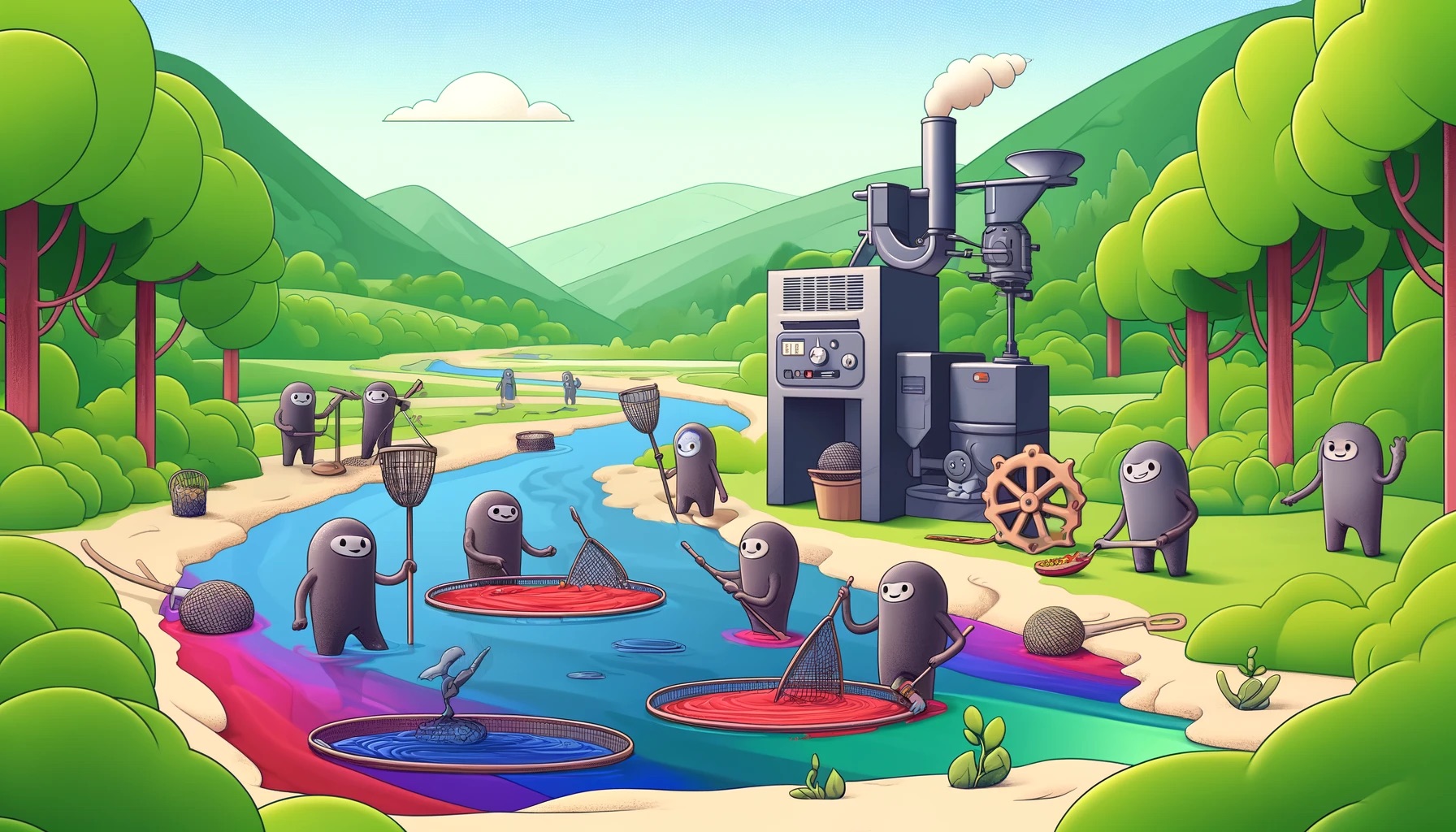

Biochar has emerged as a versatile solution for environmental remediation. Derived from various organic wastes through pyrolysisPyrolysis is a thermochemical process that converts waste biomass into bio-char, bio-oil, and pyro-gas. It offers significant advantages in waste valorization, turning low-value materials into economically valuable resources. Its versatility allows for tailored products based on operational conditions, presenting itself as a cost-effective and efficient More, biochar possesses unique properties such as high carbon content, large surface area, and excellent adsorption capabilities. These attributes make it ideal for applications like soil remediation, pollutant removal, and greenhouse gas mitigation. However, enhancing biochar’s adsorption efficiency remains a key area of research, particularly for water treatment. A recent study compares the effectiveness of ball milling and chemical modification in improving biochar’s capacity to adsorb methylene blue, a common pollutant.
The research, published in Biomass and Bioenergy, explores how ball milling, a mechanical treatment, and chemical modifications influence the dye adsorption efficiency of biochar. The study specifically examines the adsorption of methylene blue, using it as a model pollutant. Ball milling, which mechanically reduces particle size and increases surface area, was compared to chemical methods involving oxidation and alkaline treatments.
Key findings include an increased adsorption capacity with ball milling significantly enhancing the adsorption capacity of biochar for methylene blue compared to chemically modified biochars. This improvement is attributed to the increased surface area and the exposure of more active sites. The adsorption kinetics of the ball-milled biochar followed a pseudo-second-order model, suggesting that chemisorption, involving the formation of chemical bonds, is the predominant mechanism. Impressively, the ball-milled biochar maintained high adsorption efficiency even after being regenerated and reused up to six times, with only a 1% decrease in performance. Experimental design techniques identified the optimal pHpH is a measure of how acidic or alkaline a substance is. A pH of 7 is neutral, while lower pH values indicate acidity and higher values indicate alkalinity. Biochars are normally alkaline and can influence soil pH, often increasing it, which can be beneficial More and initial dye concentration that maximize adsorption efficiency, providing practical guidelines for real-world applications.
The findings of this study have significant practical implications for industries and environmental management practices. Ball milling offers a cost-effective and efficient alternative to chemical modifications for enhancing biochar’s adsorption capacity. This method can reduce reliance on expensive and potentially hazardous chemicals, making wastewater treatment more sustainable and affordable. Industries that produce wastewater containing dyes, such as textiles and manufacturing, can benefit from adopting ball-milled biochar as a filtration medium. Its high efficiency and reusability make it an economically viable option for large-scale applications. By using ball milling, which requires less energy and produces fewer toxic byproducts than chemical treatments, the environmental footprint of biochar production and usage can be minimized. This aligns with global sustainability goals and promotes greener industrial practices.
While this study focused on methylene blue, the principles can be extended to other pollutants. Future research can explore the efficacy of ball-milled biochar in adsorbing a variety of contaminants, broadening its applicability in environmental cleanup efforts. This study highlights the potential of ball milling as a superior method to enhance the adsorption capabilities of biochar for dye removal. By providing a greener, cost-effective, and efficient alternative to chemical modifications, ball milling could revolutionize the use of biochar in environmental remediation. Industries and environmental agencies should consider integrating ball-milled biochar into their pollutant management strategies to achieve better sustainability and efficiency in wastewater treatment processes.




Leave a Reply