
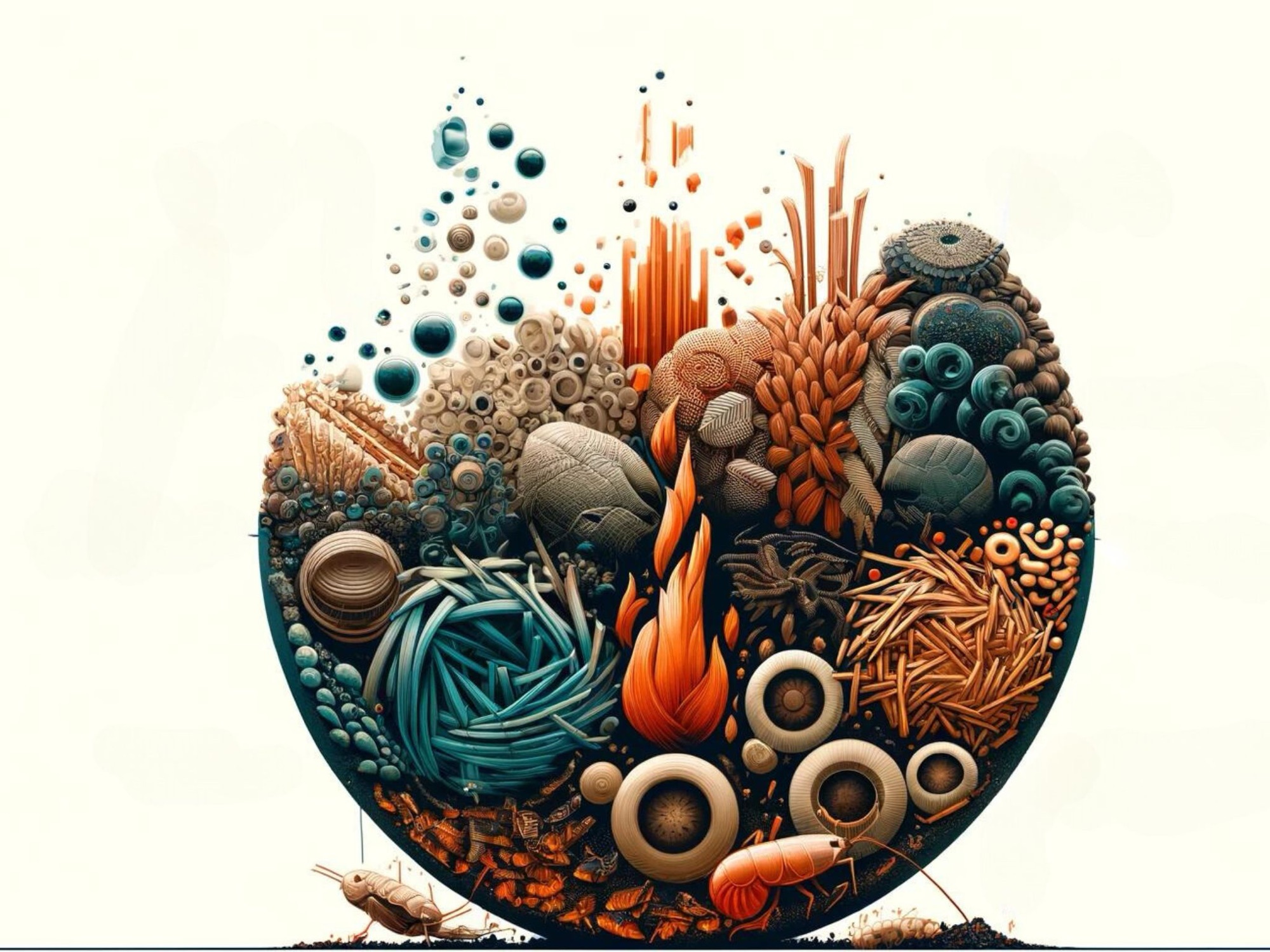

BiocharBiochar is a carbon-rich material created from biomass decomposition in low-oxygen conditions. It has important applications in environmental remediation, soil improvement, agriculture, carbon sequestration, energy storage, and sustainable materials, promoting efficiency and reducing waste in various contexts while addressing climate change challenges. More has emerged as an effective solution to mitigate the environmental impact of ciprofloxacin (CIP) residues in soil. Recent research has shed light on how biochar-derived dissolved organic matter (DOM) influences the transformation and mobility of CIP in soils. This study explored biochar made from rice straw, pig manure, and cockroach shells, produced at two different pyrolysisPyrolysis is a thermochemical process that converts waste biomass into bio-char, bio-oil, and pyro-gas. It offers significant advantages in waste valorization, turning low-value materials into economically valuable resources. Its versatility allows for tailored products based on operational conditions, presenting itself as a cost-effective and efficient More temperatures (300°C and 600°C), to assess their effectiveness in transforming residual CIP.
The results showed that biochar amendments significantly increased the water-soluble CIP content in soil, indicating enhanced desorption from soil particles. The increase ranged from 55.2% with rice straw biochar at 600°C to an astonishing 1160.6% with cockroach shell biochar at 300°C. This variation underscores the importance of biochar feedstockFeedstock refers to the raw organic material used to produce biochar. This can include a wide range of materials, such as wood chips, agricultural residues, and animal manure. More in controlling soil CIP release.
Further analysis revealed that the presence of DOM, especially protein-like components, played a crucial role in forming stable complexes with CIP, making them less bioavailable and less harmful. In contrast, humus-like components were less effective in stabilizing CIP. Moreover, biochar produced at lower pyrolysis temperatures (300°C) generally formed more stable DOM-CIP complexes compared to higher temperatures (600°C), particularly with pig manure biochar.
These findings are pivotal for environmental management, suggesting that selecting appropriate biochar feedstocks and optimizing pyrolysis conditionsThe conditions under which pyrolysis takes place, such as temperature, heating rate, and residence time, can significantly affect the properties of the biochar produced. More can enhance the removal of CIP from soils. This approach not only aids in controlling CIP contamination but also helps in understanding the broader implications of antibiotic mobility in the environment.


![Eucalyptus Wood Waste-Derived Biochar Achieves a Ninety-Eight Percent Removal Efficiency for Benzo[ghi]perylene in Vehicle-Wash Wastewater](https://biochartoday.com/wp-content/uploads/2026/10/SCIENCE-BLOGS-2026-2026-10-19T160523.703.jpg)


Leave a Reply