


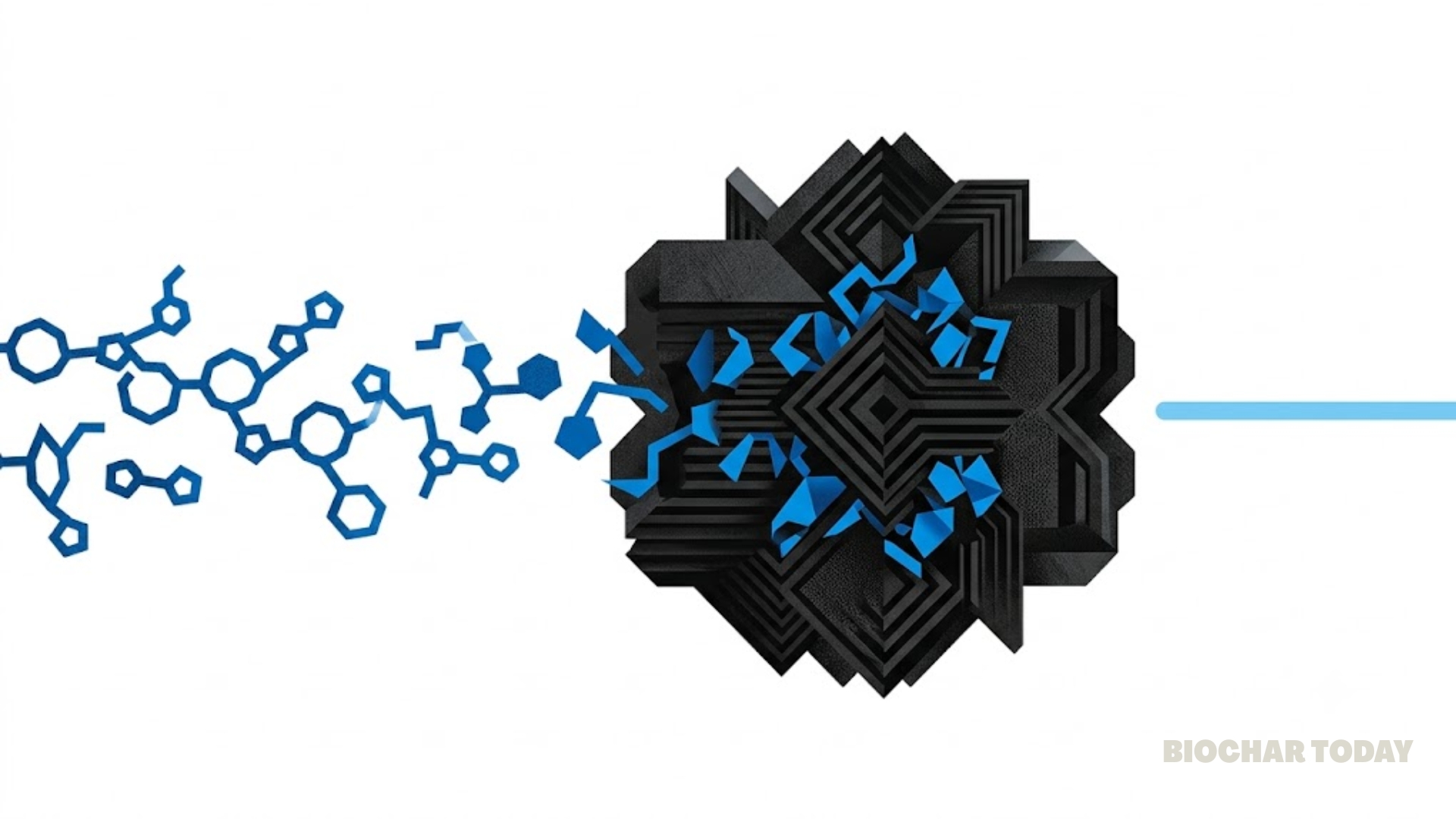
While light can break down harmful organic pollutants in the environment, a recent study reveals complexities when these pollutants cling to biochar particles. Researchers investigated how biochar colloids (BCCs) derived from bamboo chips affect the photodegradation of a specific pollutant, 2,4,4′-trichlorobiphenyl (PCB28).
The study found that:
- Light can still degrade PCB28 even when stuck to BCCs, but slower. The higher the temperature used to create the biochar, the stronger the inhibition effect.
- Biochar type matters. Low-temperature BCCs influence degradation differently than high-temperature ones due to variations in surface properties and electron transfer abilities.
- Different mechanisms at play. Low-temperature BCCs promote dechlorination followed by ring breakdown, while high-temperature ones favor direct ring opening.
- Real-world factors have little impact. Water conditions and organic matter presence only slightly affect the degradation process.
This research highlights the crucial role of biochar properties in shaping pollutant fate under sunlight. Understanding these intricacies is vital for accurately assessing the environmental risks and benefits of using biochar for remediation.
Key takeaways:
- Biochar can hinder but not completely prevent light-driven pollutant degradation.
- Biochar type significantly impacts the degradation process and mechanisms.
- Real-world conditions have minimal influence on the overall photodegradation of pollutants adsorbed on biochar.
This study paves the way for further research on optimizing biochar design and application for effective and environmentally responsible pollutant cleanup strategies.



Leave a Reply