


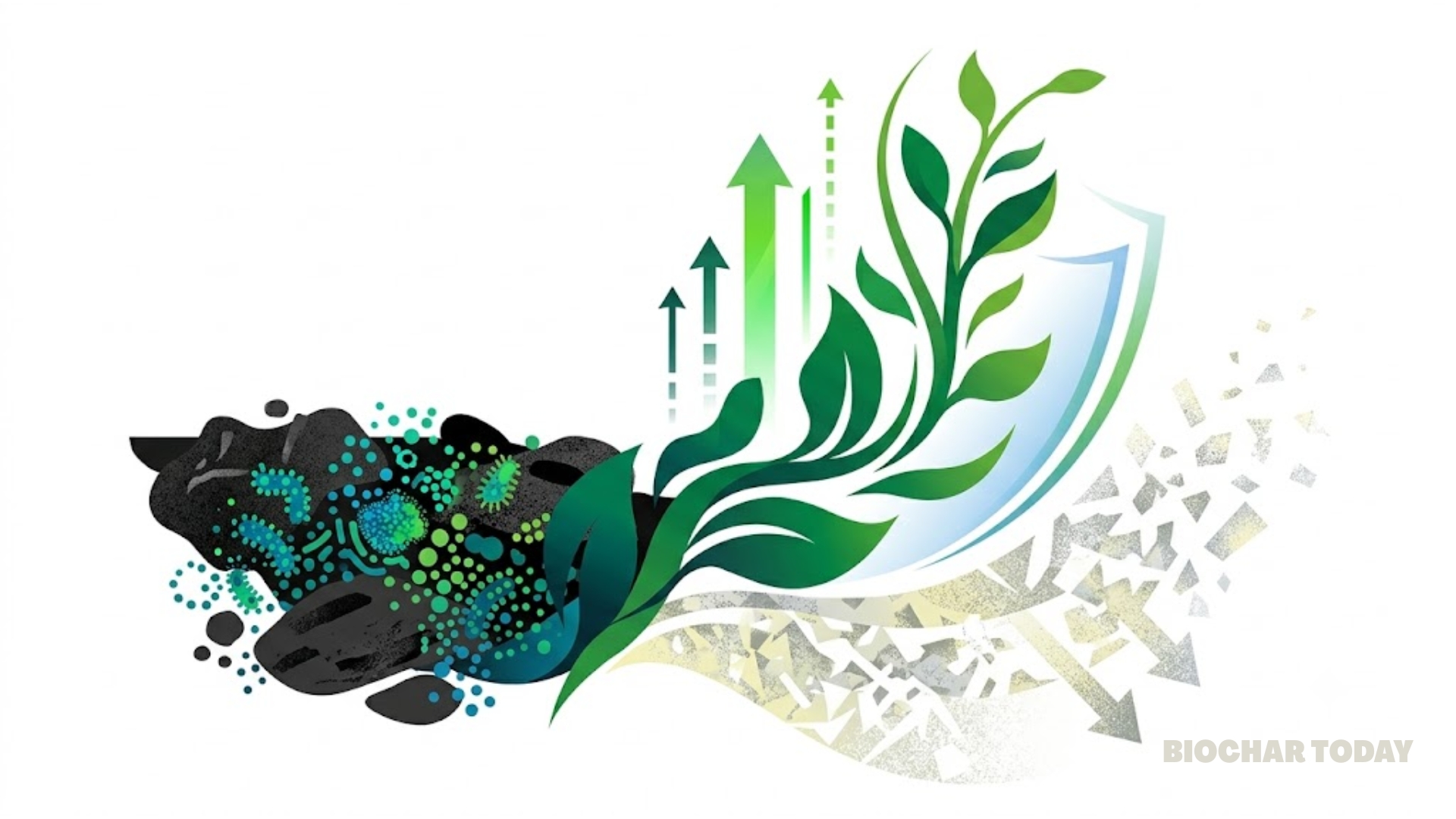
As the global population soars, agricultural productivity must keep pace to secure food for all. Chemical fertilizers have fueled the past decades’ yield increases, but their downsides, including nutrient loss and environmental harm, are increasingly apparent. Slow-release fertilizers (SRFs) offer a promising alternative, gradually releasing nutrients for efficient plant uptake and minimizing environmental impact. This research explores the potential of biocharBiochar is a carbon-rich material created from biomass decomposition in low-oxygen conditions. It has important applications in environmental remediation, soil improvement, agriculture, carbon sequestration, energy storage, and sustainable materials, promoting efficiency and reducing waste in various contexts while addressing climate change challenges. More derived from banana leaf sheaths (BLS) as a sustainable and eco-friendly SRF for nitrogen delivery.
Biochar: A Powerful Tool for Sustainable Agriculture
Biochar, a carbon-rich material produced from biomassBiomass is a complex biological organic or non-organic solid product derived from living or recently living organism and available naturally. Various types of wastes such as animal manure, waste paper, sludge and many industrial wastes are also treated as biomass because like natural biomass these More, possesses unique properties like large surface area, porosityPorosity of biochar is a key factor in its effectiveness as a soil amendment and its ability to retain water and nutrients. Biochar’s porosity is influenced by feedstock type and pyrolysis temperature, and it plays a crucial role in microbial activity and overall soil health. Biochar More, and surface functional groups. These features make it ideal for various applications, including soil amendmentA soil amendment is any material added to the soil to enhance its physical or chemical properties, improving its suitability for plant growth. Biochar is considered a soil amendment as it can improve soil structure, water retention, nutrient availability, and microbial activity. More, carbon sequestration, and, as demonstrated in this study, nutrient delivery. BLS, readily available as agricultural waste, is a viable and sustainable biochar feedstockFeedstock refers to the raw organic material used to produce biochar. This can include a wide range of materials, such as wood chips, agricultural residues, and animal manure. More.
Developing the BLS Biochar SRF
The study investigated the preparation and characterization of BLS biochar and its subsequent transformation into an SRF loaded with nitrogen. Characterization techniques like Fourier transform infrared spectroscopy and scanning electron microscopy revealed the biochar’s porous structure and functional groups suitable for nutrient loading. Nutrient release studies confirmed the gradual release of nitrogen from the SRF over an extended period, showcasing its potential to minimize nutrient loss compared to conventional fertilizers.
Benefits of BLS Biochar SRF
- Reduced environmental impact: The SRF’s slow-release mechanism minimizes nutrient leachingLeaching is the process where nutrients are dissolved and carried away from the soil by water. This can lead to nutrient depletion and environmental pollution. Biochar can help reduce leaching by improving nutrient retention in the soil. More and runoff,preventing water pollution and protecting ecosystems.
- Improved fertilizer use efficiency: Gradual nutrient release ensures efficient plant uptake, reducing fertilizer waste and lowering production costs.
- Sustainability and waste valorization: Utilizing BLS, an abundant agricultural waste, as biochar feedstock promotes sustainability and reduces waste disposal burden.
- Eco-friendly fertilizer alternative: The BLS biochar SRF offers a biodegradable and non-toxic alternative to synthetic fertilizers,contributing to a healthier environment.
This study paves the way for utilizing BLS biochar as a sustainable and environmentally friendly SRF for nitrogen delivery. Its slow-release properties, coupled with its ability to valorize agricultural waste, make it a promising solution for sustainable and efficient fertilizer use in the face of a growing global population and concerns about environmental pollution. Continued research and development efforts can further refine this technology and bring it closer to real-world agricultural applications.




Leave a Reply