
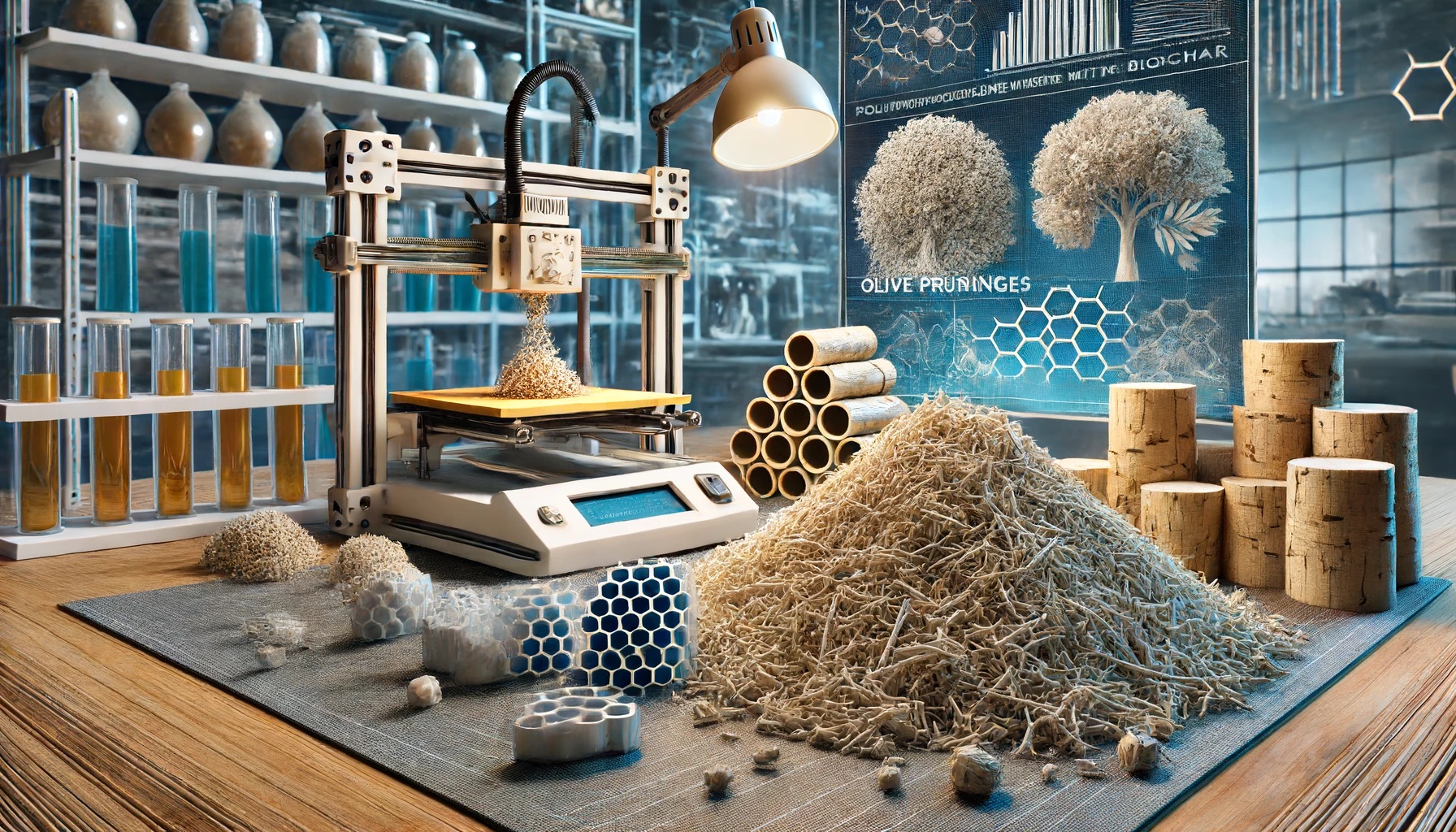

Researchers have explored the use of biochar, derived from olive tree prunings, as a sustainable filler material to enhance the properties of polypropylene (PP) composites in additive manufacturing (AM). The study involved combining PP with varying amounts of biochar (2.0 to 10.0 wt%) and analyzing the resulting composites through fourteen different tests, assessing their thermal, mechanical, electrical, and structural properties.
The findings showed that a 4.0 wt% biochar addition to PP significantly improved its mechanical properties, with a 28.4% increase in tensile strength and a 24.3% increase in modulus of elasticity compared to pure PP. Thermal stability was also enhanced, and at an 8.0 wt% biochar loading, the composite’s electrical conductivity increased by nine orders of magnitude, indicating a shift from an insulating to a conductive state.
The study highlights the potential of biochar as an eco-friendly and cost-effective alternative to traditional carbon-based fillers like carbon black or graphene. These PP/biochar composites demonstrated high performance and suitability for various AM applications, including electrical and electronic engineering, where properties such as electromagnetic shielding and antistatic protection are crucial.
Overall, the research suggests that biochar not only improves the mechanical and thermal properties of PP but also imparts significant electrical conductivity, making it a promising material for future sustainable manufacturing practices. The study’s comprehensive approach and findings support the industrial scalability of biochar-infused composites, paving the way for their broader adoption in AM technologies.




Leave a Reply