

Soil in arid, salinized regions often struggles to retain carbon and suffers from reduced crop yields. BiocharBiochar is a carbon-rich material created from biomass decomposition in low-oxygen conditions. It has important applications in environmental remediation, soil improvement, agriculture, carbon sequestration, energy storage, and sustainable materials, promoting efficiency and reducing waste in various contexts while addressing climate change challenges. More has emerged as a potential solution, promoting carbon storage and potentially enhancing plant growth. But what happens when biochar is used in these challenging environments?
Researchers in Inner Mongolia, China, investigated this question by analyzing the impact of corn straw biochar on sorghum production in salinized soil under water-saving irrigation. For two years, they tested different biochar application rates (0, 15, 30, and 45 tons per hectare) and tracked changes in soil carbon, greenhouse gas emissions, crop yields, and economic profits.
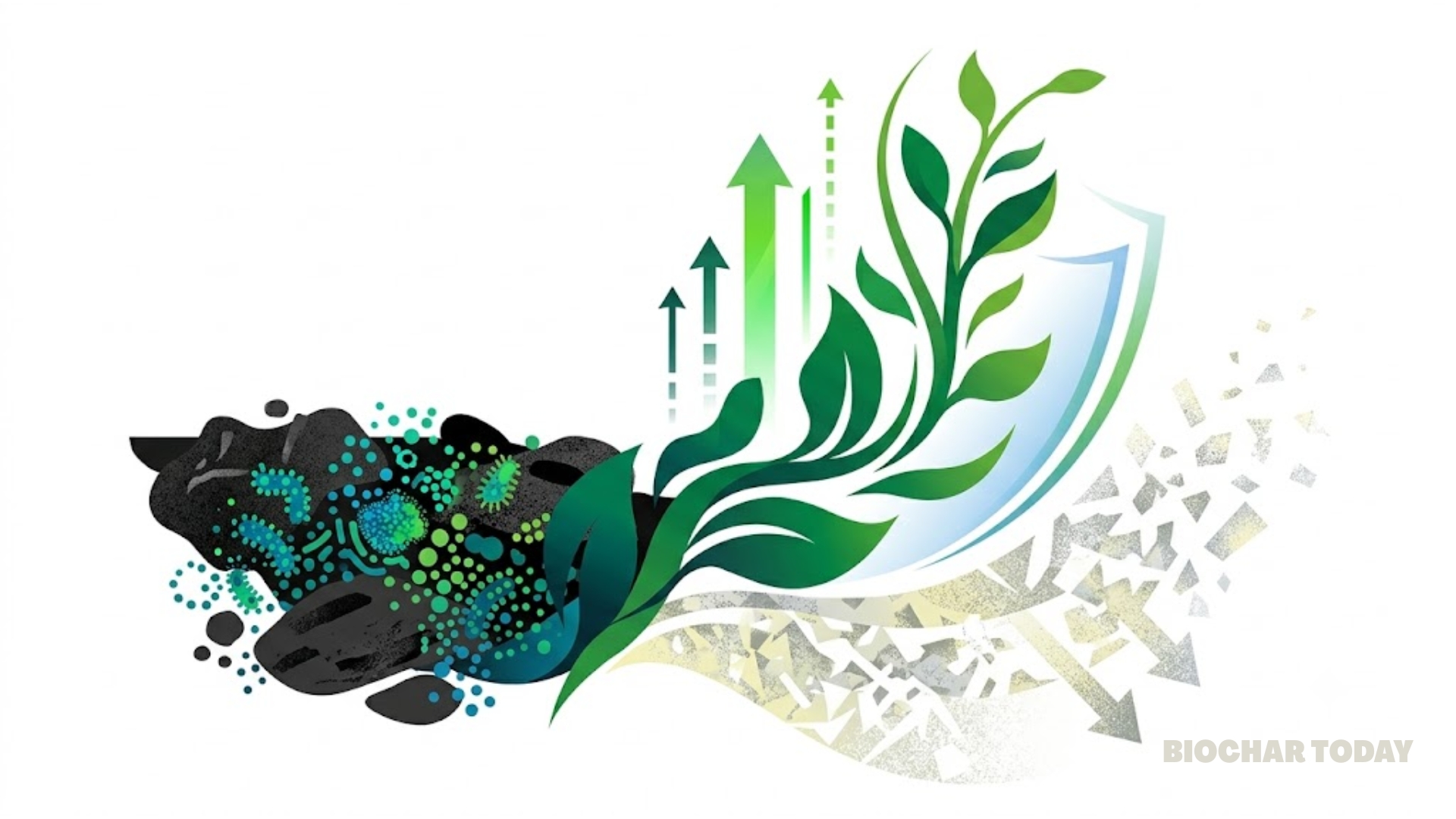
The results were impressive. All biochar treatments significantly reduced carbon dioxide emissions from the soil, with the 15 ton/ha application (B15) showing the most substantial reduction (13.1% compared to the control). Additionally, B15 led to a remarkable 36.7% increase in net primary productivity (NPP), an indicator of plant growth and carbon fixation.
But the benefits weren’t limited to the environment. Biochar treatments also significantly improved net profits for farmers, ranging from 57.2% to 87.1%. The B15 group again stood out, showcasing the highest net profit and environmental benefit in terms of carbon trading revenue.
These findings suggest that moderate biochar application (around 15 tons/ha) can be a game-changer for sorghum production in salinized soils. It reduces greenhouse gas emissions, enhances carbon storage, boosts crop yields, and increases profits for farmers. This win-win scenario for both the environment and the economy offers a promising approach to sustainable agriculture in challenging dryland regions.
Further research is needed to optimize biochar use for different crops and soil types. However, this study provides compelling evidence that biochar can be a powerful tool for promoting sustainable agriculture in salinized areas, helping to combat climate change and improve farmer livelihoods.
READ MORE
Yang, et al (2024) Evaluation of net carbon sequestration and ecological benefits from single biochar-incorporated sorghum farmland systems in saline-alkali areas of Inner Mongolia, China. Journal of Environmental Management, Vol 351. https://doi.org/10.1016/j.jenvman.2023.119979





Leave a Reply