
Blanco-Canqui, et al (2024) Does biochar combined with cover crops improve health and
productivity of sandy, sloping, and semi-arid soils? Soil Science Society of America Journal.
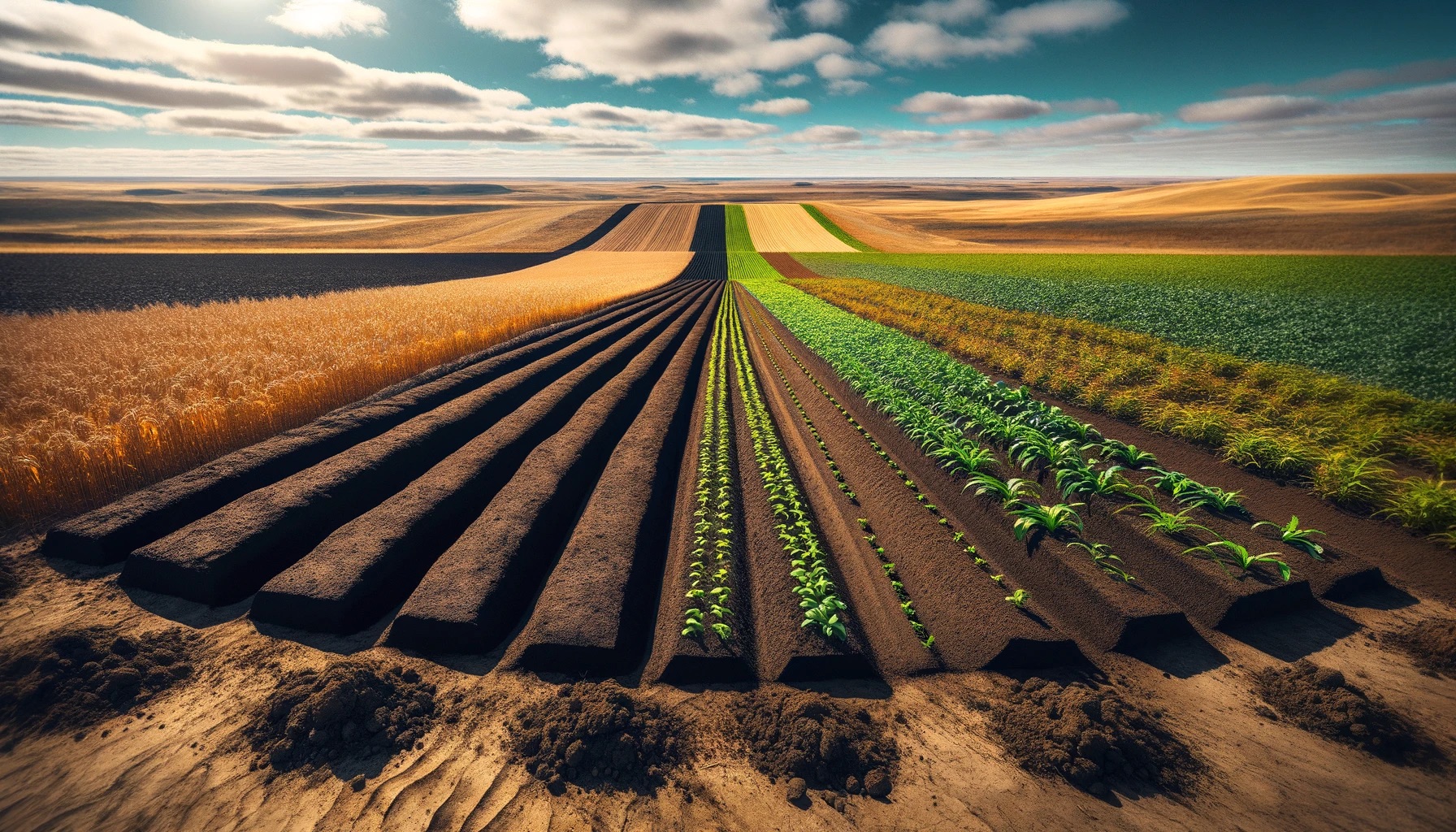
Recent research published in the Soil Science Society of America Journal explores the combined effects of biocharBiochar is a carbon-rich material created from biomass decomposition in low-oxygen conditions. It has important applications in environmental remediation, soil improvement, agriculture, carbon sequestration, energy storage, and sustainable materials, promoting efficiency and reducing waste in various contexts while addressing climate change challenges. More and cover crops (CCs) on sandy, sloping, and semi-arid soils in the central US Great Plains. Conducted over three years, the study aimed to determine whether integrating these practices could enhance soil health and crop productivity more than either practice alone.
The study utilized wood biochar, applied at varying rates (0, 6.25, 12.5, 25, and 50 Mg ha−1) with and without cover crops across three distinct soil types. Results indicated no significant interaction between biochar and cover crops, suggesting that the combination did not outperform the individual practices. Persistent droughts hindered plant establishment in semi-arid soils, while biochar’s benefits were highly site-specific.
Biochar application improved certain soil properties, notably in sandy and sloping soils, particularly at higher application rates. For instance, 50 Mg ha−1 biochar enhanced soil water sorptivity, organic matter concentration, soil pHpH is a measure of how acidic or alkaline a substance is. A pH of 7 is neutral, while lower pH values indicate acidity and higher values indicate alkalinity. Biochars are normally alkaline and can influence soil pH, often increasing it, which can be beneficial More, and available water content, albeit these benefits were predominantly observed only in the first year. In sloping soils, biochar also reduced bulk density and increased aggregate stability, infiltration rates, and microbial biomassBiomass is a complex biological organic or non-organic solid product derived from living or recently living organism and available naturally. Various types of wastes such as animal manure, waste paper, sludge and many industrial wastes are also treated as biomass because like natural biomass these More. However, biochar had no significant effect on crop yields across all soil types.
These findings underscore that while biochar can enhance specific soil properties, its impact is variable and often short-lived, necessitating high application rates to achieve noticeable improvements. The study concludes that combining biochar with cover crops does not synergistically enhance soil health or crop productivity, highlighting the need for further research to optimize biochar use in different soil conditions and climates.


Leave a Reply