
Key Takeaways
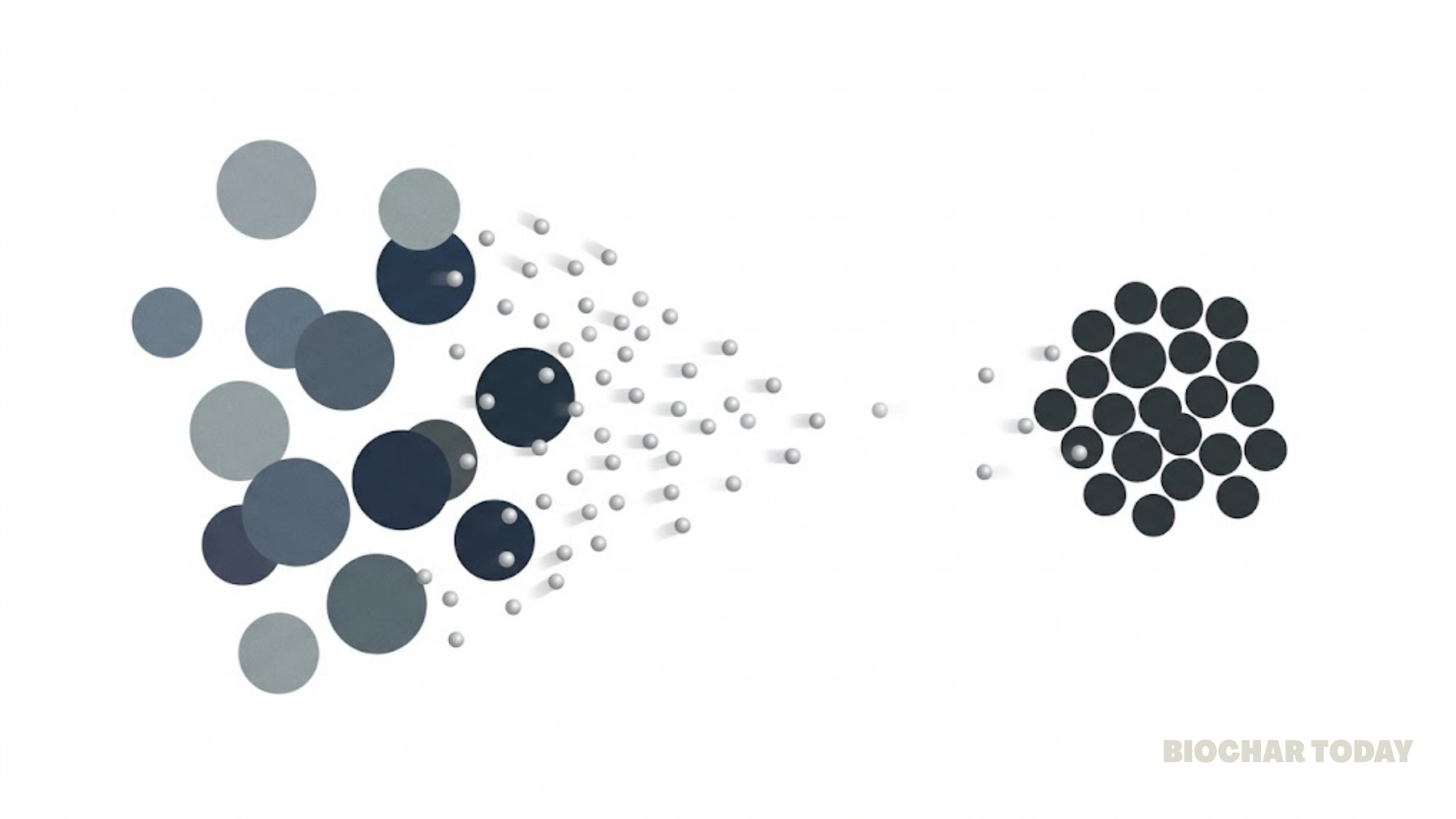
- Nano-biochar converts toxic silver ions in water into far less toxic silver nanoparticles.
- The reduction process requires weakly alkaline water to work, reaching peak performance at a pHpH is a measure of how acidic or alkaline a substance is. A pH of 7 is neutral, while lower pH values indicate acidity and higher values indicate alkalinity. Biochars are normally alkaline and can influence soil pH, often increasing it, which can be beneficial More of 9.5.
- Nano-biochar produced at a lower temperature works two and a half times faster than nano-biochar made at a higher temperature.
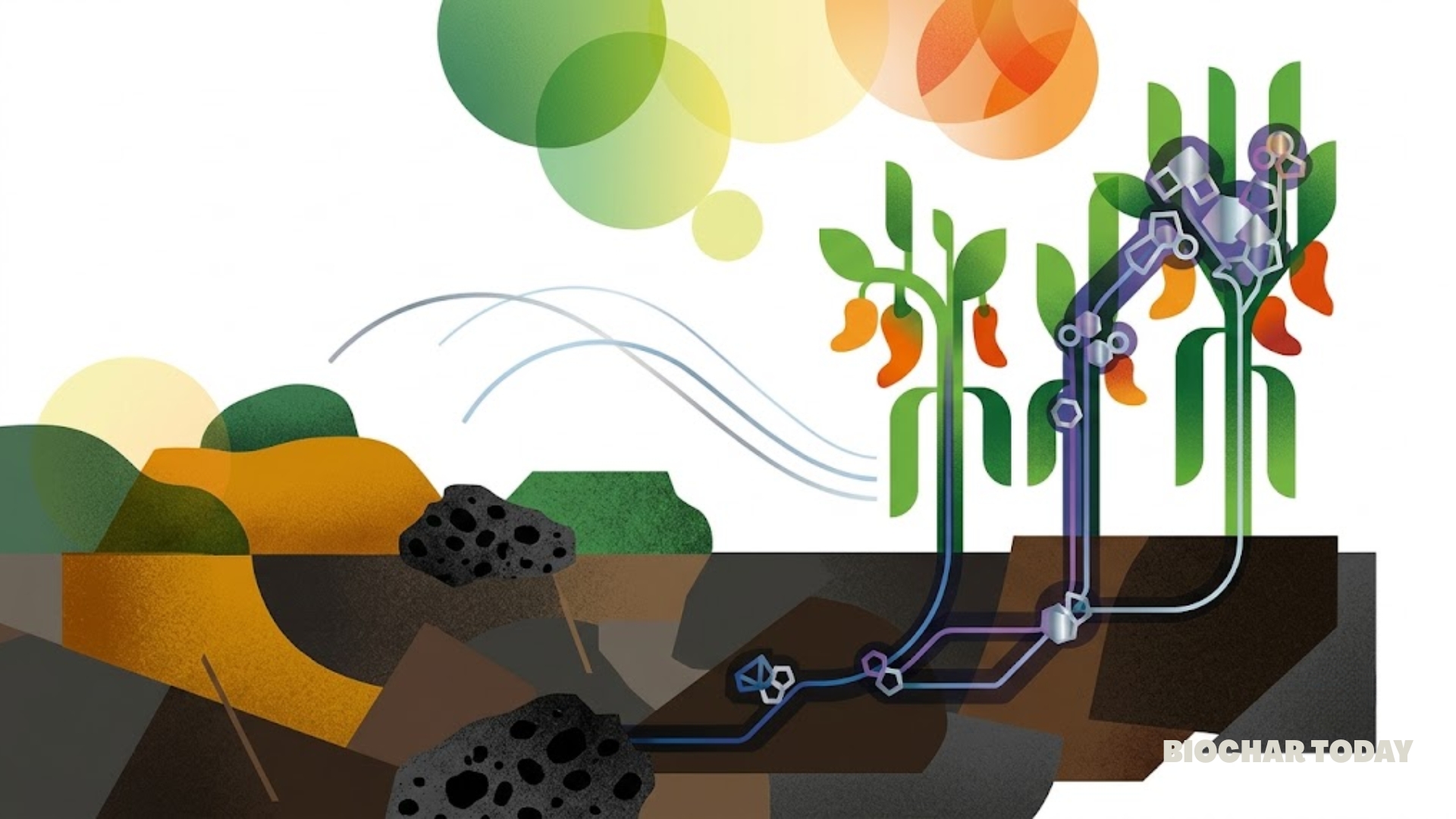
- Superoxide radicals produced on the surface of the biocharBiochar is a carbon-rich material created from biomass decomposition in low-oxygen conditions. It has important applications in environmental remediation, soil improvement, agriculture, carbon sequestration, energy storage, and sustainable materials, promoting efficiency and reducing waste in various contexts while addressing climate change challenges. More are the primary drivers converting the silver ions.
- Adding too much nano-biochar slows down the reaction because the excess particles begin consuming their own reactive oxygen species.
Silver ion pollution in aquatic ecosystems presents significant ecological and public health challenges due to the high toxicity and mobility of soluble silver species. Transforming these dissolved ions into metallic silver nanoparticles substantially mitigates environmental risk, as nanoparticles exhibit drastically lower cellular toxicity and reduced plant uptake rates compared to their ionic counterparts. Pyrogenic carbon materials processed into nanoscale dimensions possess enhanced surface area, dense oxygen-containing functional groups, and abundant environmentally persistent free radicals. These unique structural features allow nano-biochar to act as an efficient electron donor and catalytic platform for heavy metal transformation, offering a green alternative to energy-intensive or chemical-heavy remediation methods.
The chemical transformation of silver ions by nano-biochar relies heavily on the acidity or alkalinity of the surrounding water. Under acidic and neutral conditions, the reactive oxygen-containing groups on the nano-biochar surface undergo protonation. This positive surface charge modification blocks electron transfer pathways and prevents the formation of key reactive oxygen species, completely halting nanoparticle synthesis. Conversely, increasing the alkalinity converts these functional groups into their deprotonated forms. This deprotonation enhances the negative surface charge and electron-donating capacity of the material, which accelerates the interfacial attraction of positively charged silver ions and promotes rapid chemical reduction.
The temperature at which the original biochar is produced dictates its surface chemistry and overall reactive performance. Lower pyrolysisPyrolysis is a thermochemical process that converts waste biomass into bio-char, bio-oil, and pyro-gas. It offers significant advantages in waste valorization, turning low-value materials into economically valuable resources. Its versatility allows for tailored products based on operational conditions, presenting itself as a cost-effective and efficient More temperatures preserve vital oxygenated moieties, particularly phenolic hydroxyl groups, while higher pyrolysis temperatures cause severe deoxygenation and create dense, carbonized networks that limit electron availability. Because of this structural difference, lower-temperature nano-biochar delivers a significantly higher electron-donating capacity and elevated persistent free radical activity. When mixed into weakly alkaline solutions, this abundance of phenolic groups works synergistically with ambient dissolved oxygen to continuously generate superoxide radicals, which serve as the primary chemical intermediate driving the reduction process.
Particle dosage also regulates nanoparticle yield and reaction rates. While moderate quantities of nano-biochar efficiently reduce silver ions, adding an excessive concentration of the material suppresses nanoparticle formation. High particle concentrations promote local aggregation, reducing the overall surface area and hiding available reactive sites. Furthermore, an overabundance of nano-biochar triggers self-consumption pathways among generated reactive oxygen species, where surplus radicals react with each other or secondary side products rather than reducing silver. Optimizing both environmental pH and particle loading ensures rapid pseudo-first-order reaction kinetics, resulting in uniformly distributed, quasi-spherical metallic silver nanoparticles.
Source: Gu, S., Wang, D., Wang, T., & Zhu, W. (2026). pH-regulated surface chemistry of nano-biochar for selective silver ion reduction: the pivotal role of superoxide radicals. Biochar, 8(1), 133.




Leave a Reply