
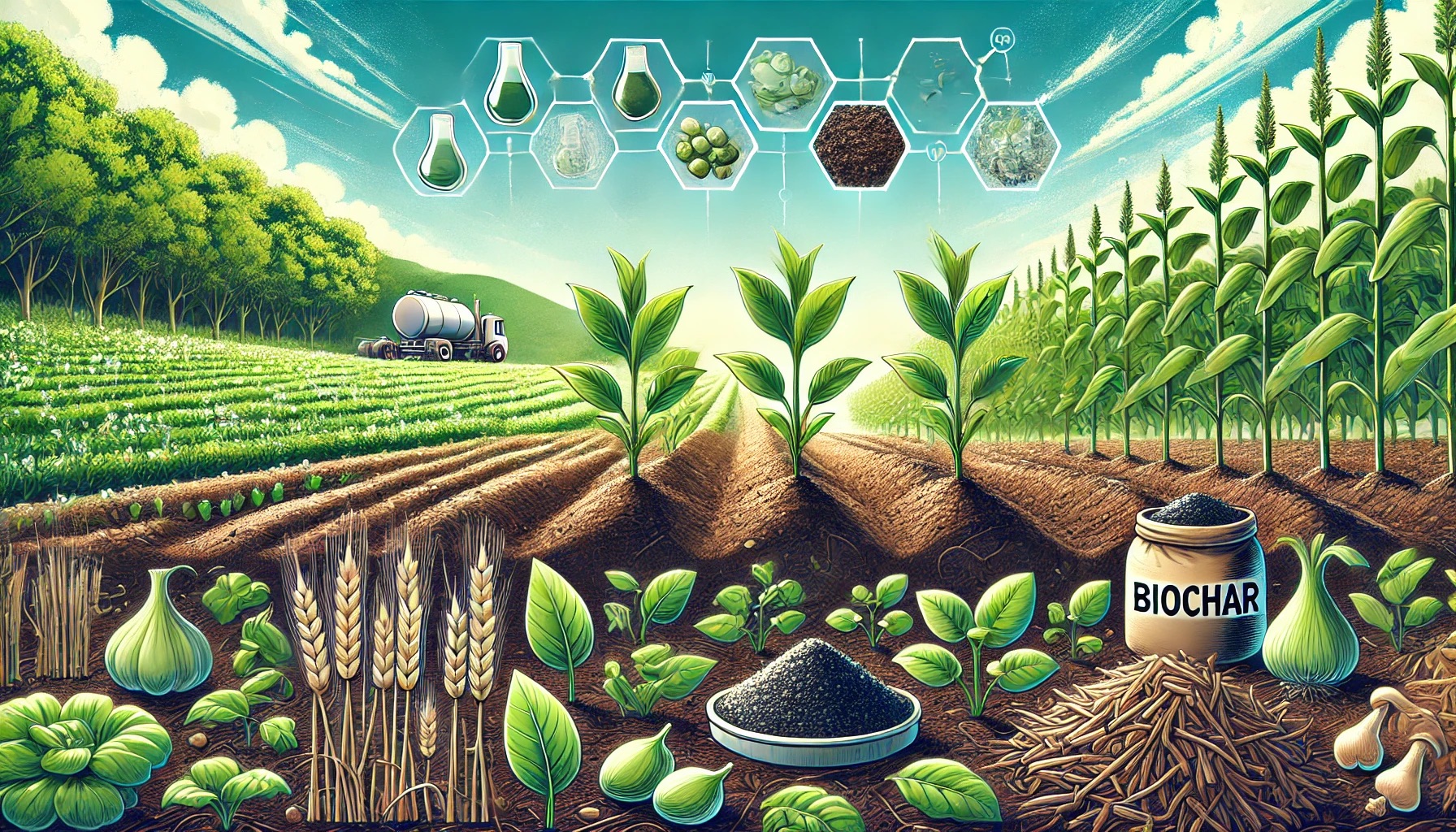
Kaushik, et al (2024) BiocharBiochar is a carbon-rich material created from biomass decomposition in low-oxygen conditions. It has important applications in environmental remediation, soil improvement, agriculture, carbon sequestration, energy storage, and sustainable materials, promoting efficiency and reducing waste in various contexts while addressing climate change challenges. More Production from Plant Residues: A Sustainable Approach for Carbon Sequestration and Soil Fertility Improvement. Archives of Current Research International. https://doi.org/10.9734/acri/2024/v24i9864
Biochar, a carbon-rich material produced from plant residues through pyrolysisPyrolysis is a thermochemical process that converts waste biomass into bio-char, bio-oil, and pyro-gas. It offers significant advantages in waste valorization, turning low-value materials into economically valuable resources. Its versatility allows for tailored products based on operational conditions, presenting itself as a cost-effective and efficient More, offers a sustainable approach to improving soil health and mitigating climate change. Made from organic waste like wood chips and agricultural leftovers, biochar has gained attention for its ability to enhance soil structure, increase water retention, and boost nutrient availability. These improvements support healthier, more productive soils, essential for sustainable agriculture.
The pyrolysis process, which involves heating organic material in low oxygen environments, is critical to the properties of biochar. Depending on the temperature and feedstockFeedstock refers to the raw organic material used to produce biochar. This can include a wide range of materials, such as wood chips, agricultural residues, and animal manure. More used, biochar can exhibit high surface area and porosityPorosity of biochar is a key factor in its effectiveness as a soil amendment and its ability to retain water and nutrients. Biochar’s porosity is influenced by feedstock type and pyrolysis temperature, and it plays a crucial role in microbial activity and overall soil health. Biochar More, making it effective in capturing both nutrients and pollutants in soil. This material also fosters beneficial soil microbes, which play a key role in nutrient cycling and plant growth. Additionally, biochar’s ability to sequester carbon makes it a valuable tool in reducing greenhouse gas emissions. By locking carbon into the soil, biochar helps combat climate change while simultaneously improving crop yields.
However, biochar is not without its challenges. Research is ongoing to optimize production methods and address potential downsides, such as variable impacts on soil fauna and the release of harmful compounds under certain conditions. Nevertheless, biochar’s potential as an eco-friendly solution for both waste management and agricultural productivity is significant, making it a key component in future sustainable farming practices.


![Eucalyptus Wood Waste-Derived Biochar Achieves a Ninety-Eight Percent Removal Efficiency for Benzo[ghi]perylene in Vehicle-Wash Wastewater](https://biochartoday.com/wp-content/uploads/2026/10/SCIENCE-BLOGS-2026-2026-10-19T160523.703.jpg)


Leave a Reply