
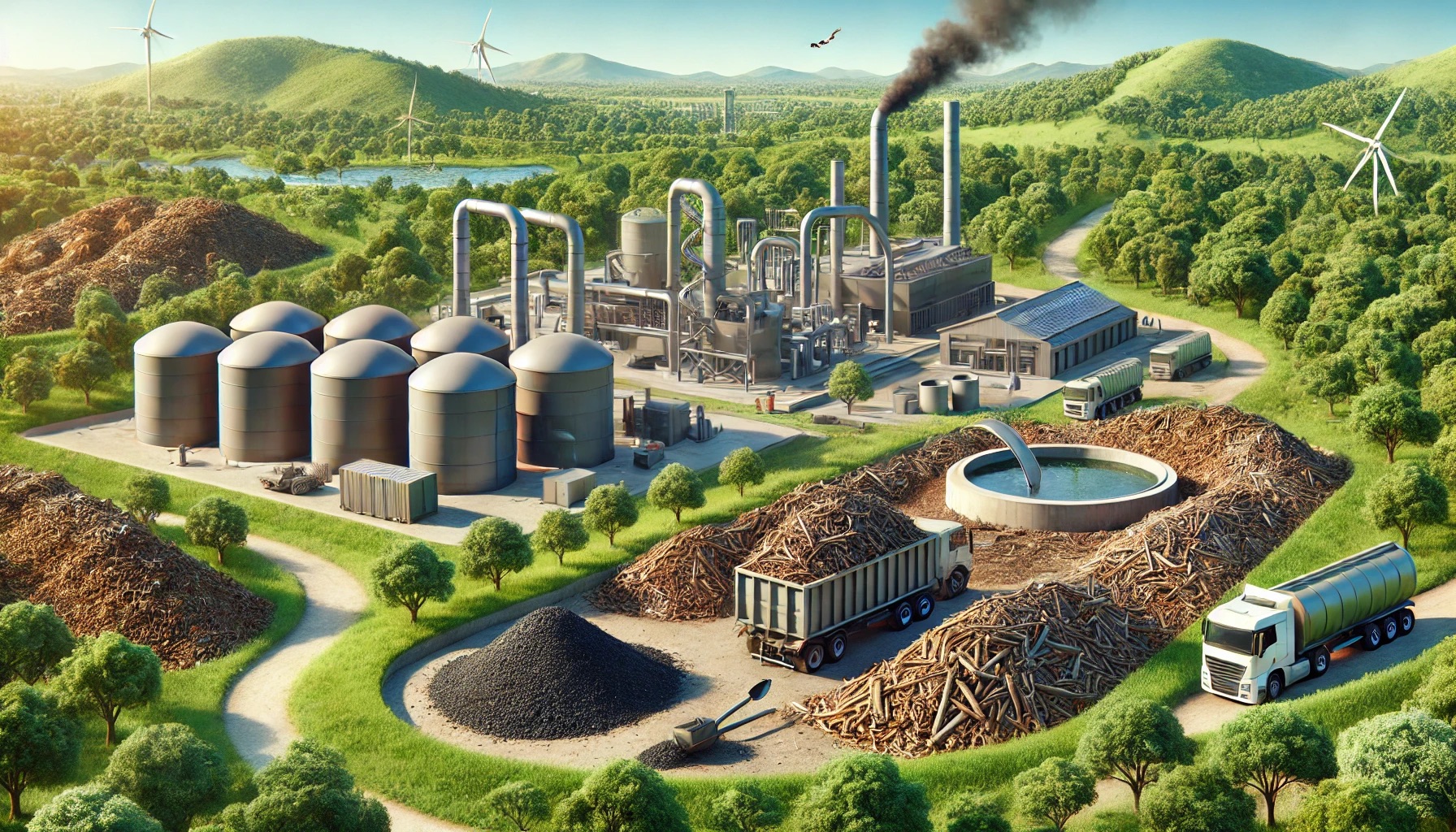
Garcia-Prats, et al (2024) BiocharBiochar is a carbon-rich material created from biomass decomposition in low-oxygen conditions. It has important applications in environmental remediation, soil improvement, agriculture, carbon sequestration, energy storage, and sustainable materials, promoting efficiency and reducing waste in various contexts while addressing climate change challenges. More: An emerging material for the improvement of biological treatment of organic waste. Waste Management Bulletin. https://doi.org/10.1016/j.wmb.2024.07.003
Biochar, a carbon-rich material derived from biomassBiomass is a complex biological organic or non-organic solid product derived from living or recently living organism and available naturally. Various types of wastes such as animal manure, waste paper, sludge and many industrial wastes are also treated as biomass because like natural biomass these More, is gaining attention as a sustainable alternative to activated carbonActivated carbon is a form of carbon that has been processed to create a vast network of tiny pores, increasing its surface area significantly. This extensive surface area makes activated carbon exceptionally effective at trapping and holding impurities, like a molecular sponge. It is commonly More. It is produced through processes like pyrolysisPyrolysis is a thermochemical process that converts waste biomass into bio-char, bio-oil, and pyro-gas. It offers significant advantages in waste valorization, turning low-value materials into economically valuable resources. Its versatility allows for tailored products based on operational conditions, presenting itself as a cost-effective and efficient More, where organic materials are heated in the absence of oxygen, resulting in a solid byproduct that can enhance soil quality and capture carbon, contributing to climate change mitigation.
Biochar’s high porosityPorosity of biochar is a key factor in its effectiveness as a soil amendment and its ability to retain water and nutrients. Biochar’s porosity is influenced by feedstock type and pyrolysis temperature, and it plays a crucial role in microbial activity and overall soil health. Biochar More and surface area make it an excellent additive for organic waste treatment. In anaerobic digestion, biochar improves process stability, increases biogas production, and purifies biogas by adsorbing contaminants like carbon dioxide and hydrogen sulfide. These improvements enhance the efficiency of biogas as a renewable energy source, reducing reliance on fossil fuels.
In composting, biochar enhances the degradation process, stabilizes moisture levels, and extends the thermophilic phase, ensuring effective pathogen elimination. It also reduces greenhouse gas emissions, particularly methane and nitrous oxide, and adsorbs odors, making composting more environmentally friendly and less disruptive to nearby communities.
Despite its benefits, the use of biochar in waste treatment is still in its early stages, requiring further research to determine optimal application rates and long-term impacts. Studies indicate that biochar can improve nutrient content and immobilize heavy metals in compost, enhancing its quality as a fertilizer.
Overall, biochar presents a promising solution for improving the sustainability of organic waste treatment processes, offering significant environmental benefits while addressing waste management challenges. Further research and large-scale applications are needed to fully harness its potential.



Leave a Reply