
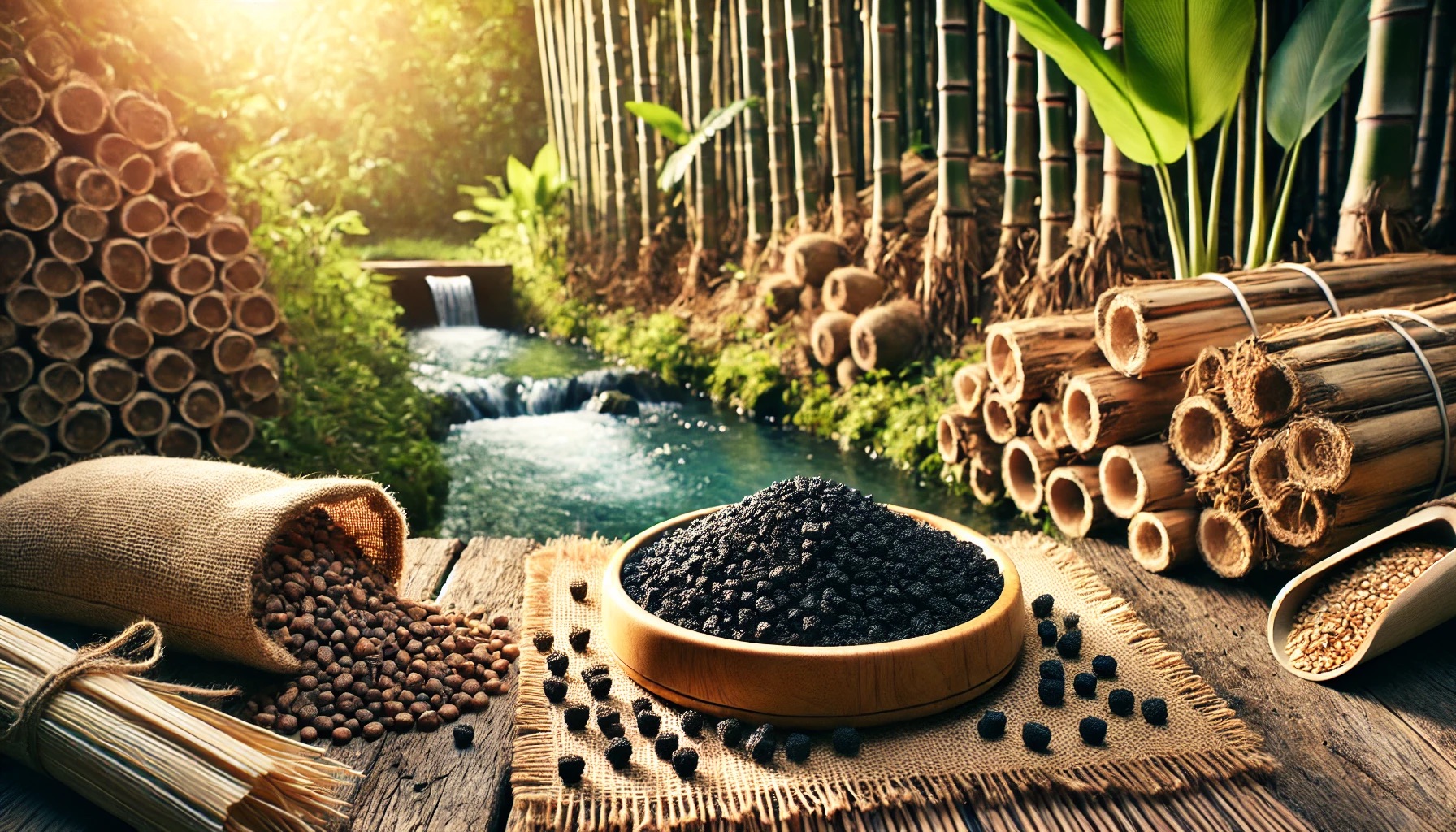
Araujo, et al (2024) BIOCHARBiochar is a carbon-rich material created from biomass decomposition in low-oxygen conditions. It has important applications in environmental remediation, soil improvement, agriculture, carbon sequestration, energy storage, and sustainable materials, promoting efficiency and reducing waste in various contexts while addressing climate change challenges. More FROM LIGNOCELLULOSIC BIOMASSBiomass is a complex biological organic or non-organic solid product derived from living or recently living organism and available naturally. Various types of wastes such as animal manure, waste paper, sludge and many industrial wastes are also treated as biomass because like natural biomass these More: A SUSTAINABLE CIRCULAR ECONOMY APPROACH FOR REMOVING ORGANIC AND INORGANIC CONTAMINANTS. Quimica Nova. https://doi.org/10.21577/0100-4042.20240079
Biochar derived from lignocellulosic biomass offers a promising solution for addressing water contamination. This semi-carbonized material, similar to activated carbonActivated carbon is a form of carbon that has been processed to create a vast network of tiny pores, increasing its surface area significantly. This extensive surface area makes activated carbon exceptionally effective at trapping and holding impurities, like a molecular sponge. It is commonly More, is produced using agricultural and food-processing waste like sugarcane bagasse, coffee husks, rice husks, and açaí seeds. These residues, abundant in agricultural nations like Brazil, provide an eco-friendly way to repurpose biomass waste.
The production of biochar occurs through pyrolysisPyrolysis is a thermochemical process that converts waste biomass into bio-char, bio-oil, and pyro-gas. It offers significant advantages in waste valorization, turning low-value materials into economically valuable resources. Its versatility allows for tailored products based on operational conditions, presenting itself as a cost-effective and efficient More or hydrothermal carbonization, processes that modify the material’s surface area and pore structure to enhance its adsorptive properties. By tailoring these characteristics, biochar effectively removes a variety of contaminants, including heavy metals, pharmaceuticals, pesticides, and dyes, from water systems. Its adsorption capacity relies on mechanisms like electrostatic interactions, pore filling, and chemical bonding with contaminants.
Studies in Brazil highlight the efficacy of biochar made from regionally significant biomass. For instance, biochar derived from sugarcane bagasse demonstrates a high adsorption capacity for metals like copper, while açaí seed biochar excels in removing organic pollutants. Chemical activation, often using agents like ZnCl₂, is the most common method to enhance biochar’s performance.
Despite its potential, challenges remain. Most studies focus on synthetic water samples rather than real-world scenarios, limiting the understanding of biochar’s efficacy in complex environments. Additionally, the material’s performance may degrade over repeated use, raising questions about its lifecycle management.
Biochar not only provides a cost-effective and sustainable way to manage agricultural waste but also contributes to cleaner water resources, embodying the principles of a circular economy. Further research into real-world applications could unlock its full potential.

Leave a Reply