

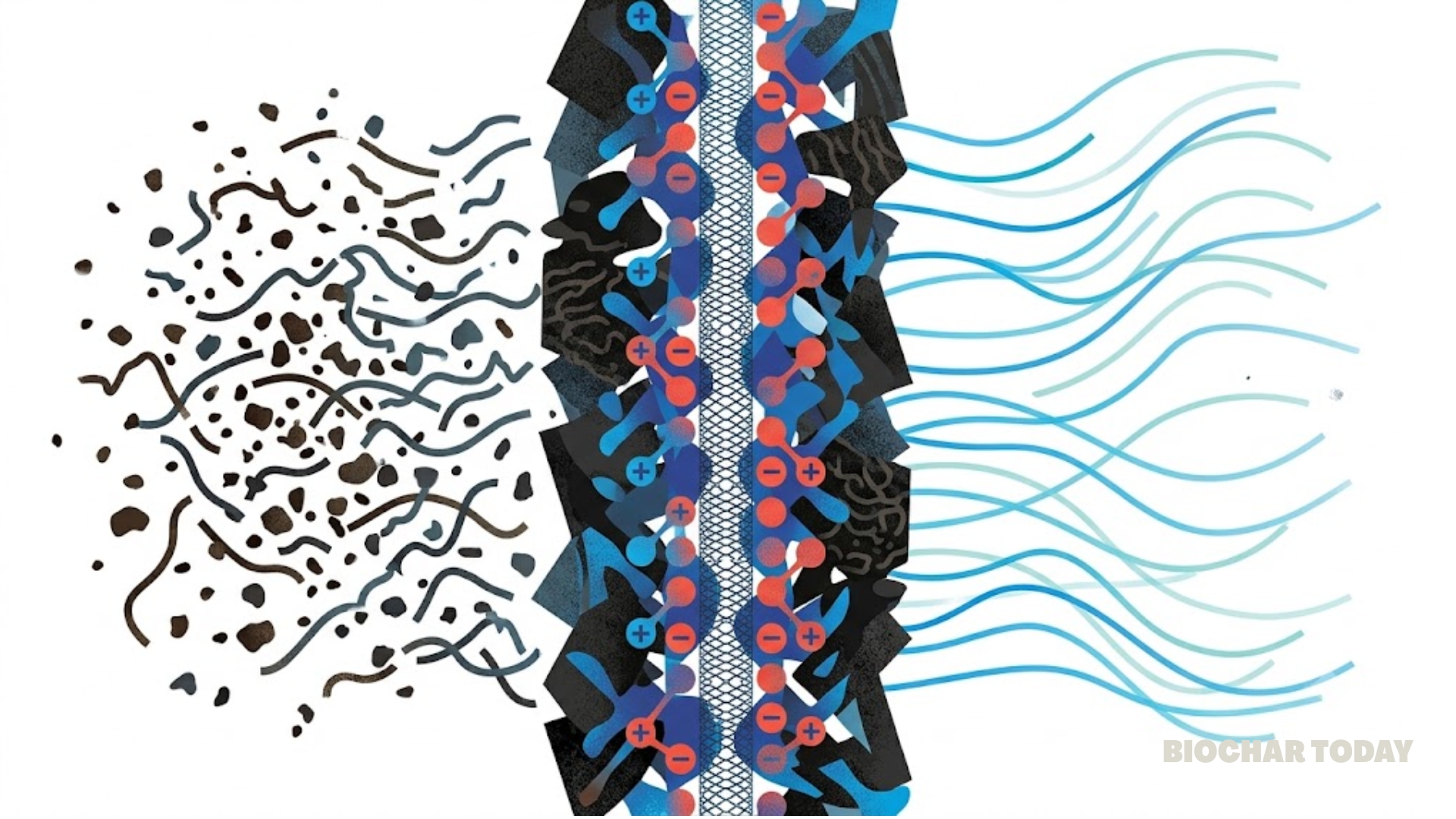
Griffin Loebsack and colleagues from Western University, studied how biocharBiochar is a carbon-rich material created from biomass decomposition in low-oxygen conditions. It has important applications in environmental remediation, soil improvement, agriculture, carbon sequestration, energy storage, and sustainable materials, promoting efficiency and reducing waste in various contexts while addressing climate change challenges. More adsorbs aromatic pollutants from water. Their work highlights biochar’s role as a sustainable tool for water purification is published in BiomassBiomass is a complex biological organic or non-organic solid product derived from living or recently living organism and available naturally. Various types of wastes such as animal manure, waste paper, sludge and many industrial wastes are also treated as biomass because like natural biomass these More and Bioenergy, is worth reading.
Biochar, made from Douglas fir and red cedar, was treated under varying conditions, including different pyrolysisPyrolysis is a thermochemical process that converts waste biomass into bio-char, bio-oil, and pyro-gas. It offers significant advantages in waste valorization, turning low-value materials into economically valuable resources. Its versatility allows for tailored products based on operational conditions, presenting itself as a cost-effective and efficient More temperatures and post-treatments. The researchers found that biochars produced at higher temperatures had larger surface areas and improved adsorption capabilities. Treatment with CO₂ created biochar with more oxygen-rich functional groups, enhancing interactions with pollutants like ibuprofen, acetaminophen, and dyes.
The study also tested post-pyrolysis treatments using nitric acid, hydrogen peroxide, and potassium hydroxide. Each treatment altered the biochar surface, improving its ability to adsorb specific contaminants. For example, hydroxyl groups added through hydrogen peroxide boosted electrostatic interactions, making biochar more effective at capturing positively charged pollutants like methylene blue.
The findings suggest that tailoring biochar properties through controlled production and treatment can optimize its performance. This research supports biochar’s potential as an eco-friendly alternative for water treatment, offering a path toward cleaner and safer water systems
SOURCE: Loebsack, G., Yeung, K. K.-C., Berruti, F., & Klinghoffer, N. B. (2025). Impact of biochar physical properties on adsorption mechanisms for removal of aromatic aqueous contaminants in water. Biomass and Bioenergy, 194, 107617. https://doi.org/10.1016/j.biombioe.2025.107617




Leave a Reply