
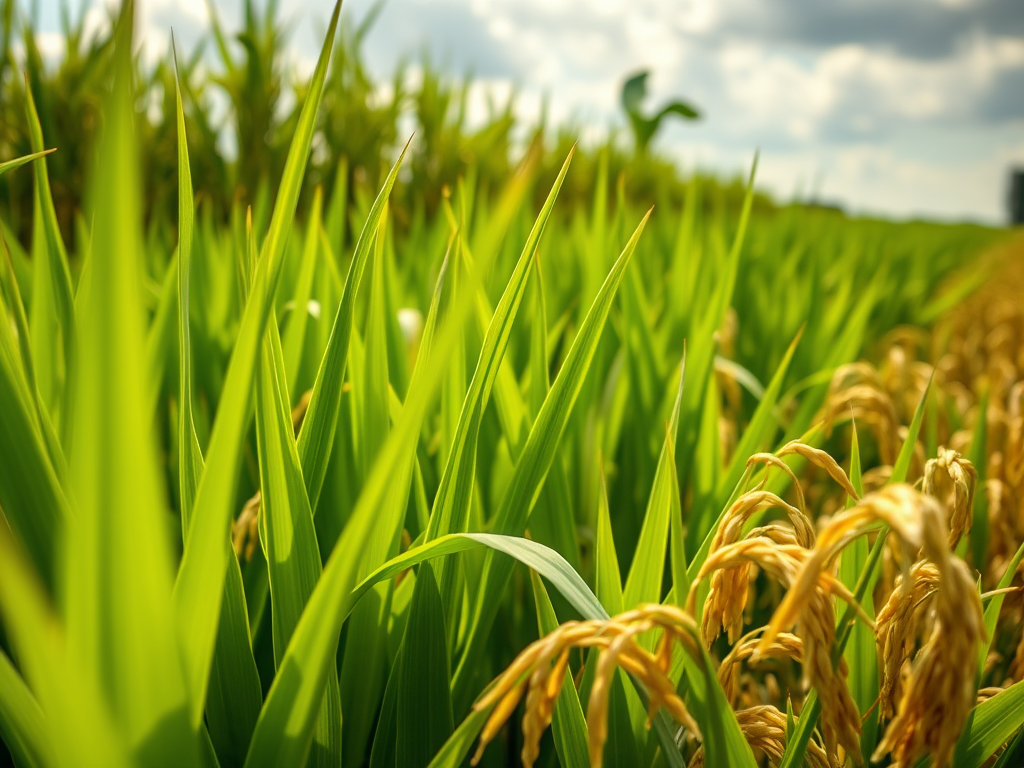
In an article published in the journal Plants, Mehmood Ali Noor, Muhammad Umair Hassan, and colleagues investigated a synergistic approach to mitigate arsenic (As) toxicity in rice plants. Their study, titled “BiocharBiochar is a carbon-rich material created from biomass decomposition in low-oxygen conditions. It has important applications in environmental remediation, soil improvement, agriculture, carbon sequestration, energy storage, and sustainable materials, promoting efficiency and reducing waste in various contexts while addressing climate change challenges. More and Melatonin Partnership Mitigates Arsenic Toxicity in Rice by Modulating Antioxidant Defense, Phytochelatin Synthesis, and Down-Regulating the Transporters Involved in Arsenic Uptake,” explores how the combined use of biochar (BC) and melatonin (MT) can protect rice (Oryza sativa L.) from the harmful effects of arsenic contamination. This contamination poses a serious global challenge, affecting crop productivity and human health in rice-dependent regions.
The study, which comprised a control group and four experimental groups, found that arsenic stress significantly impaired rice growth and yield. However, the co-application of biochar and melatonin led to a substantial improvement in plant health and productivity. The combination of BC and MT increased rice grain yield by 31.43% and biomassBiomass is a complex biological organic or non-organic solid product derived from living or recently living organism and available naturally. Various types of wastes such as animal manure, waste paper, sludge and many industrial wastes are also treated as biomass because like natural biomass these More yield by 26.06% under arsenic stress, outperforming the effects of either treatment alone. This improved yield was linked to a significant increase in chlorophyll synthesis, with chlorophyll-a, chlorophyll-b, and carotenoids increasing by 30.07%, 71.21%, and 38.70%, respectively. Leaf water content also increased by 40% with the combined treatment.
The co-application of biochar and melatonin also proved highly effective in reducing oxidative stress and boosting the plant’s defense mechanisms. Arsenic exposure alone increased oxidative markers such as electrolyte leakage (EL), malondialdehyde (MDA), and hydrogen peroxide (H2O2) by 206.81%, 238.25%, and 279.79%, respectively. The combined BC and MT treatment, however, decreased these markers by 62.28%, 40.67%, and 75.66%, respectively. This was achieved by significantly enhancing antioxidant activities, with ascorbate peroxidase, catalase, peroxidase, and superoxide dismutase showing increases of 56.43%, 55.14%, 57.77%, and 57.52%, respectively, under arsenic stress.
The research further explored the molecular mechanisms behind these improvements. The combined BC and MT treatment significantly enhanced the expression of genes involved in antioxidant activities (OsAPx6, OsCAT, OsPOD, and OsSOD) and melatonin synthesis (OsASMT1 and OsASMT2). This led to a 91.53% increase in endogenous melatonin synthesis and a 41.35% increase in proline synthesis, helping the plants maintain osmotic balance and protect against damage. The combination also increased the synthesis of phytochelatins by 125%, which chelate arsenic ions and promote their sequestration in vacuoles, reducing translocation from roots to shoots.
Importantly, the study found that the combined treatment effectively reduced arsenic uptake and accumulation. While arsenic stress led to maximum arsenic concentrations of 46 mg/kg in roots and 25.15 mg/kg in shoots, the BC and MT application decreased these to 20.53 mg/kg and 9.26 mg/kg, respectively. This was partly due to the down-regulation of the arsenic uptake gene, OsABCC1, which was suppressed by 84.15% with the combined treatment. Furthermore, the application of BC and MT significantly reduced soil arsenic availability by 74.19%. This was achieved by converting arsenic into more stable forms, such as those bound to organic matter, iron, and manganese. Overall, the findings demonstrate a powerful synergistic effect between biochar and melatonin, presenting a promising and eco-friendly strategy to enhance rice productivity in arsenic-contaminated environments.
Source: Noor, M. A., Hassan, M. U., Khan, T. A., Zhou, B., & Huang, G. (2025). Biochar and Melatonin Partnership Mitigates Arsenic Toxicity in Rice by Modulating Antioxidant Defense, Phytochelatin Synthesis, and Down-Regulating the Transporters Involved in Arsenic Uptake. Plants, 14(15), 2453.





Leave a Reply