
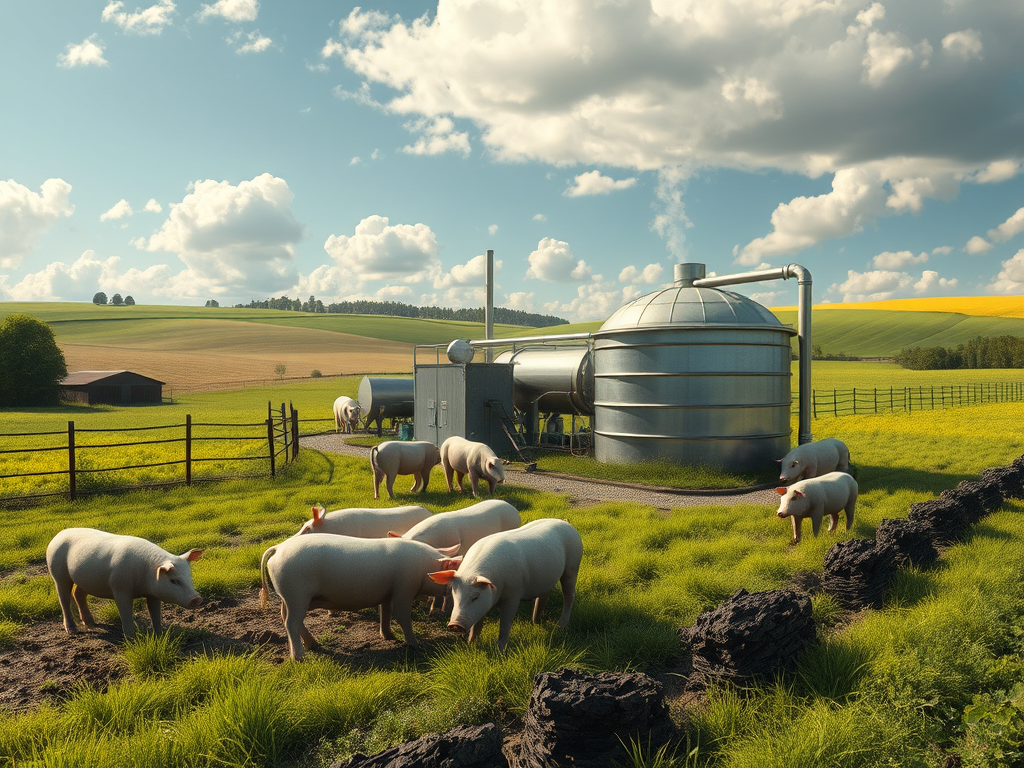
Silva, Lapa, Ribeiro, and Duarte reviewed the potential of anaerobic digestion (AD) to transform pig slurry, a common biowaste from livestock farming, into valuable resources. Published in Applied Sciences, the review highlights the environmental and economic benefits of AD, particularly in the context of a circular economy.
The study emphasizes the growing need for efficient biowaste management due to the intensification of livestock farming. AD offers a solution by converting pig slurry into biogas, a renewable energy source, and digestate, a nutrient-rich fertilizer. This process not only reduces greenhouse gas emissions but also decreases reliance on fossil fuels and synthetic fertilizers.
The review also explores the use of additives, such as biocharBiochar is a carbon-rich material created from biomass decomposition in low-oxygen conditions. It has important applications in environmental remediation, soil improvement, agriculture, carbon sequestration, energy storage, and sustainable materials, promoting efficiency and reducing waste in various contexts while addressing climate change challenges. More, to enhance the AD process. Biochar can improve biogas production and digestate quality, further optimizing the benefits of AD. The authors highlight the importance of continuous research to refine AD technology and promote its widespread adoption.
The review concludes by emphasizing the potential of AD to address environmental challenges and create economic opportunities within the agricultural sector. By promoting the sustainable management of pig slurry, AD can contribute to a more circular and environmentally friendly agricultural model.
SOURCE: Silva, I., Lapa, N., Ribeiro, H., & Duarte, E. (2025). Pig slurry anaerobic digestion: The role of biochar as an additive towards biogas and digestate improvement. Applied Sciences, 15(3), 1037. https://doi.org/10.3390/app15031037



Leave a Reply