
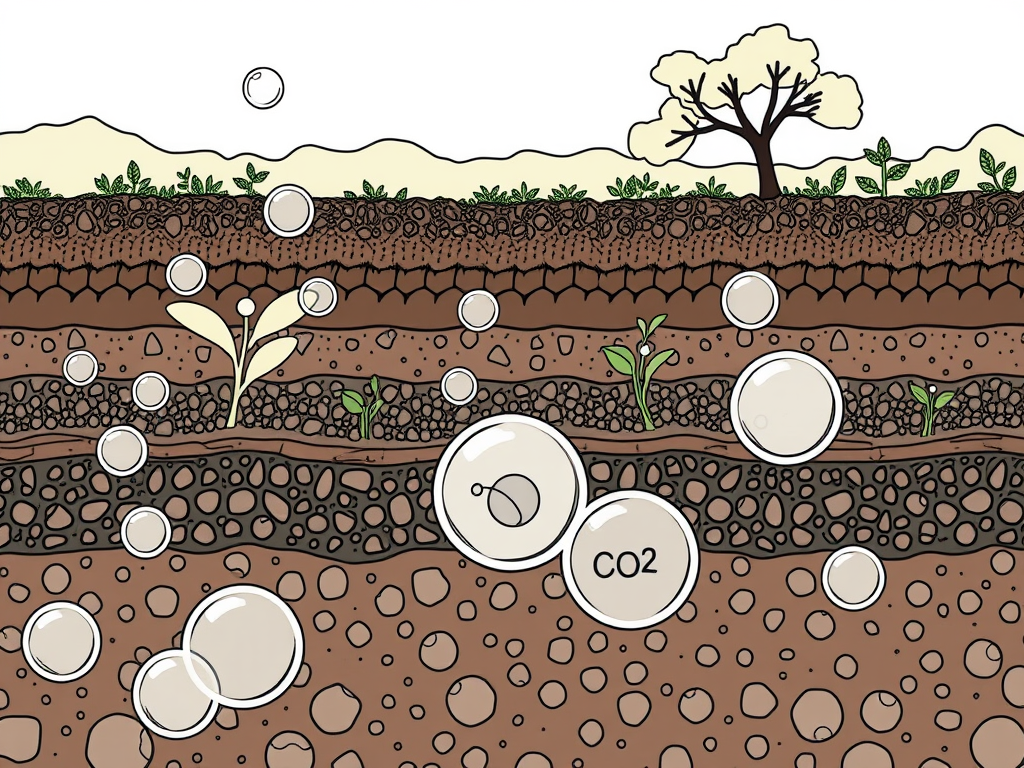
A recent study published in BiomassBiomass is a complex biological organic or non-organic solid product derived from living or recently living organism and available naturally. Various types of wastes such as animal manure, waste paper, sludge and many industrial wastes are also treated as biomass because like natural biomass these More and Bioenergy by Yang et al. explores how phosphorus-modified biocharBiochar is a carbon-rich material created from biomass decomposition in low-oxygen conditions. It has important applications in environmental remediation, soil improvement, agriculture, carbon sequestration, energy storage, and sustainable materials, promoting efficiency and reducing waste in various contexts while addressing climate change challenges. More affects carbon dioxide (CO2) emissions and bacterial communities in manganese-contaminated soils. The research highlights the potential of modified biochar to improve carbon sequestration and remediate heavy metal pollution, specifically in soils contaminated with manganese (Mn).
The study found that phosphorus-modified biochar led to lower soil CO2 emissions compared to unmodified biochar. As the application amount of the modified biochar increased, CO2 emissions decreased. This reduction in emissions is associated with an enhancement in soil organic carbon and its components, indicating improved carbon sequestration. The modified biochar also altered the bacterial communities in the soil, reducing the abundance of some bacteria while increasing others. Additionally, it contributed to decreasing the mobility of manganese in the soil, suggesting a positive impact on heavy metal remediation.
The research demonstrates that phosphorus-modified biochar can be an effective tool for simultaneously enhancing carbon sequestration and remediating manganese-contaminated soils. The application of this modified biochar not only aids in reducing CO2 emissions but also improves soil carbon content and reduces the potential migration of manganese, a toxic heavy metal. This dual benefit is particularly important for environmental management in areas affected by manganese pollution from mining activities.
The study provides valuable insights into how modified biochar can be used to address both carbon sequestration and heavy metal remediation in contaminated soils. The findings suggest that this approach could be a promising strategy for ecological restoration in manganese-polluted environments. Further research may expand on these results, potentially leading to more refined applications in environmental remediation practices.
SOURCE: Yang, Y., Tu, L., Liao, Y., Zhao, D., Ye, S., Luo, H., … & Hu, L. (2025). Phosphorus-modified biochar regulates CO2 emissions and bacterial communities in an incubation study of manganese-contaminated soils. Biomass and Bioenergy, 197, 107823.




Leave a Reply