
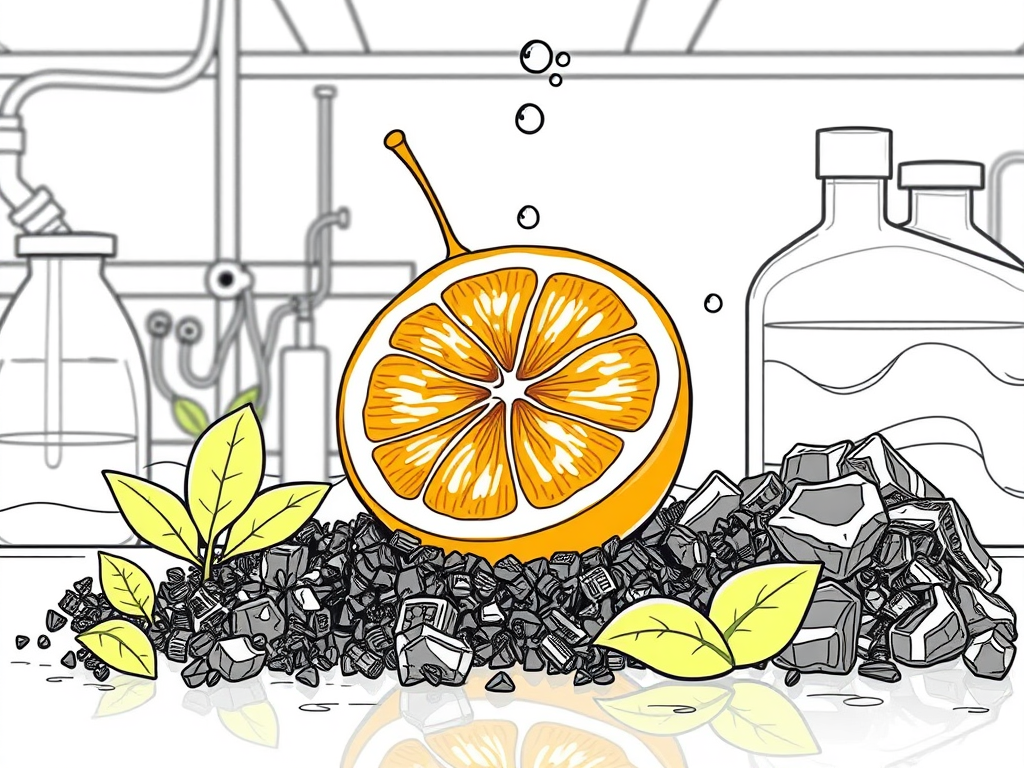
A recent study published in Environmental Processes by Lalit Kumar, Ibrahim Gbolahan Hakeem, Meenakshi Yadav, Kalpit Shah, and V. Ezhilselvi highlights a groundbreaking method for wastewater treatment: the use of biocharBiochar is a carbon-rich material created from biomass decomposition in low-oxygen conditions. It has important applications in environmental remediation, soil improvement, agriculture, carbon sequestration, energy storage, and sustainable materials, promoting efficiency and reducing waste in various contexts while addressing climate change challenges. More derived from orange peel. This innovative approach addresses the growing concern of environmental pollution, particularly from phenolic compounds like aminophenol, which are widely used in industries such as dyes, photography, and pharmaceuticals.
Aminophenol in wastewater poses significant environmental and health risks even at low concentrations. The study successfully developed a novel, cost-effective adsorbent by pretreating orange peel with potassium hydroxide (KOH) followed by a low-temperature pyrolysisPyrolysis is a thermochemical process that converts waste biomass into bio-char, bio-oil, and pyro-gas. It offers significant advantages in waste valorization, turning low-value materials into economically valuable resources. Its versatility allows for tailored products based on operational conditions, presenting itself as a cost-effective and efficient More process.
The researchers found that this KOH-pretreated orange peel biochar is highly efficient in removing aminophenol from aqueous solutions. Under optimal conditions—pH 7, an adsorbent dosage of 15 mg, and a contact time of 105 minutes for a 50 mg/L aminophenol concentration—the biochar achieved an impressive adsorption efficiency of 89.12% and an adsorption capacity of 59.36 mg/g. The biochar’s enhanced properties are attributed to the KOH pretreatment and low-temperature pyrolysis, which create a highly porous structure with a large surface area, ideal for adsorption. The study found that the biochar’s multipoint BET surface area was 403.05 m2/g before adsorption, decreasing to 298.6 m2/g after aminophenol uptake, indicating effective physical adsorption.
Further analysis showed that the adsorption process best fit the Langmuir isotherm model, suggesting a monolayer adsorption, and followed pseudo-second-order kinetics, indicating that chemical adsorption is the rate-limiting step. The study also demonstrated the reusability of the biochar, which maintained approximately 80% efficiency after five regeneration cycles using 0.1 M NaOH. This reusability significantly contributes to the cost-effectiveness of the adsorbent, with an estimated cost of 9.42 $/kg for biochar synthesis. This research provides a promising and sustainable solution for treating aminophenol-contaminated wastewater, offering a low-cost alternative to conventional methods like activated carbonActivated carbon is a form of carbon that has been processed to create a vast network of tiny pores, increasing its surface area significantly. This extensive surface area makes activated carbon exceptionally effective at trapping and holding impurities, like a molecular sponge. It is commonly More.
Source: Kumar, L., Hakeem, I. G., Yadav, M., Shah, K., & Ezhilselvi, V. (2025). Adsorption of Aminophenol from Aqueous Solution Using KOH Pretreated Biochar Derived from Orange Peel Pyrolysis: Optimization, Kinetics, and Isotherm study. Environmental Processes, 12(36)



Leave a Reply