
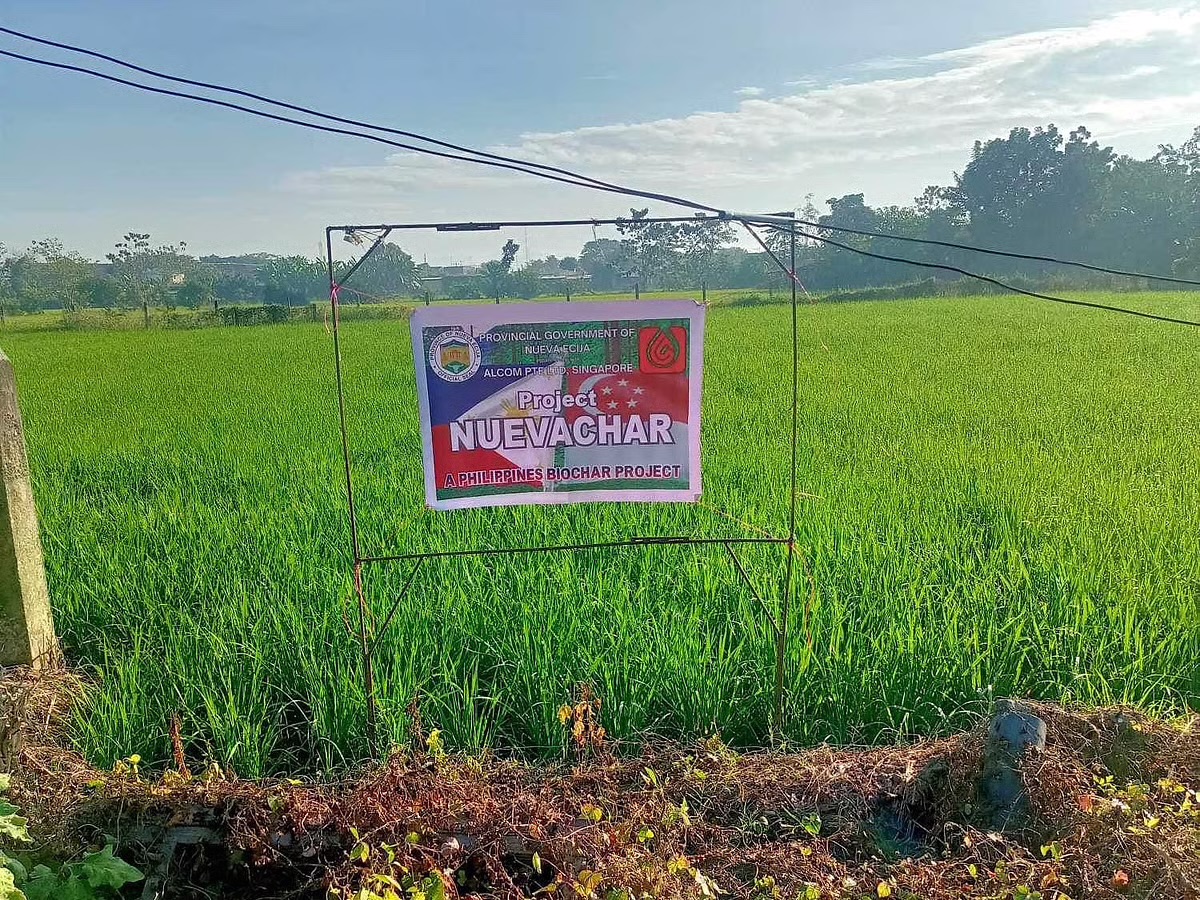
The Provincial Government of Nueva Ecija in the Philippines has made a significant stride, becoming the first local government unit (LGU) in Southeast Asia to generate income from carbon credits by implementing biocharBiochar is a carbon-rich material created from biomass decomposition in low-oxygen conditions. It has important applications in environmental remediation, soil improvement, agriculture, carbon sequestration, energy storage, and sustainable materials, promoting efficiency and reducing waste in various contexts while addressing climate change challenges. More technology.
Governor Aurelio Umali highlighted this achievement as evidence that agricultural development can coexist with environmental protection while also providing financial returns.
The initiative, dubbed the NuevaChar project, was launched during the initial phase of the COVID-19 pandemic to tackle agricultural and environmental issues in the province. The project focuses on producing biochar, a fertilizer made from rice husks that were previously either incinerated or left to decompose. The application of biochar has been shown to improve soil quality, resulting in a 20% increase in rice harvests and a 15% rise in onion yields on participating farms. Furthermore, biochar contributes to reducing air pollution through carbon sequestration.
Nueva Ecija earned P441,045 (Philippine Pesos) from Alcom Carbon Markets Philippines by selling carbon credits on the global market. A single carbon credit permits the emission of one ton of carbon dioxide or an equivalent amount of other greenhouse gases. In 2024, approximately 370 tons of biochar were distributed across 27 towns and five cities in the province, under the guidance of the Provincial Agriculture Office.
Governor Umali expressed that the success of this biochar project is not only beneficial for the province but also serves as a concrete model for the entire country. He emphasized that it exemplifies a modern governance approach that integrates nature, livelihood, and climate considerations. This initiative offers a tangible example of how biochar can be effectively implemented at a large scale, providing both environmental and economic benefits.



Leave a Reply