
Key Takeaways
- Scientists have created a highly effective cleaning material by combining wood sawdust charcoalCharcoal is a black, brittle, and porous material produced by heating wood or other organic substances in a low-oxygen environment. It is primarily used as a fuel source for cooking and heating. More with specialized mineral and organic coatings.
- This new material can trap and hold toxic metals like lead and cadmium much better than standard charcoal in both water and dirt.
- The specialized coating makes the cleaning material more stable and resistant to breaking down over long periods of time in the environment.
- By turning these toxic metals into a solid, stable form, the material prevents them from being absorbed by plants or leaking into groundwater.
- This technology provides a sustainable way to recycle wood waste into a tool that can help restore land and water contaminated by industrial activities.
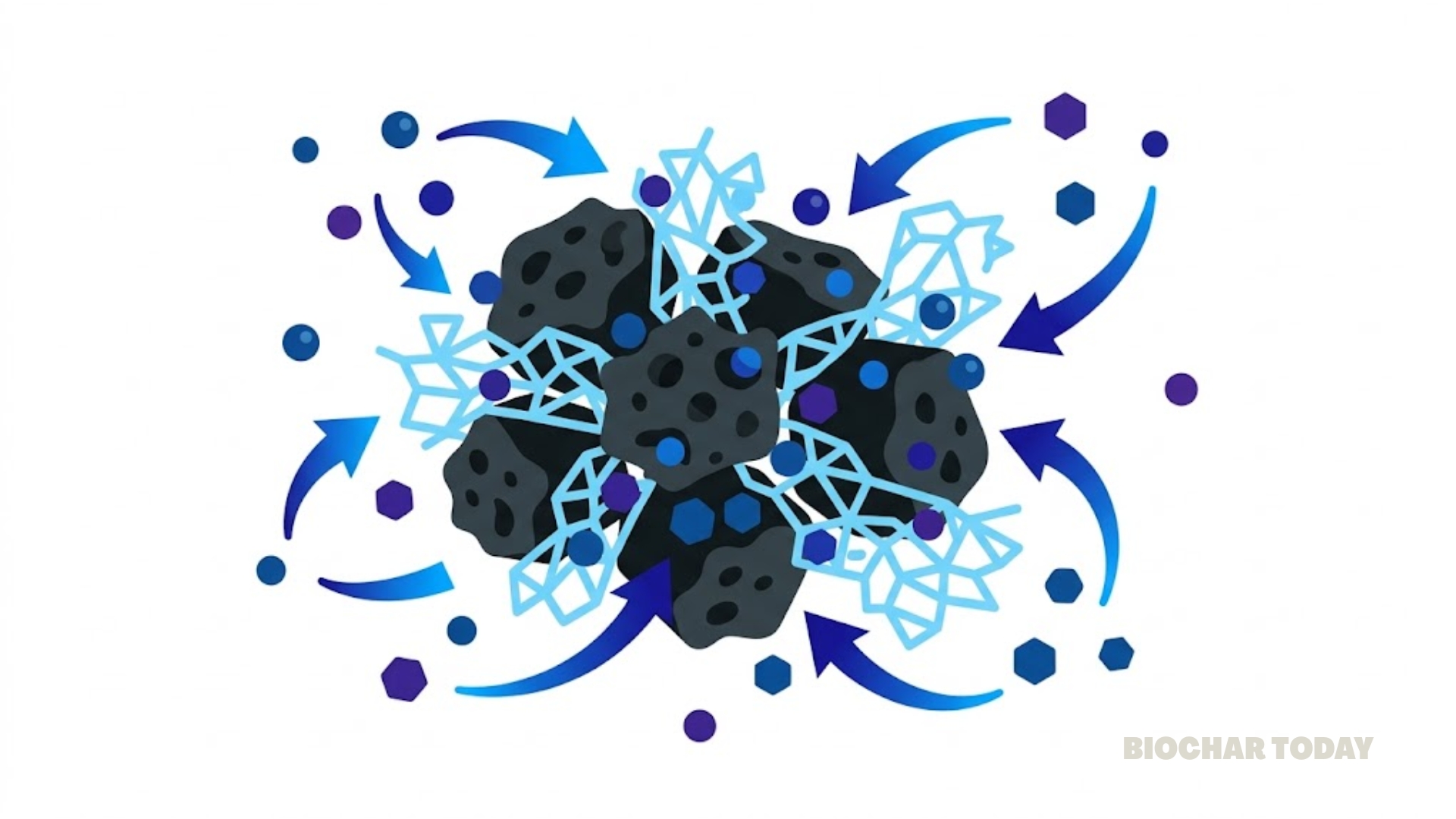
The research published in the journal BiocharBiochar is a carbon-rich material created from biomass decomposition in low-oxygen conditions. It has important applications in environmental remediation, soil improvement, agriculture, carbon sequestration, energy storage, and sustainable materials, promoting efficiency and reducing waste in various contexts while addressing climate change challenges. More by Xin Pan and an international team of scientists addresses the critical need for more effective ways to clean up toxic metal pollution in the environment. Lead and cadmium are particularly dangerous because they last a long time in the soil and can be very harmful to humans and wildlife if they enter the food chain. While standard biochar made from wood waste is already known to help trap these metals, it often lacks the strength and surface area needed to deal with high levels of pollution. To overcome these limitations, the researchers developed a two-step modification process for biochar derived from sawdust. They first coated the material with a magnesium-iron mineral layer and then treated it with an organic surfactant. This produced a specialized composite that behaves significantly differently than the original wood charcoal.
The study found that this double-modified material possesses a unique micro-nano structure that provides many more active sites for toxic metals to stick to. In water tests, the composite showed a remarkable ability to capture pollutants, outperforming both untreated sawdust biochar and biochar that had only been given the mineral coating. Specifically, the maximum capacity for lead increased to over four hundred milligrams per gram, while the capacity for cadmium reached over six hundred seventy milligrams per gram. These figures represent a massive improvement over standard materials, suggesting that this modified biochar is a superior tool for cleaning heavily contaminated industrial wastewater. The researchers discovered that the material works through several overlapping chemical processes, including forming new mineral solids and using electrostatic attraction to pull the metal ions out of the liquid.
When the material was tested in real soil, the results were equally promising. One of the biggest problems with contaminated land is that toxic metals are often in a soluble form, meaning they can easily move through the soil and be taken up by crops. The study demonstrated that adding the modified biochar changed the chemical state of lead and cadmium, shifting them from these dangerous soluble forms into a residual state that is essentially locked away. In comparison to untreated soil, the most dangerous, easily dissolved fraction of lead decreased by nearly forty percent when the new composite was used. This immobilization process is aided by the material’s high alkalinity, which helps neutralize soil acidity and creates an environment where toxic metals are much less likely to stay dissolved in water.
Stability is another area where the new composite excelled. Many environmental amendments are prone to breaking down over time, which can release the trapped pollutants back into the surroundings or cause the sequestered carbon to return to the atmosphere as greenhouse gases. The researchers put their material through rigorous aging tests to simulate how it would behave over a century in the ground. They found that the modified biochar was much more resistant to chemical oxidation and heat than the original sawdust charcoal. The content of carbon that remains stable for at least one hundred years was measured at nearly eighty percent for the new composite, a notable increase over the untreated version. This suggests that using this material not only cleans the soil but also contributes to long-term carbon storage, helping to mitigate climate change.
In conclusion, this research provides a technical roadmap for creating high-performance, carbon-negative tools for environmental restoration. By carefully modifying the surface of wood-waste charcoal, scientists have produced a material that is both a powerful filter and a stable long-term resident of the soil. While the cost of making this modified version is higher than standard charcoal, its vastly superior cleaning power and longevity make it a viable candidate for large-scale environmental projects. Future work will likely look at how this material affects soil microbes and its ability to handle other types of industrial toxins in complex, real-world ecosystems.
Source: Pan, X., Kuang, S., Wang, X., Ullah, H., Rao, Z., Ali, E. F., Abbas, Q., Lee, S. S., & Shaheen, S. M. (2025). Functionalization of sawdust biochar using Mg-Fe-LDH and sodium dodecyl sulfonate enhanced its stability and immobilization capacity for Cd and Pb in contaminated water and soil. Biochar, 7(1), 16.


![Eucalyptus Wood Waste-Derived Biochar Achieves a Ninety-Eight Percent Removal Efficiency for Benzo[ghi]perylene in Vehicle-Wash Wastewater](https://biochartoday.com/wp-content/uploads/2026/10/SCIENCE-BLOGS-2026-2026-10-19T160523.703.jpg)


Leave a Reply