
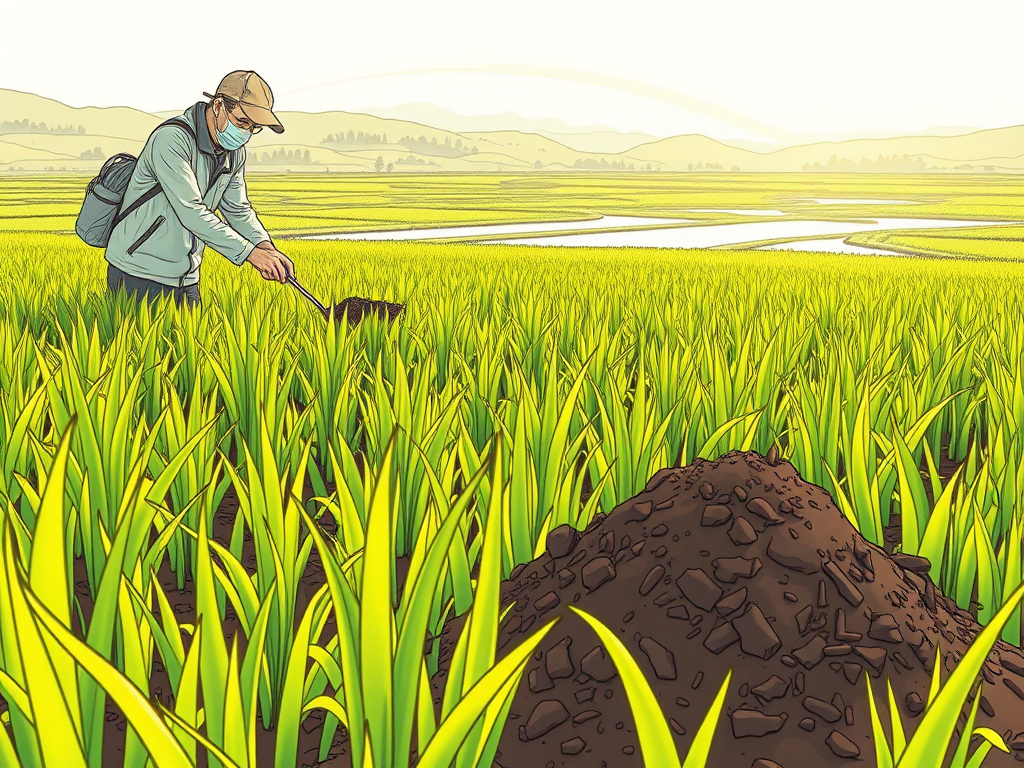
In a recent study published in Ecotoxicology and Environmental Safety, Ofori Prince Danso, Gege Wu, and their colleagues explored an innovative approach to tackling global soil cadmium (Cd) contamination, particularly in rice-growing regions. Their research focused on the combined effects of biocharBiochar is a carbon-rich material created from biomass decomposition in low-oxygen conditions. It has important applications in environmental remediation, soil improvement, agriculture, carbon sequestration, energy storage, and sustainable materials, promoting efficiency and reducing waste in various contexts while addressing climate change challenges. More (BC), foliar selenium (Se) application, and water management (WM) practices to reduce Cd uptake in rice plants, improve soil health, and minimize human health risks. This comprehensive pot experiment provides compelling evidence for a practical and cost-effective solution to a widespread environmental and food safety concern.
Cadmium is a highly soluble and toxic heavy metal that poses a significant threat to food safety, especially in rice, which tends to accumulate more Cd than other crops. This accumulation can lead to reduced crop yields and increased dietary Cd exposure in humans, with direct links to health risks. Current mitigation strategies often prove expensive or time-consuming. This study, however, demonstrates the synergistic potential of three distinct approaches.
Biochar has unique properties that make it effective in treating Cd-contaminated soils. Its porous structure, high surface area, and functional groups help adsorb Cd, reducing its leachingLeaching is the process where nutrients are dissolved and carried away from the soil by water. This can lead to nutrient depletion and environmental pollution. Biochar can help reduce leaching by improving nutrient retention in the soil. More and bioavailability in the soil, and consequently, its uptake by plants. Beyond Cd immobilization, biochar also improves soil structure, water retention, and nutrient availability, promoting better plant growth and productivity. The study found that biochar application significantly increased soil pHpH is a measure of how acidic or alkaline a substance is. A pH of 7 is neutral, while lower pH values indicate acidity and higher values indicate alkalinity. Biochars are normally alkaline and can influence soil pH, often increasing it, which can be beneficial More, acting as a liming agent and further enhancing Cd adsorption.
Selenium, while its necessity in plants is still debated, plays a crucial role in mitigating Cd toxicity. It achieves this by enhancing photosynthesis, forming Cd-Se complexes, accumulating Cd in cell walls, and regulating transporter genes. Foliar application of selenium, where it’s sprayed directly onto leaves, is preferred for its efficiency and minimal environmental impact. The researchers observed that selenium significantly improved rice yield and biomassBiomass is a complex biological organic or non-organic solid product derived from living or recently living organism and available naturally. Various types of wastes such as animal manure, waste paper, sludge and many industrial wastes are also treated as biomass because like natural biomass these More production, likely due to reduced oxidative stress and enhanced photosynthetic rates.
Water management, particularly continuous flooding, is another critical factor in controlling Cd absorption in rice. Flooding elevates soil pH and lowers redox potential, which in turn reduces Cd absorption by promoting its binding to soil particles. This study confirmed that continuous flooding significantly reduced Cd uptake and increased SPAD values, an indicator of chlorophyll content and photosynthetic health.
The most striking findings emerged from the interactive effects of these three elements. The combination of 1% biochar, 0.50 mM foliar selenium, and continuous flooding (B2S3W2) proved exceptionally effective. This specific interaction led to a remarkable 95.32% reduction in grain Cd content compared to the control group (B1S1W1), bringing the levels below the permissible limit of 0.2 mg/kg set by Chinese authorities. Furthermore, this B2S3W2 interaction significantly enhanced soil microbial diversity, increasing bacterial ACE, Chaol, and Shannon indices, as well as fungal ACE and Chaol indices. This suggests that the combined treatment fostered a healthier soil ecosystem, which further contributes to mitigating Cd contamination and improving soil health.
Beyond reducing Cd in rice, the integrated approach also had a profound impact on human health risk. The B2S3W2 interaction resulted in the lowest daily intake (DI) and health risk index (HRI) of Cd (8.10E-06 and 0.008, respectively), compared to the highest values observed in the control group (1.66E-04 and 0.166). This highlights the significant potential of this combined strategy to ensure safer rice consumption and minimize associated health consequences.
While the study was conducted in a pot experiment, its findings offer a promising pathway for sustainable agriculture and food safety in Cd-contaminated regions. Future research involving multi-season field trials across diverse environments will be crucial to further validate and strengthen the applicability of these results. This integrated approach of biochar, foliar selenium, and water management represents a powerful tool in our efforts to produce safer food and protect human health from the pervasive threat of cadmium contamination.
Source: Danso, O. P., Wu, G., Wang, Z., Zhang, Z., Niu, S., Asamoah, E. O., Peng, Z., Muhammad, R. F., Song, J., Yin, X., & Zhu, R. (2025). Interactive impact of biochar, selenium and water management on rice plants and soil microbial diversity in a cadmium-contaminated soil and assessment of health risk. Ecotoxicology and Environmental Safety, 300, 118386.


![Eucalyptus Wood Waste-Derived Biochar Achieves a Ninety-Eight Percent Removal Efficiency for Benzo[ghi]perylene in Vehicle-Wash Wastewater](https://biochartoday.com/wp-content/uploads/2026/10/SCIENCE-BLOGS-2026-2026-10-19T160523.703.jpg)


Leave a Reply