
Key Takeaways
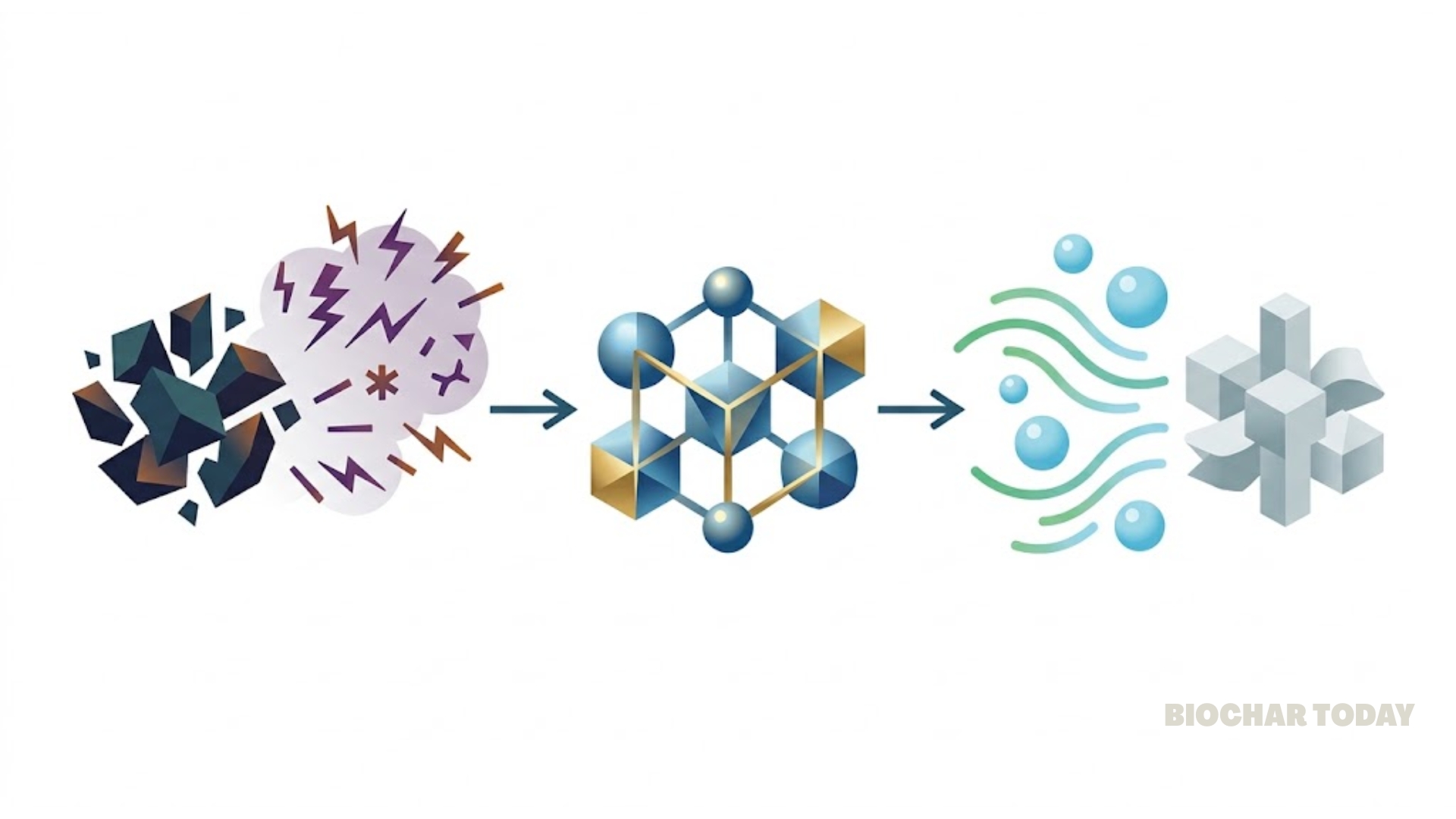
- Incorporating active mineral components during biomassBiomass is a complex biological organic or non-organic solid product derived from living or recently living organism and available naturally. Various types of wastes such as animal manure, waste paper, sludge and many industrial wastes are also treated as biomass because like natural biomass these More processing forms structured organo-mineral complexes that prevent the release of native carbon back into the atmosphere.
- Coating carbon matrices with iron, aluminum, or calcium minerals shields the material from natural environmental breakdown and oxidation over multiple years.
- Mixing iron-containing metal salts into plant residues triggers chemical bonding that changes the final layout of vital absorbing pore networks.
- Adding specific metal oxides lowers the overall breakdown energy required for production by 15% to 20% while locking down up to 82% of toxic field contaminants.
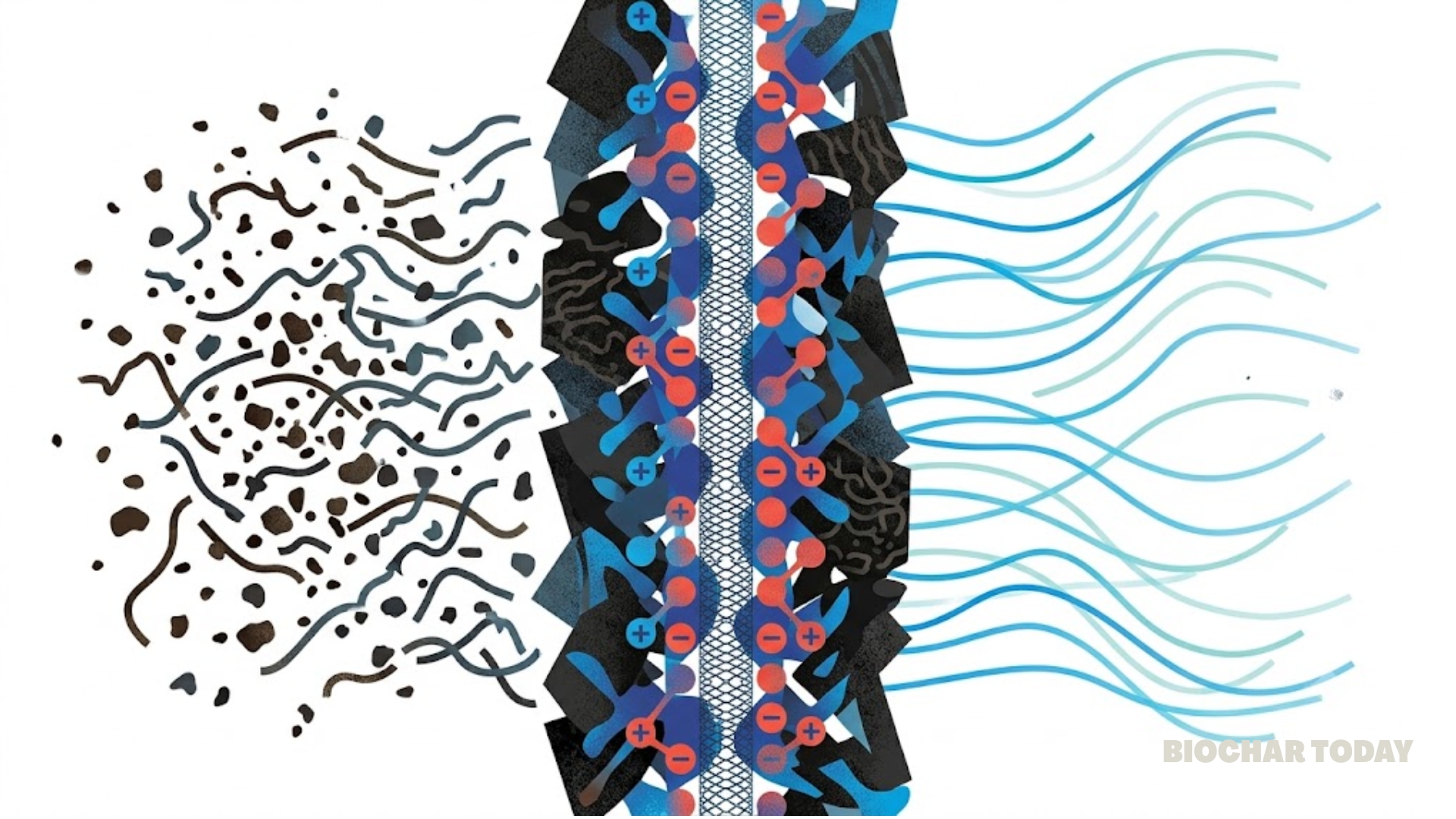
- Tailoring composite surface charges allows these engineered materials to simultaneously catch toxic heavy metals and remove organic pollutants from municipal wastewater streams.
As documented in the scientific review journal BiocharBiochar is a carbon-rich material created from biomass decomposition in low-oxygen conditions. It has important applications in environmental remediation, soil improvement, agriculture, carbon sequestration, energy storage, and sustainable materials, promoting efficiency and reducing waste in various contexts while addressing climate change challenges. More, authors Liuwei Wang, Jiale Yang, Xuanru Li, Liping Zhang, Lukas Van Zwieten, Ondřej Mašek, Stephen Joseph, Kaikai Zhang, and Kefu Yu evaluated the structural changes, processing pathways, and practical limitations of engineered biochar-mineral composites. Pristine carbonaceous materials frequently lack the specific surface characteristics or physical durability required to successfully handle complex environmental remediation tasks on their own. To bypass these baseline limitations, modern engineering strategies emphasize the direct combination of raw biomass feedstocks with mineral additives—such as clay minerals, non-clay silicates, iron oxides, and carbonates—to construct smart, multi-functional organo-mineral complexes. By tracing historical archeological indicators alongside modern laboratory data, the team outlined how these combined material systems significantly change elemental layouts and carbon storage windows.
The primary discovery details how the deliberate integration of active mineral components alters the core chemistry, density, and operational performance of the resulting composite materials compared to unmodified carbon. Quantitative analysis across multiple mineral groups established that these structural combinations trigger a large bulk increase in total ashAsh is the non-combustible inorganic residue that remains after organic matter, like wood or biomass, is completely burned. It consists mainly of minerals and is different from biochar, which is produced through incomplete combustion. Ash Ash is the residue that remains after the complete More content along with an expansion of surface atomic oxygen and hydrogen ratios. This chemical shift enhances the overall hydrophilicity and surface polarity of the engineered material, making it far more reactive when interacting with distant liquids. Crucially, the researchers noted that while mineral additions alter the bulk properties of the composite, the internal carbon fragments derived from the biomass undergo a separate optimization phase, generating highly condensed aromatic networks that resist structural decay.
The research highlighted a profound catalytic mechanism that occurs when processing biomass alongside mineral components such as iron or aluminum oxides. During high-temperature co-pyrolysis, these active metal oxides step in as structural catalysts that fundamentally change how the raw organic bonds break apart. This chemical intervention actively lowers the thermal activation energy required to break down dense plant cellulose by 15% to 20%. The mineral surfaces accomplish this efficiency gain by guiding unstable intermediate free radicals along safer pathways, which simultaneously traps oxygen-containing gases and limits the formation of toxic polycyclic aromatic hydrocarbons. Consequently, the process preserves more solid material while maximizing the structural stability of the underlying carbon matrix.
The physical pore networks of the composites display distinct structural variations depending entirely on the specific class of mineral introduced during the fabrication phase. Statistical tracking indicated that 60.9% of engineered blends experienced a noticeable increase in specific surface area, while 67.3% achieved higher total pore volumes. Silicate additives generally drive an upgrade in both surface area and average pore diameter by promoting the early loss of volatile compounds. In contrast, iron oxides or iron salts tend to decrease average pore diameters due to fine particles lodging within internal pathways or blocking open mesopores. Despite these occasional pore-blocking events, the localized structural changes remain highly favorable for environmental remediation because the mineral surfaces introduce new metallic and chemical binding nodes across the composite.
Real-world field and pilot trials detailed in the manuscript confirm that these engineered organo-mineral systems translate into highly efficient solutions across diverse ecosystems. When deployed in agricultural field trials, manganese-modified sawdust composites applied at a rate of 2.6 tons per hectare successfully lowered toxic cadmium accumulation in crop grains by 78% to 82% due to direct cellular transport competition. Furthermore, iron-oxide-loaded carbon blends applied at rates up to 3 tons per hectare sustained the simultaneous capture of both arsenic and cadmium over a multi-year testing window. When transitioned into non-soil wastewater filters and stormwater infrastructure, these mineralized composites alter surface electrical charges to trap persistent nutrients, antibiotics, and heavy metals through precipitation and inner-sphere chemical binding. Ultimately, balancing mineral selection with exact processing temperatures provides a clear commercial path toward scalable, low-footprint remediation materials.
Source: Wang, L., Yang, J., Li, X., Zhang, L., Van Zwieten, L., Mašek, O., Joseph, S., Zhang, K., & Yu, K. (2026). Engineered biochar composite with minerals: organo-mineral interactions, physicochemical changes, and implications for practical application. Biochar, 8(1), 53.




Leave a Reply