
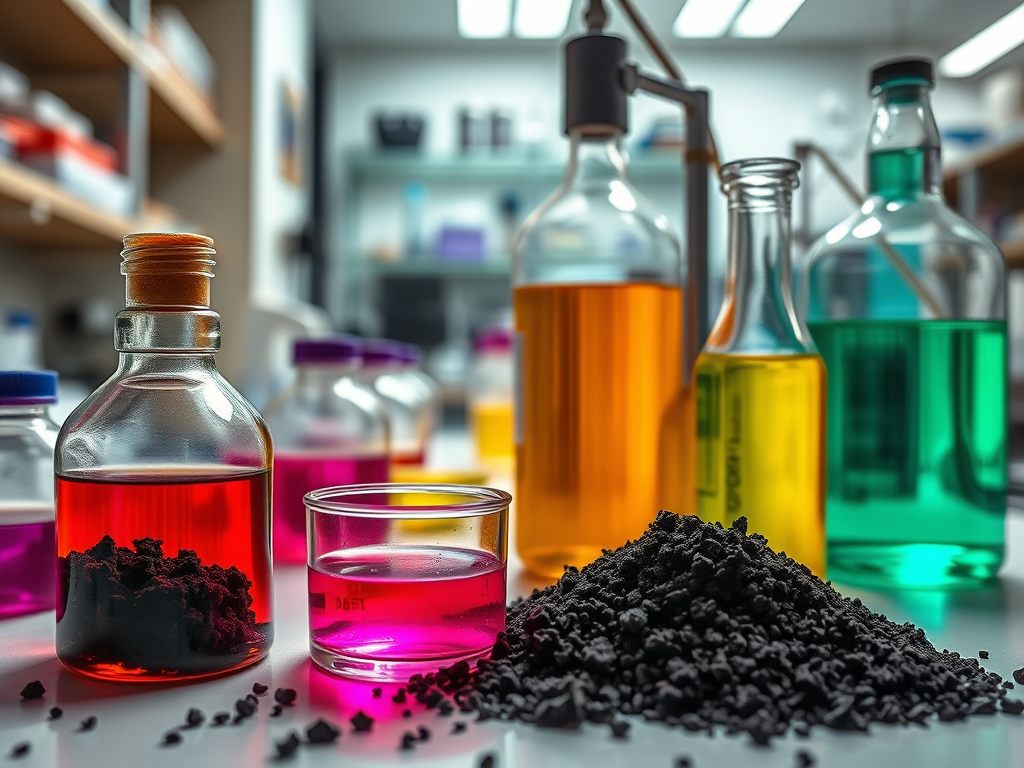
Nguyen et al., published a study in RSC Advances that explores the use of magnetic biocharBiochar is a carbon-rich material created from biomass decomposition in low-oxygen conditions. It has important applications in environmental remediation, soil improvement, agriculture, carbon sequestration, energy storage, and sustainable materials, promoting efficiency and reducing waste in various contexts while addressing climate change challenges. More, derived from rubber seed shells, to remove Rhodamine B (RhB) from wastewater using Fenton-like and electro-Fenton processes. The research demonstrates the potential of this cost-effective and sustainable material to address dye contamination from industrial effluents.
The textile industry, while economically significant, generates substantial wastewater containing pollutants like Rhodamine B, which poses environmental and health risks. Traditional wastewater treatment methods often fall short, necessitating more innovative and efficient solutions.
This study employed rubber seed shells, an abundant agricultural residue in Vietnam, to synthesize magnetic biochar. The biochar was modified with iron oxides and used as a catalyst in Fenton-like and electro-Fenton processes to degrade RhB. Under optimized conditions, the magnetic biochar achieved a RhB degradation efficiency of 91.67%.
This research highlights the potential of magnetic biochar from rubber seed shells as a stable, reusable, and efficient material for advanced oxidation processes in wastewater treatment.
SOURCE: Nguyen, M. L., Nguyen, T. T., & Ngo, H. L. (2025). Efficient Rhodamine B degradation via Fenton-like and E-Fenton processes using magnetic biochar from rubber seed shells. RSC Advances, 15, 11327-11336.



Leave a Reply