
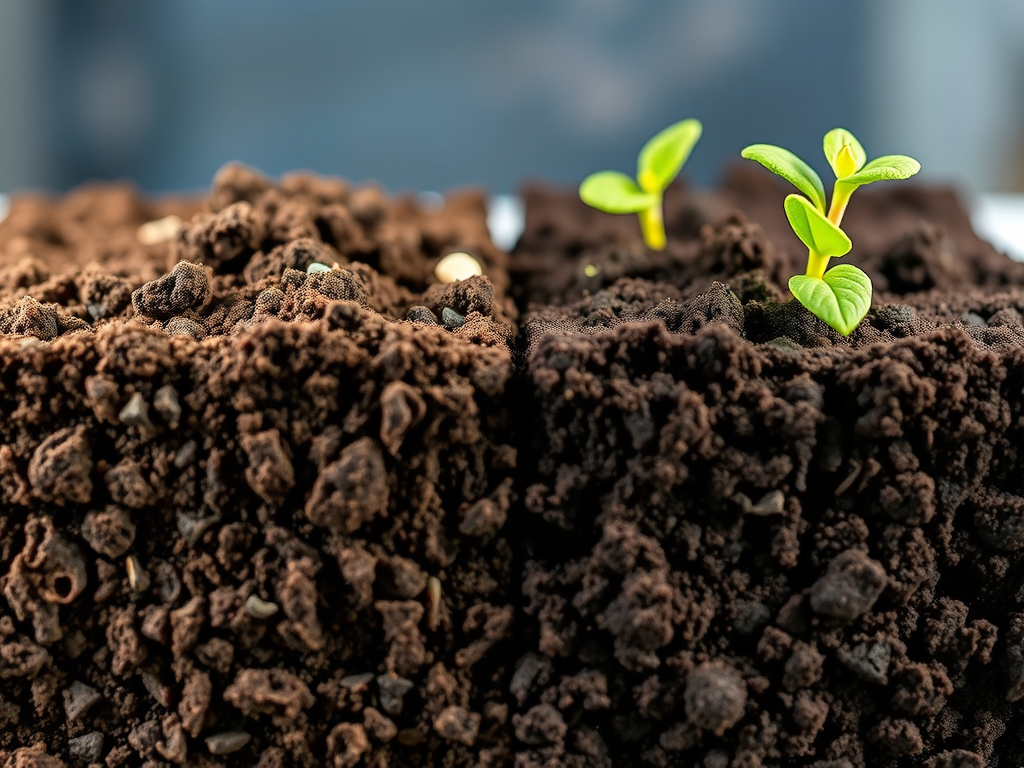
In a recent study published in the journal Environmental Sciences Europe, authors Muhammad Numan Khan, Jing Huang, and their colleagues explore a critical challenge in agriculture: the efficient and sustainable use of phosphorus. While phosphorus is a vital macronutrient for crop growth, a significant portion of it in soil remains in forms that plants cannot easily access. This often leads to over-application of synthetic fertilizers, which can cause environmental issues like water pollution. The researchers investigated a promising solution using modified biochar—a carbon-rich material made from agricultural waste. Their work examined how both non-modified and magnesium-modified wheat straw biocharBiochar is a carbon-rich material created from biomass decomposition in low-oxygen conditions. It has important applications in environmental remediation, soil improvement, agriculture, carbon sequestration, energy storage, and sustainable materials, promoting efficiency and reducing waste in various contexts while addressing climate change challenges. More affect phosphorus availabilityPhosphorus is another essential nutrient for plant growth, but it can sometimes be locked up in the soil and unavailable to plants. Biochar can help release phosphorus from the soil and make it more accessible to plants, reducing the need for chemical fertilizers. More, soil characteristics, and microbial activity in two distinct soil types, one of which was acidic.
Biochar is a popular soil amendmentA soil amendment is any material added to the soil to enhance its physical or chemical properties, improving its suitability for plant growth. Biochar is considered a soil amendment as it can improve soil structure, water retention, nutrient availability, and microbial activity. More due to its porous structure and high carbon content. It has been shown to improve soil pHpH is a measure of how acidic or alkaline a substance is. A pH of 7 is neutral, while lower pH values indicate acidity and higher values indicate alkalinity. Biochars are normally alkaline and can influence soil pH, often increasing it, which can be beneficial More, water retention, and carbon sequestration. However, pristine biochar often has a negatively charged surface, which can repel phosphate anions and limit its effectiveness. To overcome this, the study’s authors created a magnesium-modified biochar (Mg-WBC) by doping wheat straw with a magnesium chloride solution before pyrolysisPyrolysis is a thermochemical process that converts waste biomass into bio-char, bio-oil, and pyro-gas. It offers significant advantages in waste valorization, turning low-value materials into economically valuable resources. Its versatility allows for tailored products based on operational conditions, presenting itself as a cost-effective and efficient More. This process creates a positively charged surface on the biochar, allowing it to form “bridges” that can effectively adsorb and store phosphorus. The researchers tested both the non-modified biochar (WBC) and the magnesium-modified version at two doses, 1% and 2.5%, in Qiyang red soil (an acidic soil) and Harbin black soil.
The results of the study demonstrated that both types of biochar were effective, but the magnesium-modified version offered a superior advantage. The most significant finding was the impact on phosphorus fractionation, a process that categorizes phosphorus into different forms based on its availability to plants. Both WBC and Mg-WBC amendments significantly increased the concentration of labile-P, the most bioavailable form of phosphorus. In the acidic Qiyang soil, labile-P increased by an impressive 28% to 77%. The Harbin black soil also saw a significant increase, ranging from 15% to 47%. Conversely, the concentration of nonlabile-P—the least available form—decreased by 27% to 38% in Qiyang soil and 15% to 35% in Harbin soil. This transformation of nonlabile-P into more accessible forms is a major benefit for plant nutrition and soil health. The results suggest that magnesium modification is an effective strategy for enhancing P-availability in both soil types, with a particularly strong effect on the acidic Qiyang soil.
Beyond phosphorus, the biochar amendments improved a range of other crucial soil properties. The available phosphorus (AP) concentration in the Qiyang soil, for example, increased by 63% with the 1% WBC dose and a remarkable 229% with the 2.5% Mg-WBC dose. Similarly, in the Harbin soil, the AP concentration increased by 56% and 147% for the same respective doses. The study also found that the addition of biochar, especially at the higher 2.5% rate, significantly boosted soil microbial biomassBiomass is a complex biological organic or non-organic solid product derived from living or recently living organism and available naturally. Various types of wastes such as animal manure, waste paper, sludge and many industrial wastes are also treated as biomass because like natural biomass these More. Both microbial biomass carbon and microbial biomass phosphorus showed substantial increases in both soil types. This is a key indicator of a healthy, functioning soil ecosystem. Enzymatic activities, such as alkaline phosphatase and catalase, which are vital for nutrient cycling, also showed significant enhancements. These findings underscore the broad-spectrum benefits of using biochar as a soil amendment.
The research provides a compelling case for using magnesium-modified biochar as a strategy to enhance soil fertility and sustainable agriculture. By effectively converting unavailable phosphorus into a plant-accessible form and improving the soil’s overall biological health, this method offers a way to reduce reliance on conventional fertilizers. The study’s clear quantitative results and analysis of different soil conditions provide specific recommendations for farmers and land managers. For instance, the authors note that the 2.5% dose of Mg-WBC was particularly effective, especially in acidic soils, for improving P-availability. This research not only offers a practical and low-cost solution for enhancing soil fertility but also highlights the potential of repurposing agricultural waste into a valuable resource. It provides a clear path forward for developing more sustainable and productive agricultural systems in the future.
Source: Khan, M. N., Huang, J., Shah, A., Xiaoyu, H., Han, T., Núñez-Delgado, A., Hayatu, N. G., Ahmed, I., Liu, W., Singh, A. K., Zhu, X., & Zhang, H. (2025). Impact of modified biochar on phosphorus fractionation and biochemical properties for different soils. Environmental Sciences Europe, 37(80).





Leave a Reply