
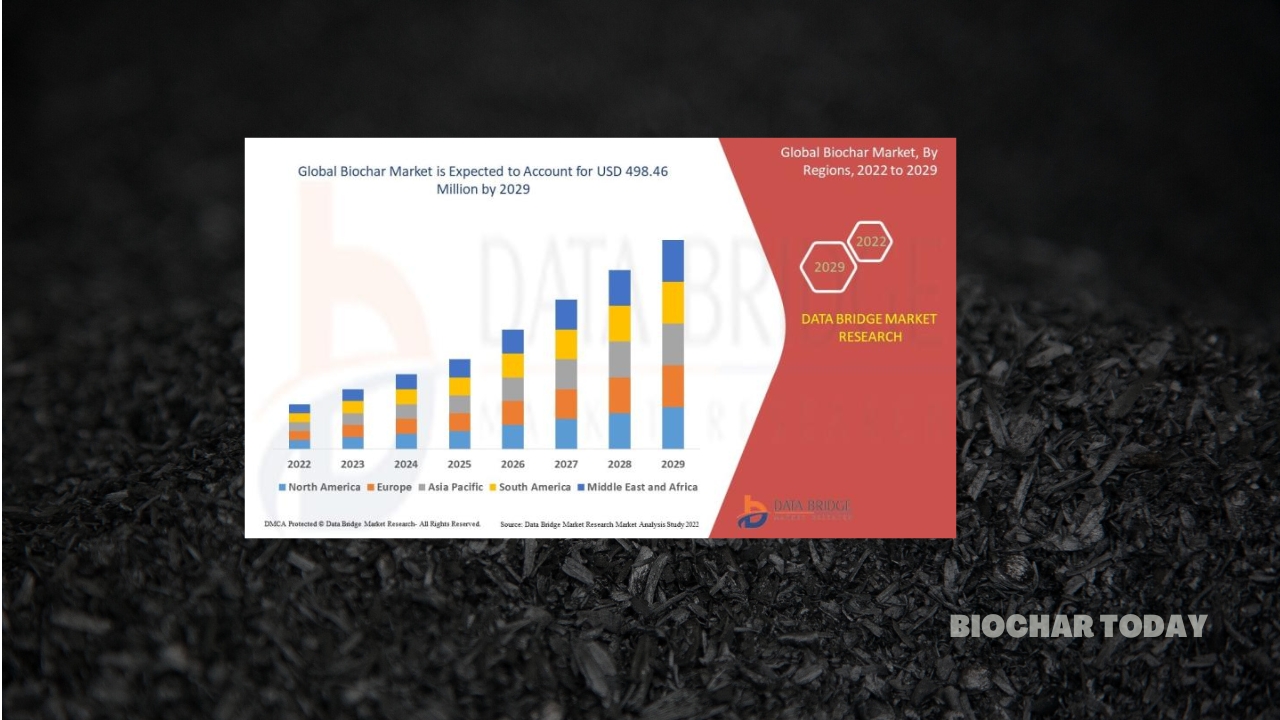
A recent analysis by Data Bridge Market Research indicates that the global biochar market is entering a period of significant expansion, with projections suggesting a valuation of USD 3.79 billion by 2032. This represents a compound annual growth rate (CAGR) of 23.2% from a 2026 baseline of USD 1.11 billion. The report highlights that North America currently maintains the largest market share, approximately 36% to 38%, while the Asia Pacific region is identified as the fastest-growing geographical segment.
The industry faces several systemic hurdles that could impede this projected trajectory. High capital expenditures required for pyrolysisPyrolysis is a thermochemical process that converts waste biomass into bio-char, bio-oil, and pyro-gas. It offers significant advantages in waste valorization, turning low-value materials into economically valuable resources. Its versatility allows for tailored products based on operational conditions, presenting itself as a cost-effective and efficient More infrastructure and significant operational costs remain primary restraints, particularly for small-scale operators in developing nations. Additionally, a lack of standardized quality control parameters creates performance variability, which can diminish consumer confidence. These economic and regulatory challenges are further compounded by limited awareness of biocharBiochar is a carbon-rich material created from biomass decomposition in low-oxygen conditions. It has important applications in environmental remediation, soil improvement, agriculture, carbon sequestration, energy storage, and sustainable materials, promoting efficiency and reducing waste in various contexts while addressing climate change challenges. More applications in specific regional markets and competition from established, lower-cost soil amendments.
To mitigate these challenges, the industry is shifting toward technological innovation and strategic financial integration. Manufacturers such as Cool Planet Technologies and Biochar Solutions Inc. are investing in advanced pyrolysis and gasificationGasification is a high-temperature, thermochemical process that converts carbon-based materials into a gaseous fuel called syngas and solid by-products. It takes place in an oxygen-deficient environment at temperatures typically above 750°C. Unlike combustion, which fully burns material to produce heat and carbon dioxide (CO2), gasification More systems to improve production efficiency and reduce unit costs. Furthermore, the integration of biochar into carbon credit markets provides a critical secondary revenue stream, enhancing the commercial viability of projects. Public-private partnerships and government incentives, particularly in the United States and Europe, are also being utilized to provide the necessary regulatory and financial frameworks to support large-scale adoption.
The successful implementation of these solutions is expected to yield transformative environmental and economic outcomes. By 2032, the widespread adoption of biochar in agriculture is projected to significantly improve soil fertility and crop yields across the Asia Pacific and North American regions. Beyond agricultural benefits, the expansion of the market facilitates large-scale carbon sequestration, contributing to global climate mitigation goals. The diversification of biochar into industrial sectors, including water treatment and construction materials, indicates a maturing industry that supports circular economy principles and sustainable waste management.




Leave a Reply