
Key Takeaways
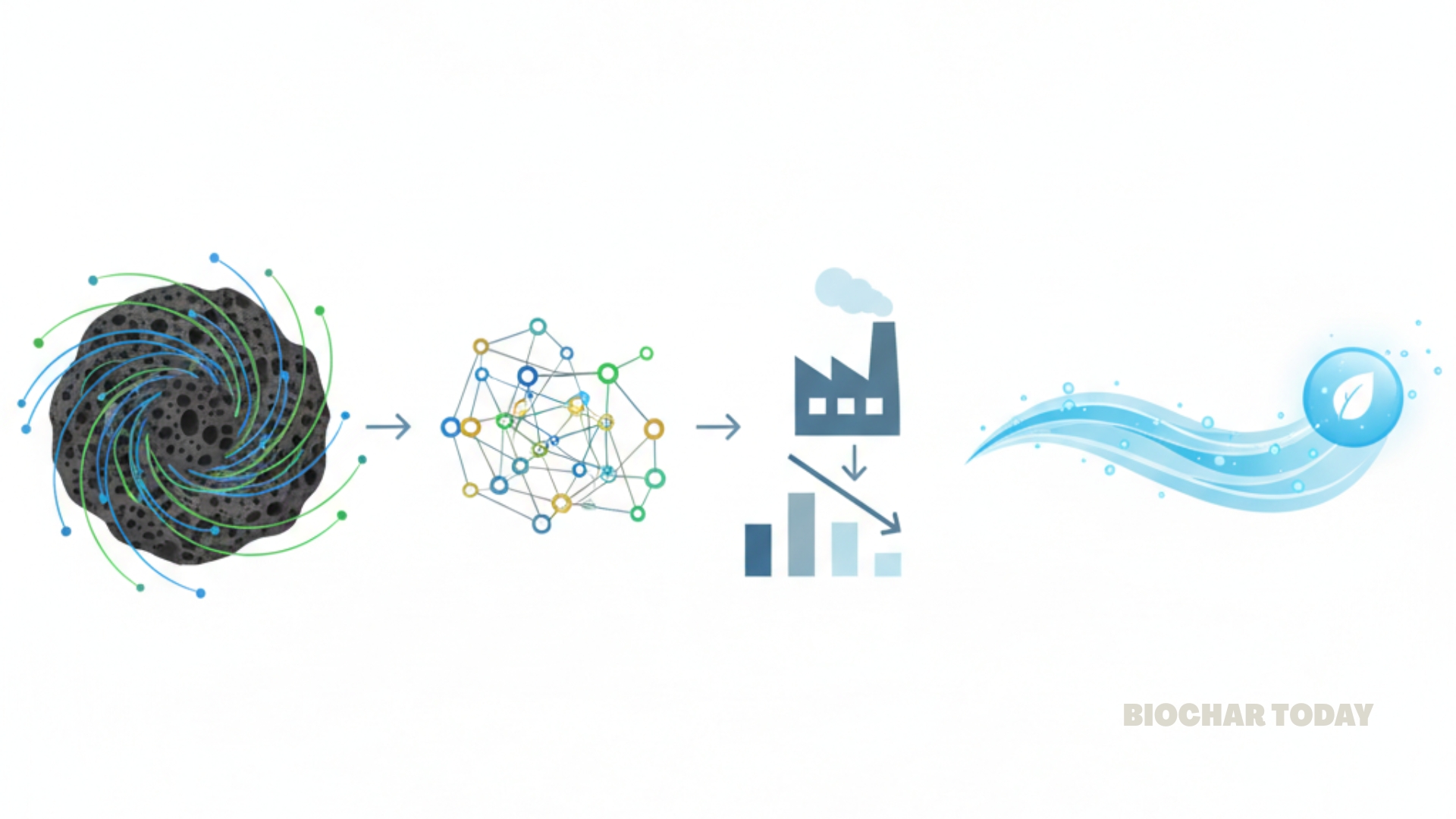
- Artificial intelligence can accurately predict how well new materials will clean polluted lake water.
- Adding common metals like iron and calcium to rare-earth materials makes them much cheaper to produce.
- New composite materials can remove almost all phosphorus from water, reaching levels safe for drinking.
- Custom-designed materials can save millions of dollars in large-scale environmental cleanup projects.
- Targeted cleanup strategies can now be tailored to the specific chemical needs of different lakes worldwide.
The researchers published their findings in the journal BiocharBiochar is a carbon-rich material created from biomass decomposition in low-oxygen conditions. It has important applications in environmental remediation, soil improvement, agriculture, carbon sequestration, energy storage, and sustainable materials, promoting efficiency and reducing waste in various contexts while addressing climate change challenges. More, led by author Weilin Fu and a specialized team of environmental scientists. Their work addresses the global crisis of water eutrophication, a process where excessive nutrients like phosphorus trigger massive algal blooms that kill fish and ruin drinking water sources. While a rare-earth element called lanthanum is incredibly effective at trapping phosphorus, its high price has prevented widespread use in large lakes. By using advanced computer modeling, the team sought to find the perfect recipe for a composite material that works just as well as pure lanthanum but costs a fraction of the price.
The study employed eight different machine learning models to analyze data from the past two decades of water treatment research. The results showed that specific computer models, known as tree-based ensemble learning, were the most accurate at predicting how different material designs would perform in the real world. These models reached a near-perfect accuracy score, allowing the scientists to skip thousands of expensive and time-consuming laboratory experiments. Instead, the computer identified that the most important factors for cleaning water were the initial concentration of the pollution and the specific amount of metal loaded onto the biochar surface.
By testing the computer’s recommendations, the team developed several new types of composite biochar. These materials combined small amounts of lanthanum with much cheaper elements like iron and calcium. The computer-aided design led to the creation of three standout materials: one using iron and two using calcium. When tested against standard lanthanum-modified biochar, these new composites proved to be significantly more economical. Specifically, the iron-based version reduced costs by 59.25 percent, while the two calcium-based versions cut expenses by 55.10 percent and 76.54 percent. Despite these lower costs, the materials remained powerful enough to reduce phosphorus levels to less than 0.02 milligrams per liter, meeting the strictest international standards for high-quality surface water.
To demonstrate the practical impact of these findings, the researchers simulated how their new materials would work in famous polluted lakes across the globe. They looked at sites like Taihu Lake in China, Lake Victoria in Kenya, and Lake Okeechobee in the United States. Each of these lakes has a different chemical makeup and level of pollution, meaning a “one size fits all” approach usually fails. The machine learning models allowed the team to propose targeted remediation strategies for each location. For example, they found that the calcium-based composite was the best choice for treating the high-pollution waters of Bellandur Lake in India, where it could save nearly half of the projected cleanup budget. In contrast, the iron-based composite was found to be the most efficient choice for lakes with slightly more acidic water.
The implications of this research extend far beyond the laboratory. By breaking the traditional trade-off between high performance and high cost, the study makes large-scale environmental restoration financially feasible for governments and environmental agencies. The ability to reclaim phosphorus from these materials also opens up new possibilities for creating a circular economy, where the trapped nutrients can eventually be recycled into slow-release fertilizers for agriculture. This approach not only cleans the water but also helps preserve a vital natural resource. Overall, the integration of artificial intelligence into material science provides a robust technical roadmap for controlling water pollution and protecting the health of aquatic ecosystems worldwide.
Source: Fu, W., Yao, X., Zhang, X., Lv, S., Yuan, T., An, Y., & Wang, F. (2026). Machine learning-aided design of La-based composite modified biochar: Efficient materials and cost optimization for low-phosphorus water treatment. Biochar, 8(19).




Leave a Reply