
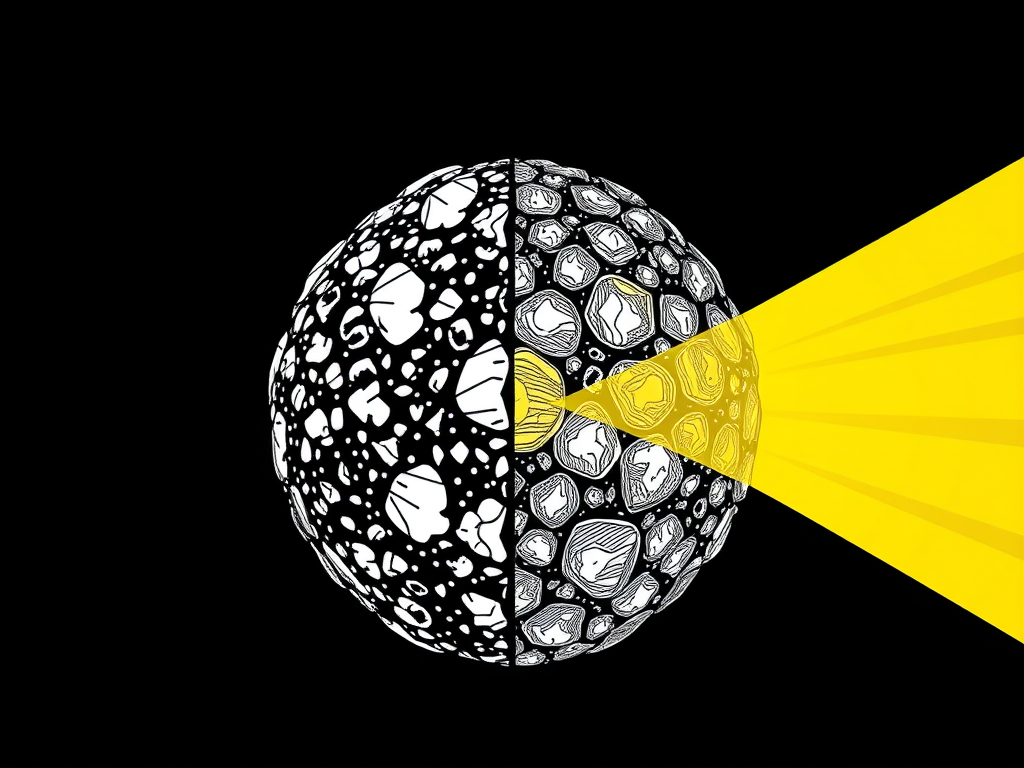
Accurate measurement of radiation doses is critical in various fields, especially medical radiotherapy. Traditional dosimeters, however, are often costly and not always readily available. A recent study by Umme Muslima and her co-authors, published in the Journal of Radiation Research and Applied Sciences, explores the potential of a low-cost, sustainable alternative: coconut shell biocharBiochar is a carbon-rich material created from biomass decomposition in low-oxygen conditions. It has important applications in environmental remediation, soil improvement, agriculture, carbon sequestration, energy storage, and sustainable materials, promoting efficiency and reducing waste in various contexts while addressing climate change challenges. More. Their research focuses on understanding the structural and defect-related changes in biochar when exposed to electron irradiation, a key step in evaluating its suitability for passive radiation dosimetry.
The study employed a range of advanced characterization techniques to analyze the biochar after it was irradiated with electron doses between 2 and 20 Gy. Using Scanning Electron Microscopy (SEM), the researchers observed significant morphological changes. As the radiation dose increased, the biochar’s particles became smaller, decreasing from an average of 70.0±0.46μm at 4 Gy to 58.0±0.47μm at 20 Gy. This reduction in particle size is attributed to radiation-induced damage that disrupts atomic bonds and causes fragmentation. The SEM images also showed increased porosityPorosity of biochar is a key factor in its effectiveness as a soil amendment and its ability to retain water and nutrients. Biochar’s porosity is influenced by feedstock type and pyrolysis temperature, and it plays a crucial role in microbial activity and overall soil health. Biochar More with higher doses, a result of radiation-induced defects and localized material disintegration within the carbon matrix.
Raman spectroscopy was used to probe the biochar’s defect states and structural modifications. The intensity ratio of the D and G bands (ID/IG), a key indicator of defect density in carbon-based materials, was measured across different doses. The study found an inverse relationship between the ID/IG ratio and the crystallite size (La), confirming that higher defect density is associated with smaller crystallites. Interestingly, the ID/IG ratio exhibited a cyclical pattern, with a peak at 15 Gy, suggesting a competition between defect creation and an internal self-annealing process. This phenomenon, previously observed in graphite-based materials, highlights the biochar’s self-healing capacity, which allows it to absorb damage.
Photoluminescence (PL) spectroscopy provided further insights into the biochar’s electronic structure. The non-irradiated biochar samples exhibited a wide band gap of 4.63±0.01 eV, which is a crucial finding for dosimetry. A wide band gap is beneficial because it facilitates the creation of deep, stable trapping centers for charge carriers, which enhances the signal’s retention and thermal resistance after irradiation. This broad band gap is higher than that of traditional dosimetric materials like LiF:Mg,Ti, which has a band gap of approximately 3.3 eV, suggesting that biochar could offer superior signal stability and reliability for long-term storage. The PL peak intensity and area also showed an oscillatory pattern with increasing doses, consistent with the defect creation and annealing cycles observed in the Raman analysis.
Finally, X-ray diffraction (XRD) analysis confirmed these structural changes at the crystalline level. The study found that the crystallite size generally decreased with increasing radiation dose, while the defect density increased. This supports the Raman spectroscopy findings and underscores the dose-dependent structural modifications. The XRD results also confirmed the biochar’s amorphous-like carbon structure.
In conclusion, the collective findings from SEM, Raman spectroscopy, PL, and XRD techniques provide strong evidence that low-cost biochar undergoes dose-dependent structural changes when exposed to electron radiation. These changes—including increased porosity, reduced particle size, and a cyclical pattern of defect creation and annealing—make it a promising candidate for passive radiation dosimetry applications. The material’s carbon-rich structure, high sensitivity to defect evolution, and a large band gap of 4.63±0.01 eV for stable charge storage offer significant advantages over conventional inorganic dosimeters. While future work is needed to validate its thermoluminescent response and long-term stability, this study establishes biochar as a viable, affordable, and sustainable alternative for radiation sensing in medical settings.
Source: Muslima, U., Khandaker, M. U., Nawi, S. N. M., Rahat, M. R., Lam, S. E., Wood, H. J., Ung, N. M., Almuqbil, N., Hamd, Z. Y., & Yeo, C. I. (2025). Structural and defects analysis of electron irradiated low-cost biochar for dosimetry application. Journal of Radiation Research and Applied Sciences, 18, 101830.



Leave a Reply