

Key Takeaways
- Researchers created a high-energy storage device using carbon made from sustainable wood waste.
- A specialized liquid component allows the device to operate at much higher voltages than standard store-bought capacitors.
- The device loses its stored power much more slowly than previous versions when not in use.
- This new technology can hold more than twice the amount of energy compared to traditional commercial capacitors.
- The battery-like device maintains most of its original storage capacity even after being charged and used ten thousand times.
In a report published in the journal Carbon Research, lead author Shichao Zhang and a team of researchers detail a breakthrough in energy storage technology that could significantly improve how we power everything from electronics to industrial machinery. Standard electrochemical capacitors, often called supercapacitors, are known for their ability to charge and discharge rapidly, but they have historically been limited by how much energy they can hold. Most commercial versions operate at relatively low voltages, which keeps their energy density much lower than that of lithium-ion batteries. Furthermore, these devices often suffer from self-discharge, where they lose their stored energy quickly when left sitting. The research team addressed these fundamental flaws by redesigning both the solid electrode and the liquid electrolyte to work together in a more efficient way.
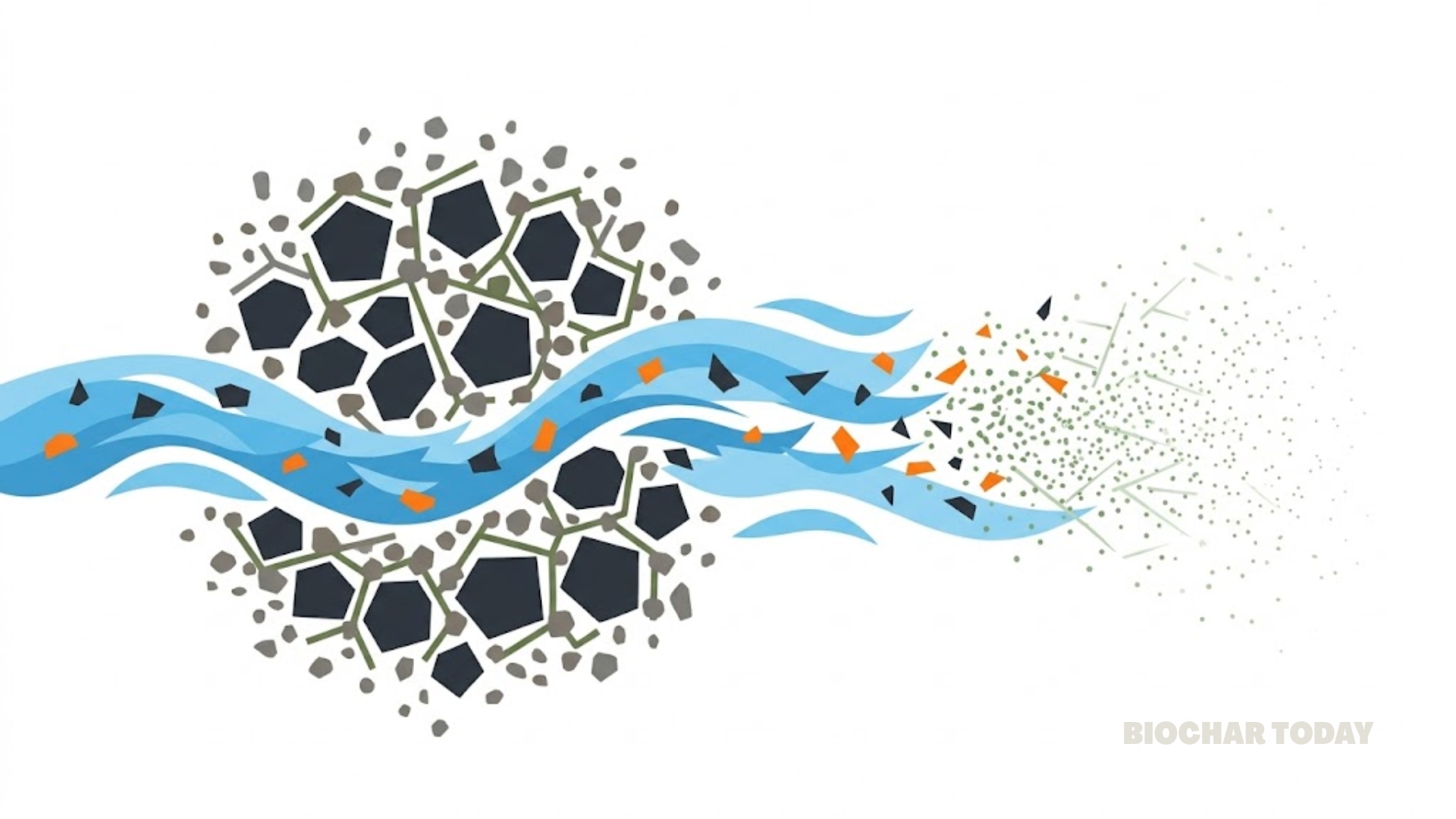
The researchers used lignin, a renewable byproduct of the paper and pulp industry, to create a hierarchical porous carbon material that serves as the heart of the capacitor. By carefully controlling the carbonization process, they were able to create a material filled with sub-nanometer pores. These tiny holes are roughly the same size as the lithium ions moving through the system. This geometric matching is critical because it allows the ions to fit perfectly into the carbon structure, maximizing the amount of charge that can be stored. This wood-derived carbon outperformed standard commercial activated carbons, providing a much higher surface area for energy storage and allowing for more efficient ion transport through its interconnected three-dimensional network.
The second half of the solution involved a new type of weakly solvating electrolyte. Standard liquids used in capacitors tend to break down if the voltage is pushed too high, causing the device to fail or lose power. By using a specialized formulation that includes a fluorinated diluent, the team created a liquid that remains stable even at an unprecedented 4.0 V. This is a significant jump from the 2.7 V standard found in most commercial devices. Because energy storage increases sharply as the voltage goes up, this wider operating window allowed the researchers to achieve an energy density that is more than double the typical industry standard. The liquid also acts as a molecular lubricant, lowering the viscosity of the electrolyte to ensure that power can be delivered quickly without the sluggishness often seen in other high-voltage liquids.
One of the most impressive results of this study is how well the device holds onto its charge over time. Self-discharge has long been the “Achilles’ heel” of supercapacitors, making them less useful for long-term storage. The researchers found that their tailored liquid created a very stable and ordered layer at the surface of the carbon electrode. This layer acts as a dynamic drag, preventing ions from escaping and reducing the parasitic chemical reactions that usually drain power. As a result, the capacitor showed the slowest voltage drop recorded at such high potentials. This chemical stability also translates to extreme durability; the device was able to go through ten thousand charge and discharge cycles while losing only a tiny fraction of its total storage capacity.
The implications of this research are broad, as it provides a clear pathway toward sustainable, high-energy storage devices that do not rely on expensive or rare materials. By transforming industrial waste into high-performance carbon and pairing it with smart electrolyte chemistry, the team has moved supercapacitors closer to the performance levels of batteries while keeping the rapid-charging benefits that make capacitors unique. This synergistic design not only boosts energy density but also solves the persistent problem of power leakage. These findings establish a new strategy for the next generation of energy storage devices, emphasizing that the best results come from designing the solid and liquid components of a system to complement one another perfectly.
Source: Zhang, S., Liu, S., Si, S., Zeng, K., Cai, C., Yuan, X., Tang, Y., Gong, F., & Ye, H. (2026). Lignin-derived hierarchical porous carbons enabling high-voltage electrochemical capacitors with low self-discharge. Carbon Research, 5(11).


Leave a Reply