
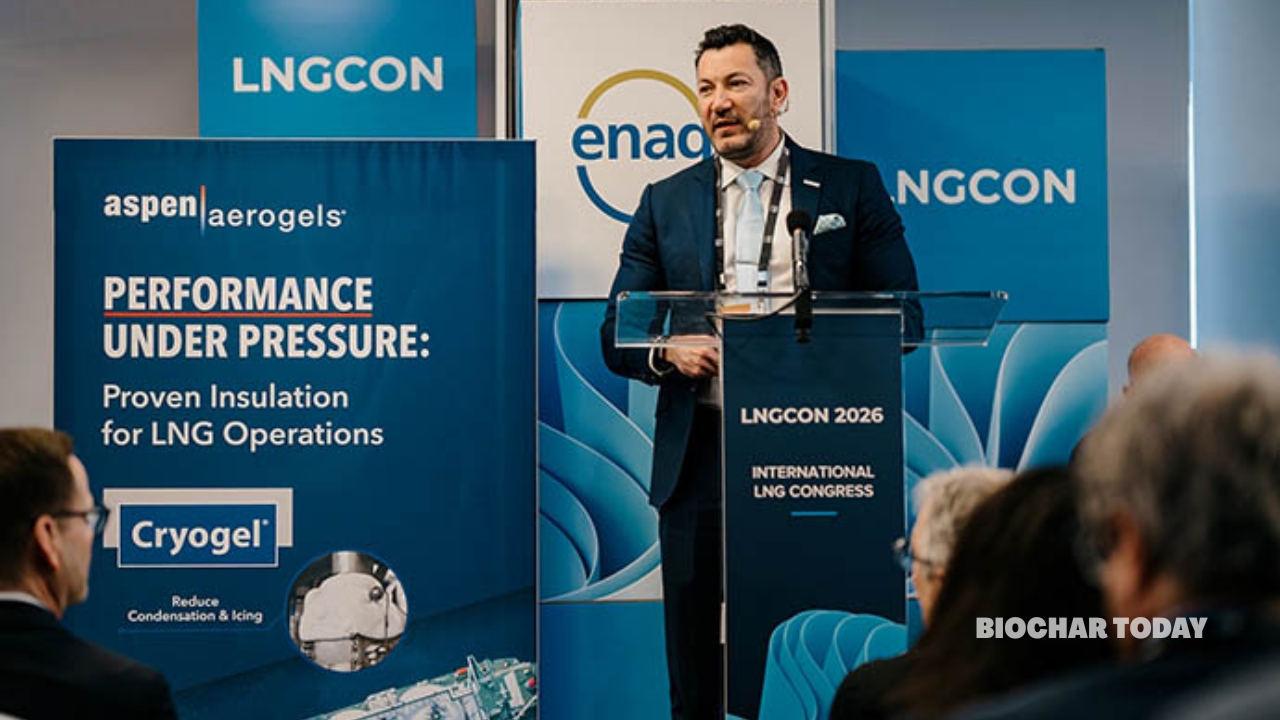
The 12th International LNG Congress (LNGCON 2026), organized by BGS Group, convened in Barcelona, Spain, to address the strategic evolution of the liquefied natural gas industry. While the congress traditionally focuses on cryogenic infrastructure and maritime bunkering, the 2026 agenda highlighted a significant shift toward cross-sector decarbonization technologies. A central component of this dialogue was a dedicated roundtable on technology advancements, featuring contributions from Carbon Farming Germany. The session specifically examined the integration of bio-methane and biocharBiochar is a carbon-rich material created from biomass decomposition in low-oxygen conditions. It has important applications in environmental remediation, soil improvement, agriculture, carbon sequestration, energy storage, and sustainable materials, promoting efficiency and reducing waste in various contexts while addressing climate change challenges. More production as a dual-purpose strategy for reducing the carbon intensity of the energy value chain. By bringing together over 350 decision-makers from more than 40 countries, the event served as a high-level platform for aligning renewable gas production with established gas infrastructure.
The primary challenge identified by industry analysts at the congress is the “hard-to-abate” nature of traditional gas infrastructure and the urgent need to meet tightening carbon intensity targets. As the global energy transition accelerates, the LNG sector faces pressure to demonstrate measurable improvements in carbon performance beyond simple fuel switching. However, the integration of renewable alternatives often encounters hurdles related to technical readiness, feedstockFeedstock refers to the raw organic material used to produce biochar. This can include a wide range of materials, such as wood chips, agricultural residues, and animal manure. More consistency, and the economic viability of standalone carbon capture systems. Without a synergistic approach that combines energy production with permanent carbon sequestration, the industry risks failing to meet net-zero benchmarks while maintaining energy security during the transition.
In response to these systemic pressures, the solution presented during the strategic roundtables involves the co-production of bio-methane and biochar. Carbon Farming Germany detailed how this integrated model allows for the simultaneous generation of renewable thermal energy—utilizable within the LNG value chain—and the creation of a stable carbon sink. This technical pathway repurposes biogenic waste into bio-methane, which can be liquefied or injected into grids, while the solid biochar byproduct provides a verifiable method of carbon dioxide removal (CDR). This multi-stream approach, supported by engineering firms like Linde Engineering and Kanadevia Inova Schmack Biogas, offers a diversified revenue model that incentivizes the adoption of greener gases through the sale of high-integrity carbon offsets.
The outcomes of these discussions indicate a maturing relationship between the biochar and LNG industries, moving from conceptual alignment to practical engineering collaboration. By incorporating biochar production into the bio-methane lifecycle, operators can significantly lower the overall carbon footprint of their gas supplies, effectively transforming renewable gas facilities into carbon-negative hubs. This strategic integration provides the LNG industry with a tangible mechanism for achieving regulatory compliance and satisfying investor demand for asset flexibility. Furthermore, the closed-door networking format facilitated by BGS Group has paved the way for new B2B partnerships focused on scaling these integrated “bio-LNG-plus-biochar” projects across Europe and the Mediterranean.


Leave a Reply