
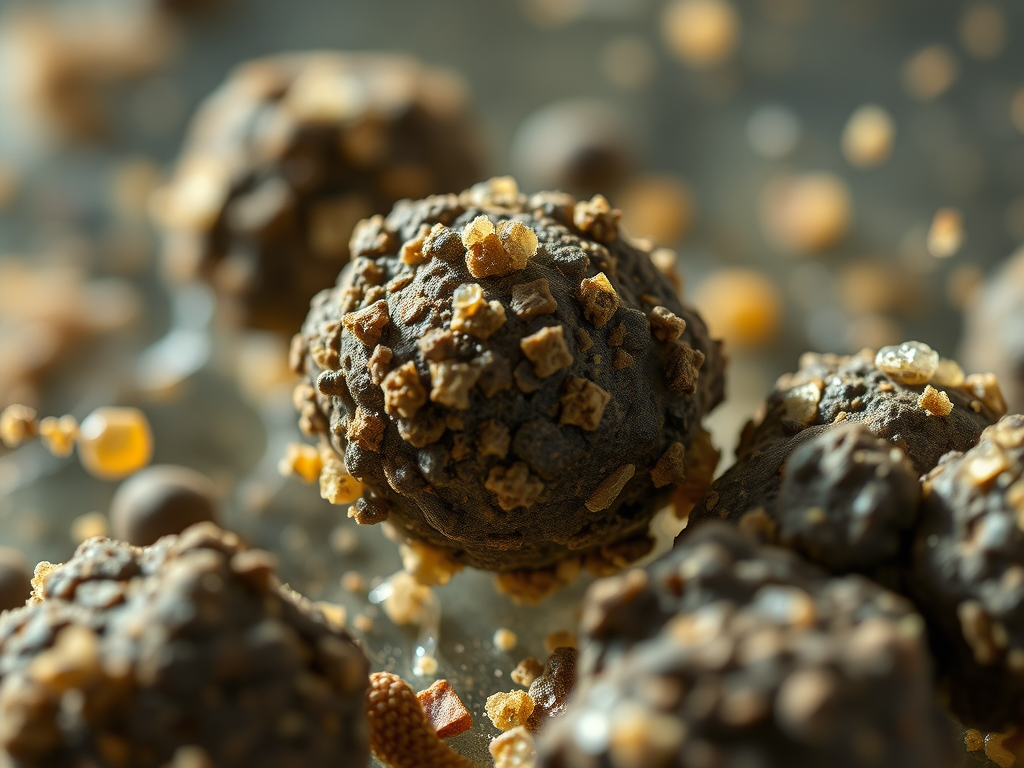
BiocharBiochar is a carbon-rich material created from biomass decomposition in low-oxygen conditions. It has important applications in environmental remediation, soil improvement, agriculture, carbon sequestration, energy storage, and sustainable materials, promoting efficiency and reducing waste in various contexts while addressing climate change challenges. More has emerged as a promising tool for environmental remediation due to its high surface area and abundance of raw materials. However, the effectiveness of unmodified biochar is often limited by its inherent properties, such as a scarcity of active functional groups and restricted elemental composition. To address these shortcomings, researchers have turned to metal-modified biochars, with iron-manganese (Fe-Mn) modification gaining significant attention for its ability to enhance biochar’s pollutant removal capabilities.
A comprehensive review published in Toxics by Chang Liu, Xiaowei Xu, Anfei He, Yuanzheng Zhang, Ruijie Che, Lu Yang, Jing Wei, Fenghe Wang, Jing Hua, and Jiaqi Shi, highlights the significant advancements in the preparation and application of iron-manganese modified biochar (FM-BC) for environmental remediation. The synergistic interactions between iron and manganese in FM-BC lead to enhanced adsorption capacity, improved redox potential, and increased microbial activity, making it a highly effective material for tackling various environmental pollutants.
FM-BC has demonstrated remarkable efficacy in removing a range of contaminants, including heavy metals, organic matter, phosphates, and nitrates. This enhanced performance is attributed to multiple mechanisms, such as mesoporous adsorption, redox reactions, complexation, electrostatic interactions, and precipitation. Beyond pollutant removal, FM-BC also contributes to improving soil physicochemical properties and supporting plant growth, underscoring its broad potential for environmental applications.
The preparation of FM-BC involves several methods, each influencing the material’s physicochemical properties. Common techniques include impregnation pyrolysisPyrolysis is a thermochemical process that converts waste biomass into bio-char, bio-oil, and pyro-gas. It offers significant advantages in waste valorization, turning low-value materials into economically valuable resources. Its versatility allows for tailored products based on operational conditions, presenting itself as a cost-effective and efficient More, hydrothermal synthesis, co-precipitation, sol-gel, and mechanical ball milling. Impregnation pyrolysis, a relatively simple and scalable method, involves impregnating biomassBiomass is a complex biological organic or non-organic solid product derived from living or recently living organism and available naturally. Various types of wastes such as animal manure, waste paper, sludge and many industrial wastes are also treated as biomass because like natural biomass these More with iron and manganese salt solutions followed by high-temperature pyrolysis (typically above 600∘C). Hydrothermal synthesis, typically performed below 200∘C, allows for precise control over the crystalline structure and morphology of Fe-Mn oxides, while preserving surface functional groups often lost in high-temperature processes. Rice straw biomass treated hydrothermally at 100∘C for 8 hours with iron and manganese salts resulted in FM-BC nanoparticles (10-40 nm) that reduced arsenic and cadmium in pore water by 67.1% and 80.2% respectively.
Co-precipitation involves simultaneously precipitating iron and manganese ions onto the biochar surface under alkaline conditions, forming nano-sized oxides and enhancing electron transfer. The sol-gel method prepares a uniform loading layer of Fe-Mn oxides on biochar, enabling rapid separation under an external magnetic field. Corn straw-derived FM-BC, prepared using egg white as a complexing agent and fired at 300∘C, retained a honeycomb porous structure with a saturated magnetization of 33.19 A/m, facilitating easy recovery. Mechanical ball milling, a green and efficient method, can be combined with other techniques to improve biochar structure without chemical reagents. FM-BC’s effectiveness in heavy metal removal stems from multiple synergistic mechanisms.
Beyond heavy metals, FM-BC also effectively removes organic pollutants through oxidation, mesoporous adsorption, complexation, hydrogen bonding, and π-π EDA mechanisms. For instance, industrial lignin-based FM-BC achieved a 90% degradation rate of oxytetracycline within 30 minutes by activating persulfate. Similarly, FM-BC significantly enhanced the catalytic ozonation of ibuprofen, achieving over 95% removal of 50 mg/L ibuprofen within 9 minutes, 6.58 times faster than ozone oxidation alone. The study also highlights the recyclability of FM-BC through methods like ultrapure water purification, acid and alkali treatment, and magnetic separation. Magnetic separation is particularly promising due to its efficiency and scalability, maintaining over 75% efficiency after 4-5 cycles, with saturation magnetization strengths of 10.41 emu/g and 9.31 emu/g reported in studies. Acid and alkali treatment also show good cyclic performance, with Cr(VI) removal efficiency remaining above 60% after six cycles.
In conclusion, FM-BC represents a significant advancement in environmental remediation. Its ability to effectively remove a wide array of pollutants through a combination of physical and chemical mechanisms, coupled with its tunable properties and recyclability, positions it as a promising and efficient material for addressing complex environmental pollution challenges. Future research will focus on optimizing microstructures, expanding feedstockFeedstock refers to the raw organic material used to produce biochar. This can include a wide range of materials, such as wood chips, agricultural residues, and animal manure. More diversity, and validating engineering applications in real-world scenarios to fully realize its potential.
Source: Liu, C., Xu, X., He, A., Zhang, Y., Che, R., Yang, L., Wei, J., Wang, F., Hua, J., & Shi, J. (2025). Research Progress on the Preparation of Iron-Manganese Modified Biochar and Its Application in Environmental Remediation. Toxics, 13(8), 618.




Leave a Reply