

Key Takeaways
- Selling biocharBiochar is a carbon-rich material created from biomass decomposition in low-oxygen conditions. It has important applications in environmental remediation, soil improvement, agriculture, carbon sequestration, energy storage, and sustainable materials, promoting efficiency and reducing waste in various contexts while addressing climate change challenges. More as a physical product is not enough to cover the high costs of making it in rural settings.
- Projects become financially successful only when they also sell credits for the carbon they remove from the air.
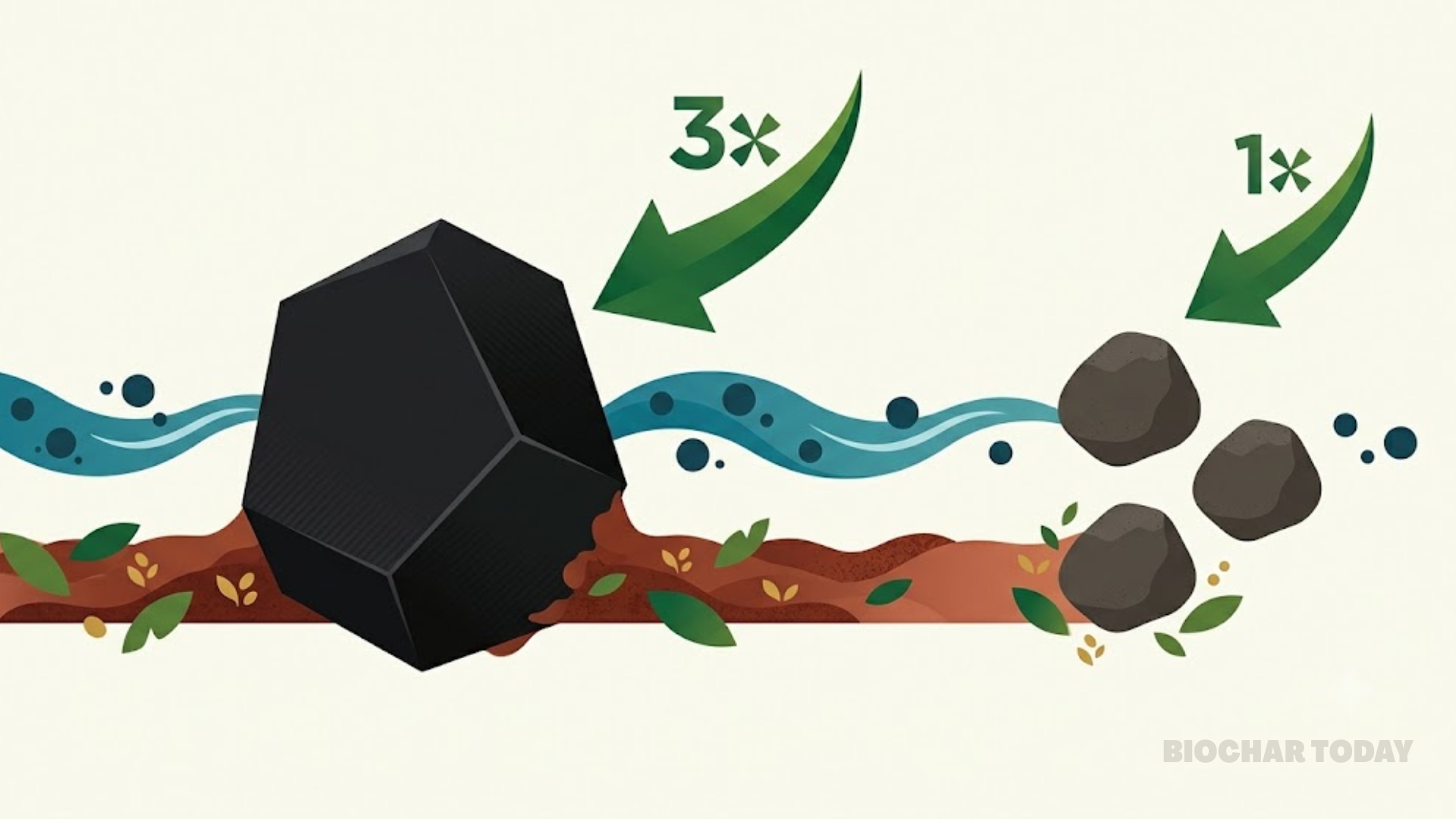
- Joining a regulated carbon trading system can nearly triple the profit of a biochar business compared to selling on voluntary markets.
- Using more production machines increases efficiency and allows the project to pay for itself much faster.
- Relying only on local plant waste can be a profitable and sustainable way to run a small-scale biochar facility.
In a recent study published in the journal BiomassBiomass is a complex biological organic or non-organic solid product derived from living or recently living organism and available naturally. Various types of wastes such as animal manure, waste paper, sludge and many industrial wastes are also treated as biomass because like natural biomass these More, authors Ginevra Ganzi and Andrea Pronti explored the economic landscape of biochar production through a detailed case study of an abandoned rural site in Tuscany, Italy. Their research highlights a critical reality for the biochar industry: the physical sale of biochar and its liquid by-product, wood vinegar, is insufficient to sustain a business. When considering only the market price for these materials, the project fails to reach a breakeven point and results in a net loss. This is primarily due to the high initial investment in pyrolysisPyrolysis is a thermochemical process that converts waste biomass into bio-char, bio-oil, and pyro-gas. It offers significant advantages in waste valorization, turning low-value materials into economically valuable resources. Its versatility allows for tailored products based on operational conditions, presenting itself as a cost-effective and efficient More equipment and the recurring costs of labor and biomass management. The study emphasizes that without external financial support or additional revenue streams, local circular economy projects based on biochar production would likely fail to survive their early stages.
The findings demonstrate that the true economic engine for biochar lies in its ability to sequester carbon. When the researchers added the potential income from selling carbon credits on the voluntary market, the financial outlook changed dramatically. By assigning a value to the carbon removed from the atmosphere, the project shifted from a losing venture to a profitable one. Specifically, using five production units in combination with carbon credit sales produced significant positive returns and a much higher internal rate of return. This shift proves that the environmental service provided by biochar—locking carbon away for centuries—is more valuable in today’s market than the material itself. The ability of biochar to help companies and individuals offset their carbon footprints makes it a vital tool for both climate mitigation and rural economic development.
One of the most significant results of the research is the impact of regulated carbon markets, such as the European Union Emission Trading System. The study simulated a scenario where biochar credits are recognized within this mandatory system, which currently sees much higher prices than voluntary markets. Under this model, the project’s profitability soared. The researchers found that the internal rate of return could reach as high as thirty-five percent when using a larger production capacity. Furthermore, the time required to recover the initial investment dropped significantly, often reaching the breakeven point in just a few years. This suggests that government policy and the formal recognition of biochar as a certified carbon removal technology are the most important factors for the widespread adoption of this technology.
The study also looked at a smaller-scale model that relied exclusively on the waste biomass already available on the estate, such as branches and agricultural residues. Even with a reduced production schedule, this “waste-only” approach proved to be economically sustainable when paired with carbon credits. This finding is particularly encouraging for small farmers and rural communities who want to implement circular economy practices without buying extra timber or expanding their land use. By prioritizing the efficient recycling of existing waste over maximum production, these communities can create resilient and environmentally friendly business models. This approach not only cleans up the land and reduces fire risks but also generates a steady income through the emerging carbon economy.
Ultimately, the research by Ganzi and Pronti makes it clear that while biochar is a powerful tool for soil health and carbon storage, its financial success is tied to the global carbon market. The study shows that the current costs of high-tech production are a barrier that can only be overcome through the sale of carbon removal services. As international regulations continue to evolve and more countries adopt carbon trading systems, biochar projects stand to become a major driver of sustainable development. The authors conclude that public policies, such as tax relief and formal market recognition, are essential to move biochar from a marginal technology to a mainstream solution for a greener future.
Source: Ganzi, G., & Pronti, A. (2026). Cost-benefit analysis of biochar production: The case study of an abandoned rural site, Borgo di Perolla, in Tuscany, Italy. Biomass, 6(19).



Leave a Reply