
Key Takeaways
- Scientists have created a new type of charcoalCharcoal is a black, brittle, and porous material produced by heating wood or other organic substances in a low-oxygen environment. It is primarily used as a fuel source for cooking and heating. More enriched with iron that cleans antibiotic pollution from farmland soil.
- This material acts like a battery to continuously produce powerful cleaning molecules that break down harmful drugs.
- The process uses natural oxygen and helpful soil bacteria to keep the cleaning cycle running for a long time.
- Tests show the treated soil is much safer for growing plants and significantly reduces the toxicity of pollutants.
- This technology provides a sustainable way to protect food safety and improve the health of agricultural land.
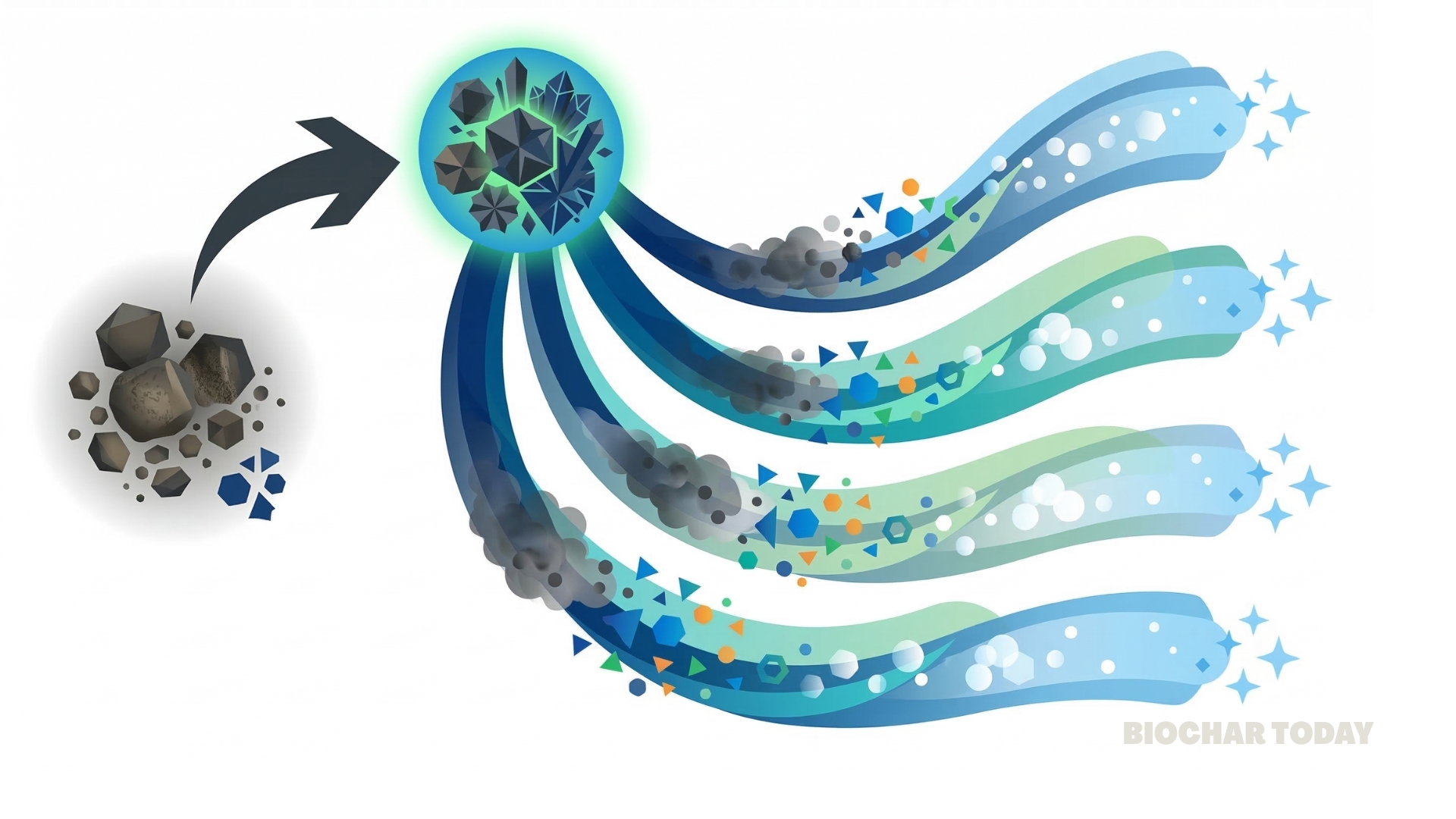
The presence of antibiotics like sulfamethoxazole in agricultural soils poses a significant risk to environmental safety and human health, often resisting natural breakdown. In a study published in the journal BiocharBiochar is a carbon-rich material created from biomass decomposition in low-oxygen conditions. It has important applications in environmental remediation, soil improvement, agriculture, carbon sequestration, energy storage, and sustainable materials, promoting efficiency and reducing waste in various contexts while addressing climate change challenges. More, lead author Hongying Du and a team of researchers introduced a sustainable solution using a specially engineered iron-modified biochar. This material acts as a catalyst to unlock the natural oxidative potential of soil, effectively turning it into a self-cleaning system. By optimizing how iron is structured within the charcoal-like biochar, the researchers created a platform that facilitates the continuous flow of electrons needed to generate hydroxyl radicals. These radicals are highly reactive molecules capable of tearing apart complex pollutants into harmless fragments.
The innovation centers on a dual-pathway mechanism that overcomes the common problem of iron depletion in traditional soil treatments. Typically, the reactive form of iron needed for cleaning is quickly used up and becomes inactive. However, this new biochar serves as both an electron highway and a chemical modulator that bridges the gap between biological and chemical processes. It coordinates a charging and discharging cycle where soil bacteria help convert inactive iron back into its reactive state. This synergy allowed the system to produce a surge in cleaning power, reaching a concentration of 881.6 micromolar of hydroxyl radicals, which is a dramatic 4.2-fold increase over standard conditions. Even under actual field conditions, the material maintained a cleaning capacity more than three times higher than untreated soil.
During a month-long incubation period, the researchers observed that the biochar significantly altered the soil’s microbial landscape. It promoted the growth of specific bacteria that thrive in nutrient-rich environments and are known for their ability to cycle iron. This shift in the microbial community accounted for nearly forty percent of the total cleaning activity, proving that the technology works in harmony with nature rather than against it. The researchers found that the biochar increased the interconnectivity of the soil ecosystem, making it more stable and resistant to the stress of contamination. This biological assistance ensures that the remediation process remains active over an extended period rather than providing just a temporary fix.
The practical impact of this enhanced cleaning was demonstrated through the degradation of the antibiotic sulfamethoxazole. The study reported that 81.2% of the drug was removed from the soil through three distinct chemical pathways, including the breaking of molecular bonds and the opening of chemical rings. Crucially, the fragments left behind after this process were found to be significantly less toxic than the original antibiotic. To confirm these findings, the team conducted plant growth experiments using cherry radish seeds. While seeds in contaminated soil struggled to grow, those in soil treated with the iron-based biochar showed much higher germination rates and healthier development, with better stem length and fresh weight.
Ultimately, this research provides a blueprint for a waste-to-remediation strategy that turns simple biomassBiomass is a complex biological organic or non-organic solid product derived from living or recently living organism and available naturally. Various types of wastes such as animal manure, waste paper, sludge and many industrial wastes are also treated as biomass because like natural biomass these More into an advanced environmental tool. By using sawdust and iron to create a high-performance catalyst, the study offers a green way to restore contaminated farmland. This approach moves beyond simply adding chemicals to the ground; it enables the innate oxidative capacity of the soil itself. The findings suggest that such advanced biochar materials can play a vital role in sustainable agriculture by ensuring that the land used to grow our food remains productive and free from the persistent threat of emerging organic pollutants.
Source: Du, H., Zhang, L., Liu, W., Xie, Y., Hou, X., Guo, J., & Zhou, Q. (2026). In-situ and long-enduring oxidation of SMX by Fe-modified biochar activated O2 in soil: bridging Fe-redox cycling and electron transfer modulation. Biochar, 8(1), 76.



Leave a Reply