
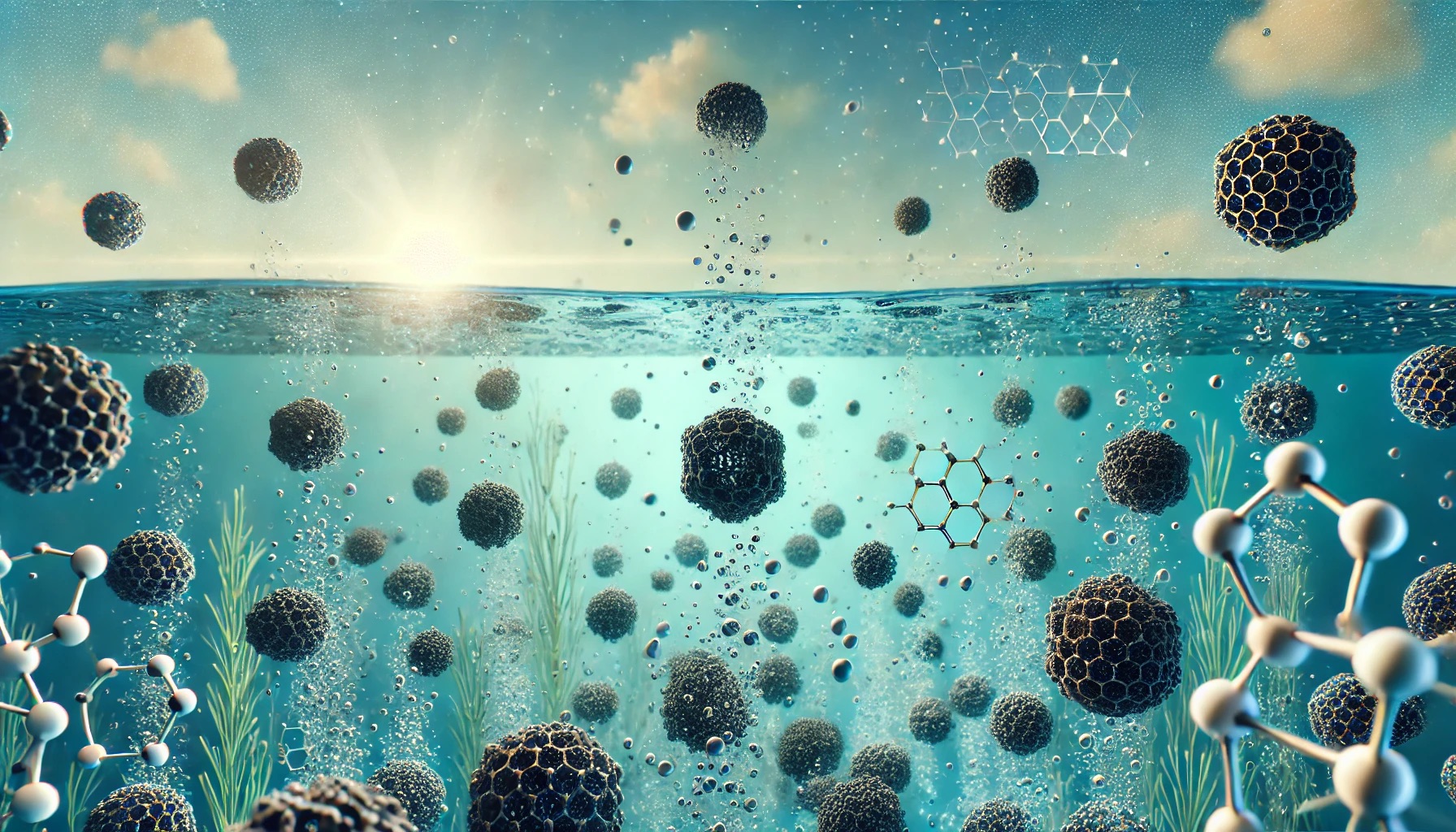
Boron contamination in water is a pressing environmental and health issue, often stemming from industrial activities, geothermal processes, and desalination. Excess boron can harm aquatic ecosystems and human health, making its removal from water critical. Traditional removal methods, such as ion exchange and membrane distillation, face challenges like high cost and inefficiency. A recent study offers an innovative solution: functionalized biocharBiochar is a carbon-rich material created from biomass decomposition in low-oxygen conditions. It has important applications in environmental remediation, soil improvement, agriculture, carbon sequestration, energy storage, and sustainable materials, promoting efficiency and reducing waste in various contexts while addressing climate change challenges. More composites synthesized from date palm fibers, a renewable and sustainable feedstockFeedstock refers to the raw organic material used to produce biochar. This can include a wide range of materials, such as wood chips, agricultural residues, and animal manure. More.
The research developed five biochar composites—BC (carboxylated biochar), BC-PDA (polydopamine-loaded biochar), MBC-PDA (magnetic polydopamine biochar), BC-AlOOH (aluminum hydroxide biochar), and BC-ZnCl2 (zinc chloride biochar). These composites were designed to optimize boron adsorption through hydroxy-functional groups and high surface porosityPorosity of biochar is a key factor in its effectiveness as a soil amendment and its ability to retain water and nutrients. Biochar’s porosity is influenced by feedstock type and pyrolysis temperature, and it plays a crucial role in microbial activity and overall soil health. Biochar More. Their production involved simple and cost-effective methods, enhancing their viability for large-scale applications.
Adsorption experiments revealed that BC-AlOOH and BC-ZnCl2 exhibited the highest boron adsorption capacities of 43.2 mg/g and 44.2 mg/g, respectively, achieved within 120 minutes. The study found that adsorption efficiency peaked at a pHpH is a measure of how acidic or alkaline a substance is. A pH of 7 is neutral, while lower pH values indicate acidity and higher values indicate alkalinity. Biochars are normally alkaline and can influence soil pH, often increasing it, which can be beneficial More range of 8–9, aligning with the chemistry of boron species in water. The process was governed by pseudo-first-order kinetics, indicating a dominant chemical adsorption mechanism facilitated by hydroxy groups on the biochar surface.
These biochars demonstrated excellent reusability, retaining significant adsorption capacity across multiple cycles. This recyclability, combined with their high efficiency, positions them as sustainable alternatives to conventional adsorbents. Compared to other materials like activated carbonActivated carbon is a form of carbon that has been processed to create a vast network of tiny pores, increasing its surface area significantly. This extensive surface area makes activated carbon exceptionally effective at trapping and holding impurities, like a molecular sponge. It is commonly More, the biochar composites showed superior performance, highlighting their potential for real-world applications.
This research underscores the promise of biochar as a low-cost, renewable solution to address boron contamination, paving the way for more sustainable water treatment technologies.
SOURCE: Amirshekari, et al (2025) Development of functionalized biochar composites for enhanced boron adsorption from aqueous solutions. Cell. https://doi.org/10.1016/j.heliyon.2025.e41720




Leave a Reply