
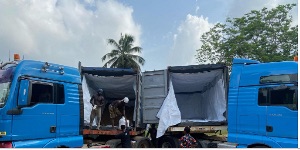
Truecoco Ghana Limited, a coconut processing company in the Western Region, has partnered with Growth Investment Partners (GIP) Ghana LTD, backed by British International Investment (BII), to launch a biocharBiochar is a carbon-rich material created from biomass decomposition in low-oxygen conditions. It has important applications in environmental remediation, soil improvement, agriculture, carbon sequestration, energy storage, and sustainable materials, promoting efficiency and reducing waste in various contexts while addressing climate change challenges. More initiative aimed at economic, social, and environmental sustainability.
The project will utilize coconut husks, previously considered agricultural waste, to produce biochar—a charcoal-like material used as a soil amendmentA soil amendment is any material added to the soil to enhance its physical or chemical properties, improving its suitability for plant growth. Biochar is considered a soil amendment as it can improve soil structure, water retention, nutrient availability, and microbial activity. More. This process supports over 4,000 smallholder farmers by creating new income streams and training opportunities, boosting rural employment.
Biochar provides significant environmental benefits by stabilizing carbon in the soil, reducing greenhouse gas emissions, and enhancing soil health through improved water retention and nutrient availability. Truecoco plans to quantify these impacts with PURO.EARTH, a carbon removal credit certifier, ensuring transparency and alignment with climate goals.
The initiative also supports regenerative agriculture, empowering farmers with knowledge on sustainable farming techniques. Truecoco aims to improve crop yields while reducing dependence on chemical fertilizers, aligning with broader goals of food security and agricultural resilience.
While coconut husks remain the primary raw material due to their abundance in Jomoro, the company envisions expanding biochar technology to other agricultural by-products like woody biomassBiomass is a complex biological organic or non-organic solid product derived from living or recently living organism and available naturally. Various types of wastes such as animal manure, waste paper, sludge and many industrial wastes are also treated as biomass because like natural biomass these More and shea nut waste.
Truecoco has engaged stakeholders, including the Council for Scientific and Industrial Research (CSIR), to monitor the project’s outcomes. By addressing multiple United Nations Sustainable Development Goals (SDGs), this partnership represents a significant step toward inclusive and sustainable economic growth in Ghana.
For now, Truecoco remains focused on executing its immediate objectives to ensure project success.
LEARN MORE: Truecoco’s biochar project backed by GIP Ghana



Leave a Reply