
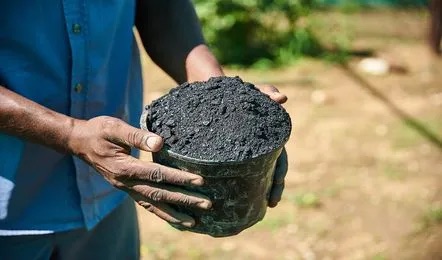
The Kerala government has formed an expert committee to assess the potential of biocharBiochar is a carbon-rich material created from biomass decomposition in low-oxygen conditions. It has important applications in environmental remediation, soil improvement, agriculture, carbon sequestration, energy storage, and sustainable materials, promoting efficiency and reducing waste in various contexts while addressing climate change challenges. More, a carbon-rich material derived from organic waste, as part of its efforts to promote sustainable agriculture and explore export opportunities. The initiative, led by the Special Officer for Agriculture (WTO Cell), includes experts from the Kerala Agricultural University (KAU), Central Plantation Crops Research Institute (CPCRI), and state agriculture officials. A report is expected within three weeks.
Biochar, created through pyrolysisPyrolysis is a thermochemical process that converts waste biomass into bio-char, bio-oil, and pyro-gas. It offers significant advantages in waste valorization, turning low-value materials into economically valuable resources. Its versatility allows for tailored products based on operational conditions, presenting itself as a cost-effective and efficient More of organic residues in a low-oxygen environment, has garnered attention for its ability to improve soil fertility, enhance water retention, and store carbon. This makes it a valuable tool for combating climate change. Beyond agricultural benefits, biochar and its derivatives, such as activated charcoalCharcoal is a black, brittle, and porous material produced by heating wood or other organic substances in a low-oxygen environment. It is primarily used as a fuel source for cooking and heating. More, are in high demand internationally for applications in water purification, air filtration, and industrial processes.
Kerala’s abundant agricultural waste positions it well to become a biochar production hub. Officials emphasize biochar’s export potential in markets like Australia and New Zealand, where it is used in animal feeds and sustainable practices. Domestically, its ability to address soil acidity and degradation is particularly relevant for Kerala’s agriculture.
Dr. Anitha S from KAU highlighted biochar’s benefits for improving soil health, increasing crop productivity, and mitigating greenhouse gas emissions. While some farmers in Kerala have adopted biochar, its usage remains limited. Widespread adoption could transform the state’s approach to sustainable farming and position Kerala as a leader in biochar innovation.
LEARN MORE: Biochar revolution: Kerala to study its role in carbon sequestration, international trade





Leave a Reply