
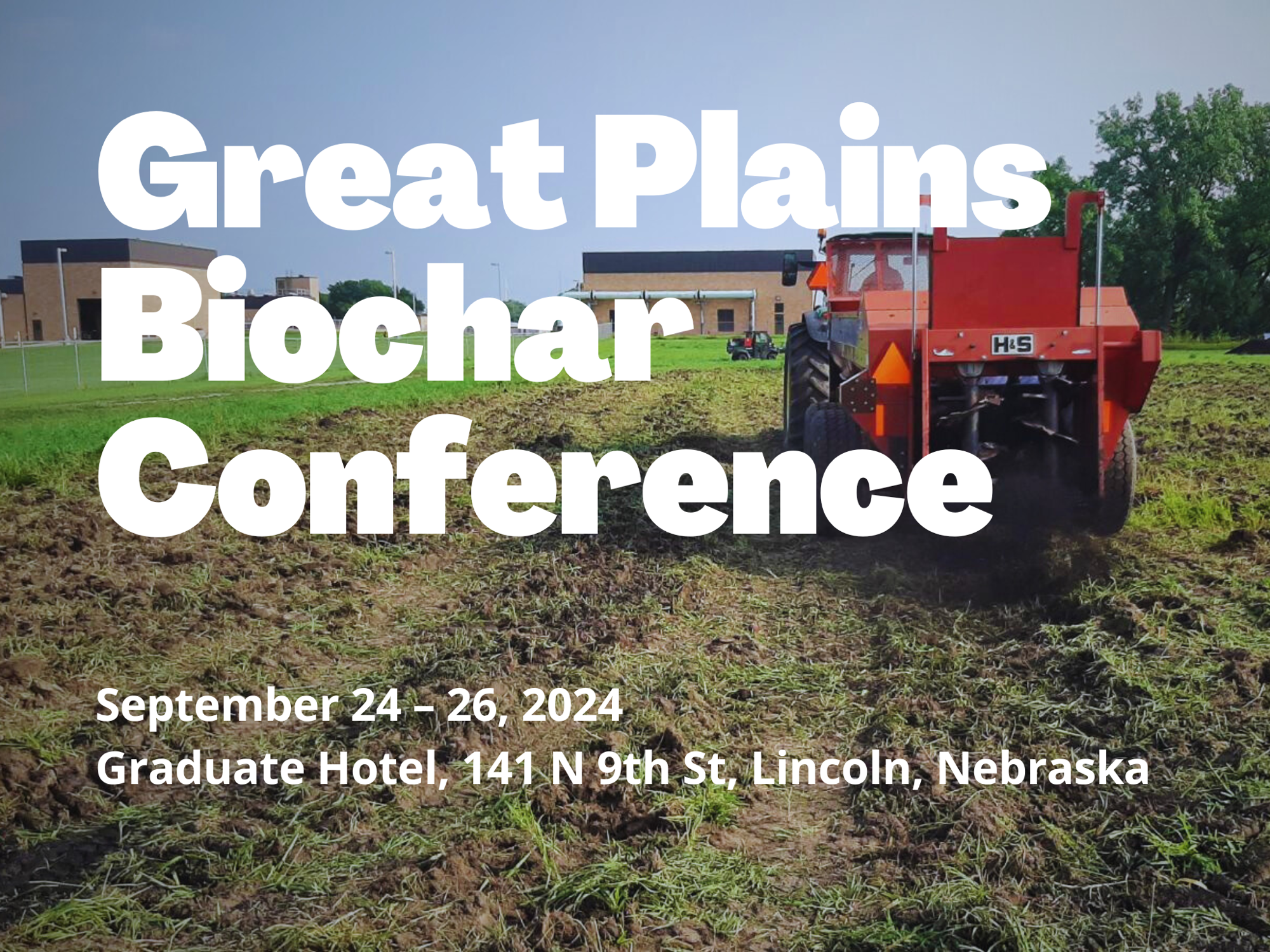
The inaugural Great Plains Biochar Conference is poised to take place from September 24 to 26, 2024, at the Graduate Hotel in Lincoln, Nebraska, showcasing a landmark event in the biocharBiochar is a carbon-rich material created from biomass decomposition in low-oxygen conditions. It has important applications in environmental remediation, soil improvement, agriculture, carbon sequestration, energy storage, and sustainable materials, promoting efficiency and reducing waste in various contexts while addressing climate change challenges. More community. Spearheaded by the University of Nebraska–Lincoln, the Nebraska Biochar Initiative, and the Nebraska Forest Service, this conference is a gathering of experts and professionals from diverse fields such as research, education, agricultural application, production, industries, and trade. The focus is on exploring the vast potential of biochar—a form of charcoalCharcoal is a black, brittle, and porous material produced by heating wood or other organic substances in a low-oxygen environment. It is primarily used as a fuel source for cooking and heating. More produced by burning organic waste under limited oxygen conditions.
Biochar’s roots trace back to the Amazon’s discovery of terra pretaTerra preta, meaning “black earth” in Portuguese, is a type of highly fertile soil found in the Amazon Basin. It is characterized by its high biochar content, which contributes to its long-term fertility and ability to support productive agriculture More, soils enriched centuries ago by indigenous communities through the addition of charcoal, bones, compost, and other materials, enhancing their fertility significantly. This ancient technology highlights biochar’s capability to improve soil conditions by increasing organic carbon content, enhancing porosityPorosity of biochar is a key factor in its effectiveness as a soil amendment and its ability to retain water and nutrients. Biochar’s porosity is influenced by feedstock type and pyrolysis temperature, and it plays a crucial role in microbial activity and overall soil health. Biochar More, and boosting water and nutrient retention. These qualities not only make biochar an effective material for long-term carbon storage but also position it as a versatile tool in agriculture, urban planning, remediation, and construction, among other applications.
The conference aims to facilitate a comprehensive dialogue on the latest data, ideas, and developments surrounding biochar. Given its environmental benefits and multifaceted applications, biochar is gaining attention for its role in reducing carbon footprints and emerging as a valuable asset in the carbon credit market. Highlighting the growing demand for biochar, the city of Lincoln is in the process of establishing a biochar plant, underscoring the region’s commitment to embracing sustainable technologies. The organizing committee, featuring professionals like Michael Kaiser, Nash Leef, Kim Slezak, and Frank E. Uhlarik, anticipates a productive exchange of insights over the course of the conference.
LEARN MORE: Great Plains Biochar Conference




Leave a Reply