
Key Takeaways
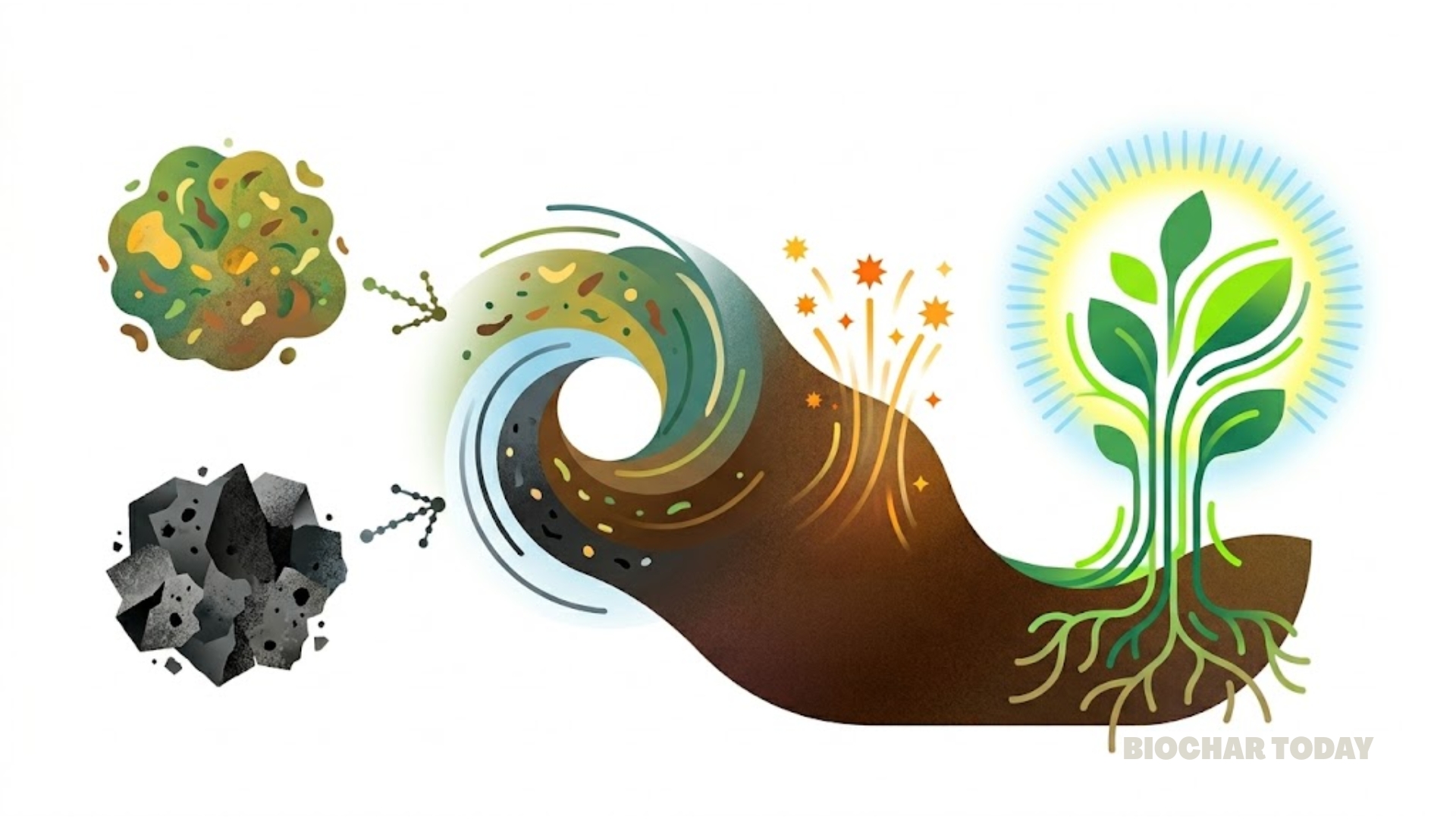
- Maize plants fertilized with biochar-enriched compost showed a significant increase in leaf chlorophyll content compared to plants that received no fertilizer.
- Mixing sewage sludge biocharBiochar is a carbon-rich material created from biomass decomposition in low-oxygen conditions. It has important applications in environmental remediation, soil improvement, agriculture, carbon sequestration, energy storage, and sustainable materials, promoting efficiency and reducing waste in various contexts while addressing climate change challenges. More into the composting process helps trap and retain important nutrients like phosphorus and calcium that might otherwise be lost.
- Adding biochar produced at higher temperatures makes the final compost more stable and resistant to breaking down too quickly in the soil.
- The resulting compost product meets strict safety standards for heavy metals, making it a safe option for use in home gardens or large farms.
- Using waste from sewage and food to create a high-quality fertilizer supports a circular economy by turning urban trash into agricultural treasure.
The journal BiomassBiomass is a complex biological organic or non-organic solid product derived from living or recently living organism and available naturally. Various types of wastes such as animal manure, waste paper, sludge and many industrial wastes are also treated as biomass because like natural biomass these More and Bioenergy recently published a study by Jane Ribeiro dos Santos, José Ferreira Lustosa Filho, Camila Rodrigues Costa, Marcela Granato Barbosa dos Santos, Alessandra Monteiro de Paula, Jader Galba Busato, and Cícero Célio de Figueiredo exploring a sustainable solution for urban waste management. The research team, based at the University of Brasília in Brazil, investigated how adding biochar created from sewage sludge can improve the quality of compost made from restaurant food waste. This work is particularly relevant because food waste and sewage sludge represent two of the largest waste challenges for modern cities. By combining these materials through the natural process of composting, the researchers aimed to create a nutrient-rich soil amendmentA soil amendment is any material added to the soil to enhance its physical or chemical properties, improving its suitability for plant growth. Biochar is considered a soil amendment as it can improve soil structure, water retention, nutrient availability, and microbial activity. More that recycles valuable elements back into the earth rather than leaving them to produce greenhouse gases in a landfill.
The findings indicate that the addition of sewage sludge biochar significantly alters the chemical and physical makeup of the resulting compost in beneficial ways. One of the most striking results was the dramatic increase in essential plant nutrients. When biochar was added at a rate of twenty percent, the total phosphorus content in the final product nearly tripled compared to compost made without any biochar. This is a critical discovery for agriculture, especially in regions with nutrient-poor soils, as phosphorus is a vital element for plant energy transfer and root development. Beyond phosphorus, the biochar-enriched compost also showed higher levels of calcium, sulfur, and zinc. These minerals are essential for building strong plant cell walls and supporting the various biological functions that allow a crop to thrive throughout its growing cycle.
Stability is another key factor in high-quality compost, as it determines how long the organic matter will remain in the soil to provide benefits. The researchers found that biochar produced at higher temperatures, specifically five hundred degrees Celsius, created a much more stable end product. This was measured through a decrease in volatile matterVolatile matter refers to the organic compounds that are released as gases during the pyrolysis process. These compounds can include methane, hydrogen, and carbon monoxide, which can be captured and used as fuel or further processed into other valuable products. More and an increase in fixed carbon within the compost piles. In practical terms, this means the biochar acts as a skeleton for the compost, protecting the organic nutrients from washing away or breaking down too rapidly. This stability allows the compost to function as a slow-release fertilizer, providing a steady stream of nutrition to plants over a longer period rather than a single, short-lived burst that can lead to nutrient runoff into local waterways.
Safety is often a concern when dealing with sewage-derived products, but this study provides reassuring evidence regarding the environmental impact of these materials. The research team monitored the levels of eight different heavy metals, including lead, mercury, and cadmium. They found that even with high concentrations of biochar, the heavy metal levels remained well below the strict limits set by international and Brazilian environmental regulations. The process of turning the sludge into biochar through high heat essentially locks away or reduces the availability of these potentially harmful elements. This confirms that the resulting co-compost is a safe and effective tool for agricultural use, providing the benefits of recycled nutrients without the risk of soil contamination.
To test the real-world effectiveness of their creation, the scientists applied the biochar-compost mixture to maize plants in a greenhouse setting. The plants grown with the biochar-enriched compost showed a remarkable improvement in health as measured by their chlorophyll levels. Specifically, maize plants treated with compost containing higher proportions of biochar saw a rise in their chlorophyll index of up to sixty percent compared to plants grown in unfertilized soil. Chlorophyll is the green pigment plants use to turn sunlight into food, so higher levels generally indicate a more robust and efficient photosynthetic process. While the total weight of the plants in the greenhouse did not change significantly due to the short duration of the experiment, the boost in chlorophyll suggests that the plants were better nourished and better prepared for long-term growth.
Ultimately, this research supports the transition toward a circular economy where urban waste is viewed as a resource rather than a burden. By integrating sewage sludge biochar into food waste composting, municipalities can reduce the volume of material sent to landfills while producing a high-value fertilizer. This approach addresses the global problem of food waste, which accounts for approximately one-third of all food produced, and provides a safe path for recycling sewage sludge. The resulting product not only enriches the soil with vital nutrients like phosphorus and calcium but also improves the overall health and photosynthetic capacity of crops. This study serves as a blueprint for sustainable waste management practices that can support local food production and protect the environment simultaneously.
Source: dos Santos, J. R., Lustosa Filho, J. F., Costa, C. R., dos Santos, M. G. B., de Paula, A. M., Busato, J. G., & de Figueiredo, C. C. (2026). Enhancing food waste compost with sewage sludge biochar: impacts on stability, nutrient dynamics, and agronomic performance in maize. Biomass and Bioenergy, 210, 109037.


Leave a Reply