
BiocharBiochar is a carbon-rich material created from biomass decomposition in low-oxygen conditions. It has important applications in environmental remediation, soil improvement, agriculture, carbon sequestration, energy storage, and sustainable materials, promoting efficiency and reducing waste in various contexts while addressing climate change challenges. More, increasingly recognized for its agricultural benefits, has seen a surge in scientific interest, with Scopus recording over 33,000 papers since 2001. While many studies highlight its positive impacts on soil properties, including increased pHpH is a measure of how acidic or alkaline a substance is. A pH of 7 is neutral, while lower pH values indicate acidity and higher values indicate alkalinity. Biochars are normally alkaline and can influence soil pH, often increasing it, which can be beneficial More and sorption capacity, there’s a notable gap in understanding its long-term behavior in soil. Addressing this, Vladimír Šimanský and Martin Juriga from the Slovak University of Agriculture in Nitra investigated the effectiveness of two biochar application rates on soil pH and sorption capacity in a silt loam Haplic Luvisol after one and nine years. Their findings, published in Acta Horticulturae et Regiotecturae, provide crucial insights into the extended impact of biochar.
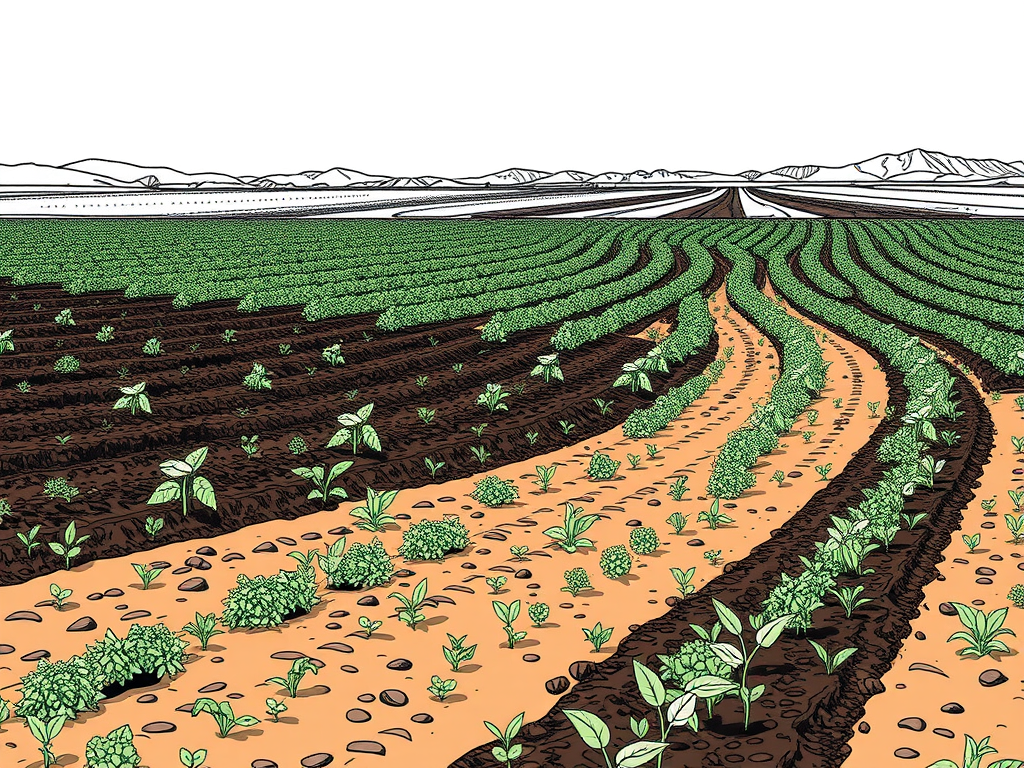
The study, conducted at the Slovak University of Agriculture’s experimental base in Dolná Malanta, Slovakia, focused on Haplic Luvisol, a soil type common in the Danubian Lowland. Before the experiment, the soil was slightly acidic (pH 5.71) and had a low organic carbon content (9.13%). Biochar was applied once in 2014 at two rates: 10 t/ha (B10) and 20 t/ha (B20), alongside a control group with no biochar (B0). The biochar used had an alkaline pH of 8.8 and contained basic cations, including 15 g/kg K, 57 g/kg Ca, and 3.9 g/kg Mg. Soil samples were collected monthly during the growing seasons of 2015 (1st year) and 2023 (9th year) to analyze changes in soil pH and sorption capacity.
The research revealed that biochar’s effectiveness on soil pH decreased over time, but the higher application rate still yielded significant results. One year after application, both biochar rates significantly increased soil pH, with B10 showing a 3% increase and B20 a 9% increase compared to the control. However, by the ninth year, only the 20 t/ha application maintained a statistically significant effect, keeping soil pH values 0.22 units higher than the control, whereas the 10 t/ha rate showed no effect. This indicates that while the liming effect of biochar intensified with higher rates initially, it also decreased more rapidly with higher rates over time. All treatments, including the control, showed a decrease in soil pH from 2015 to 2023, suggesting ongoing acidification and a need for liming.
In terms of soil sorption capacity, the study observed statistically significant changes in hydrolytic acidity (Ha) and base saturation (Bs) one year after biochar application, with more pronounced changes at higher rates. Ha content decreased by 1.56 and 2.67 mmol (p)+kg-1 in B10 and B20, respectively, compared to the control. Despite the soil’s sorption complex being initially saturated, its saturation significantly increased after both biochar applications. However, the sum of basic cations (SBC) and cation exchange capacity (CEC) showed only a non-significant tendency to increase in 2015. By the ninth year, the overall effectiveness on soil sorption capacity gradually decreased. Interestingly, the 20 t/ha rate still significantly increased SBC and CEC values compared to the 10 t/ha and control treatments in 2023, while no effect on Ha and Bs was observed across all treatments. The authors attribute this reduction in effectiveness to the aging process of biochar, where its pores become clogged with fine soil particles or are obstructed by earthworm activity, and smaller biochar particles become inactive within aggregates.
The correlation analysis revealed that soil pH negatively correlated with Ha across all treatments, with the strongest negative correlation found in the 10 t/ha biochar group. Increased soil pH due to biochar positively influenced Bs values, though a higher biochar rate didn’t necessarily mean a higher saturation in the sorption complex due to the soil’s initial saturation. Notably, soil pH did not correlate with CEC in this study, which could be attributed to the specific properties of the biochar used or the soil’s initial saturation.
In conclusion, this long-term study demonstrates that biochar, particularly at higher application rates, can sustain positive impacts on soil pH and sorption capacity in acidic Luvisol for extended periods. While the initial liming effect decreases over time, the 20 t/ha rate proved more effective than the 10 t/ha rate. The findings underscore the importance of considering biochar properties and its aging processes in soil for more intensive interventions and future soil management.
Source: Šimanský, V., & Juriga, M. (2025). The Effectiveness of Biochar on Soil pH and Sorption Capacity of Luvisol after the 1st and 9th Year of Application. Acta Horticulturae et Regiotecturae, 28(1), 83-88.




Leave a Reply