
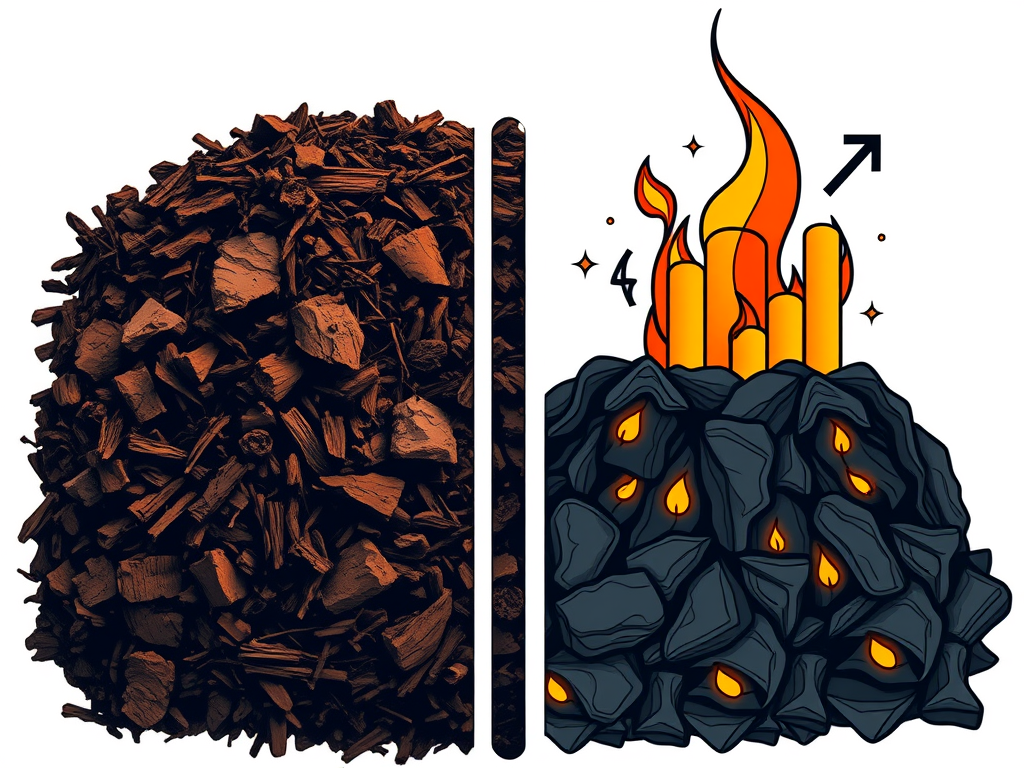
In an era where waste management and greenhouse gas mitigation are paramount, finding sustainable and effective solutions is more critical than ever. Not all compost meets the strict quality standards required for agricultural use, leading to environmental challenges. A new study in the journal Molecules, authored by Sylwia Stegenta-Dąbrowska, Marta Galik, Magdalena Bednik-Dudek, Ewa Syguła, and Katarzyna Ewa Kosiorowska, explores an innovative approach: using mature compost as a feedstockFeedstock refers to the raw organic material used to produce biochar. This can include a wide range of materials, such as wood chips, agricultural residues, and animal manure. More for producing biocharBiochar is a carbon-rich material created from biomass decomposition in low-oxygen conditions. It has important applications in environmental remediation, soil improvement, agriculture, carbon sequestration, energy storage, and sustainable materials, promoting efficiency and reducing waste in various contexts while addressing climate change challenges. More with strong gas adsorption properties. This valorization pathway not only provides a useful application for low-quality compost but also offers a cost-effective material for mitigating gas emissions from processes like composting and biogas production.
The study investigated how different pyrolysisPyrolysis is a thermochemical process that converts waste biomass into bio-char, bio-oil, and pyro-gas. It offers significant advantages in waste valorization, turning low-value materials into economically valuable resources. Its versatility allows for tailored products based on operational conditions, presenting itself as a cost-effective and efficient More conditions—specifically temperature and heating rate—affect the biochar’s ability to adsorb a synthetic gas mixture that mimics composting emissions, including carbon dioxide (CO2), carbon monoxide (CO), hydrogen sulfide (H2S), ammonia (NH3), and methane (CH4). The results showed a clear and significant correlation between the pyrolysis temperature and the biochar’s sorption characteristics.
Researchers found that higher pyrolysis temperatures were key to creating a material that was highly effective against some of the most potent greenhouse gases. Biochars produced at temperatures of 550°C, 600°C, and 650°C (with a heating rate of 10°C/min) demonstrated the highest efficacy for reducing emissions of CO2, CH4, and H2S. These biochars achieved impressive reductions of 69% for both CO2 and CH4, and a remarkable 72% for H2S. In contrast, these same high-temperature biochars were less effective at adsorbing CO and NH3. Interestingly, biochars produced at lower temperatures (400°C and 450°C) showed better performance specifically for CO adsorption. This indicates that the ideal pyrolysis temperature is dependent on the specific gas being targeted for removal.
The physical and chemical properties of the biochar were a major factor in its performance. As the pyrolysis temperature increased, the biochar’s specific surface area (SSA) also increased. The highest surface area, 39.2 m2/g, was found in the biochar produced at 650°C with a heating rate of 15°C/min. This is a modest but reasonable value for a waste-derived material and is directly linked to the formation of more microporous structures at higher temperatures. Conversely, the lowest surface area (2.34 m2/g) was found in biochar produced at 400°C with a faster heating rate of 20°C/min, suggesting that lower temperatures and faster heating rates inhibit the development of porosityPorosity of biochar is a key factor in its effectiveness as a soil amendment and its ability to retain water and nutrients. Biochar’s porosity is influenced by feedstock type and pyrolysis temperature, and it plays a crucial role in microbial activity and overall soil health. Biochar More.
These findings demonstrate that compost biochar has strong potential as a gas adsorbent, particularly for CO2, CH4, and H2S. The study concludes that due to its pronounced capacity for adsorbing methane, this type of biochar is particularly well-suited for mitigating emissions during composting, rather than for more general biogas purification. By providing a clear roadmap on how pyrolysis conditionsThe conditions under which pyrolysis takes place, such as temperature, heating rate, and residence time, can significantly affect the properties of the biochar produced. More can be adjusted to tailor a biochar’s properties, this research offers a valuable, sustainable solution for waste management and a tangible way to reduce greenhouse gas emissions.
Source: Stegenta-Dąbrowska, S., Galik, M., Bednik-Dudek, M., Syguła, E., & Kosiorowska, K.E. (2025). Applying Compost Biochar for Gas Adsorption-Effects of Pyrolysis Conditions. Molecules, 30(16), 3365.




Leave a Reply