
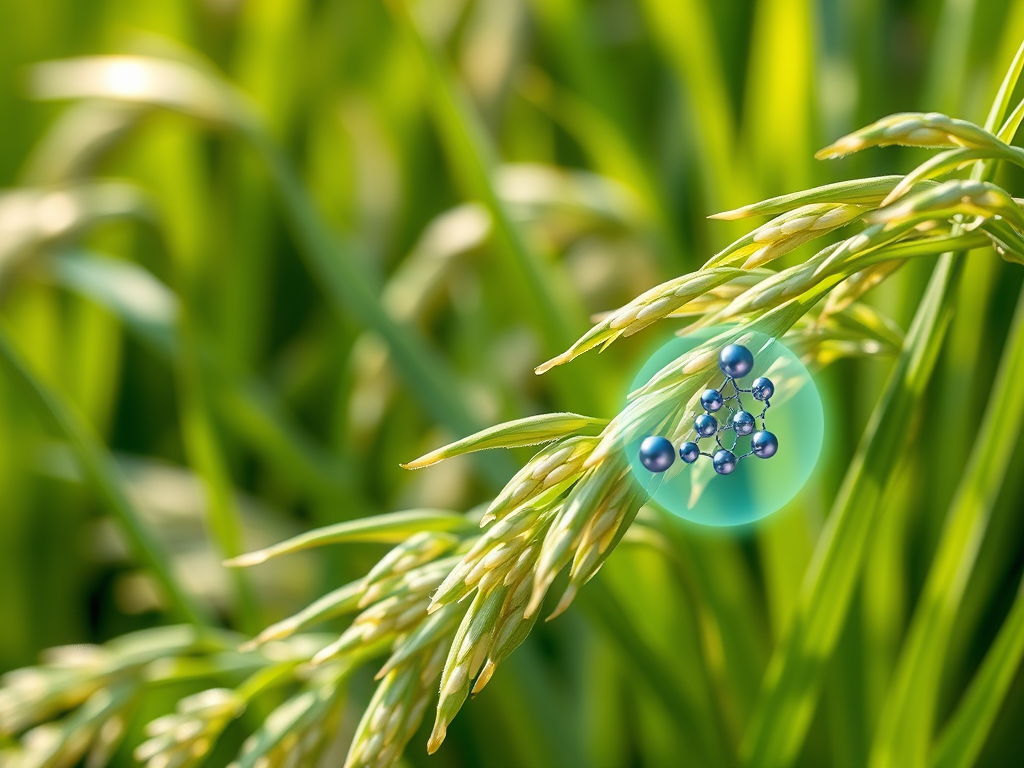
A study by Gu et al. in the journal BiocharBiochar is a carbon-rich material created from biomass decomposition in low-oxygen conditions. It has important applications in environmental remediation, soil improvement, agriculture, carbon sequestration, energy storage, and sustainable materials, promoting efficiency and reducing waste in various contexts while addressing climate change challenges. More reveals the critical role of nano-biochar (nano-BC) in the formation and bioaccumulation of silver nanoparticles (AgNPs) in the rhizosphere of rice plants. The research identifies a synergistic interaction between nano-BC and dioxygen (O2) secreted from the roots, which is essential for the reduction of silver ions (Ag+) into AgNPs. This process is mediated by nano-BC acting as an electron donor, transferring electrons to dioxygen to form superoxide free radicals ( O2−), which then reduce Ag+. The study also found that while nano-BC decreased the overall uptake of silver by rice plants, it significantly increased the accumulation of AgNPs within plant tissues.
The research found that the optimal dosage of nano-BC is a crucial factor in this process. While a moderate amount promotes the formation of AgNPs, an excess amount can inhibit the process by being unfavorable to the secretion of dioxygen from the plant roots. The reduction kinetics for Ag+ to AgNPs were well-fitted by a pseudo-first-order kinetic equation. The rate constant (k) for wood-derived nano-biochar (nano-WB) was 0.095 h−1, nearly three times higher than the 0.032 h−1 recorded for pig manure-derived nano-biochar (nano-PMB). This highlights the extraordinary catalytic capacity of nano-BC compared to other natural materials.
The bioaccumulation of silver was a key finding. The study demonstrated that the newly formed AgNPs could be absorbed by rice roots and translocated to the aboveground tissues. Using TEM and single-particle ICP-MS, researchers confirmed the presence of AgNPs not only in the intercellular spaces of leaf tissues but also within the interior of leaf cells. The presence of nano-BC led to a significant portion of the accumulated silver being in nanoparticle form, with 48.05% of the silver in shoots and 33.33% in roots present as AgNPs. These findings suggest a previously hidden pathway for nanoparticles to enter the food chain, which has important implications for food security and human health. However, the study also notes the potential for nanomaterials to enhance plant immunity, highlighting the need for further investigation into both the benefits and risks of nano-BC in sustainable agriculture.
Source: Gu, S., Sun, B., Wang, F., Zhu, W., Lian, F., & Li, J. (2025). Insight into the crucial role of nano-biochar in the natural formation and bioaccumulation of silver nanoparticles in the rhizosphere by single-particle ICP-MS. Biochar, 7(111), 1-13


Leave a Reply