
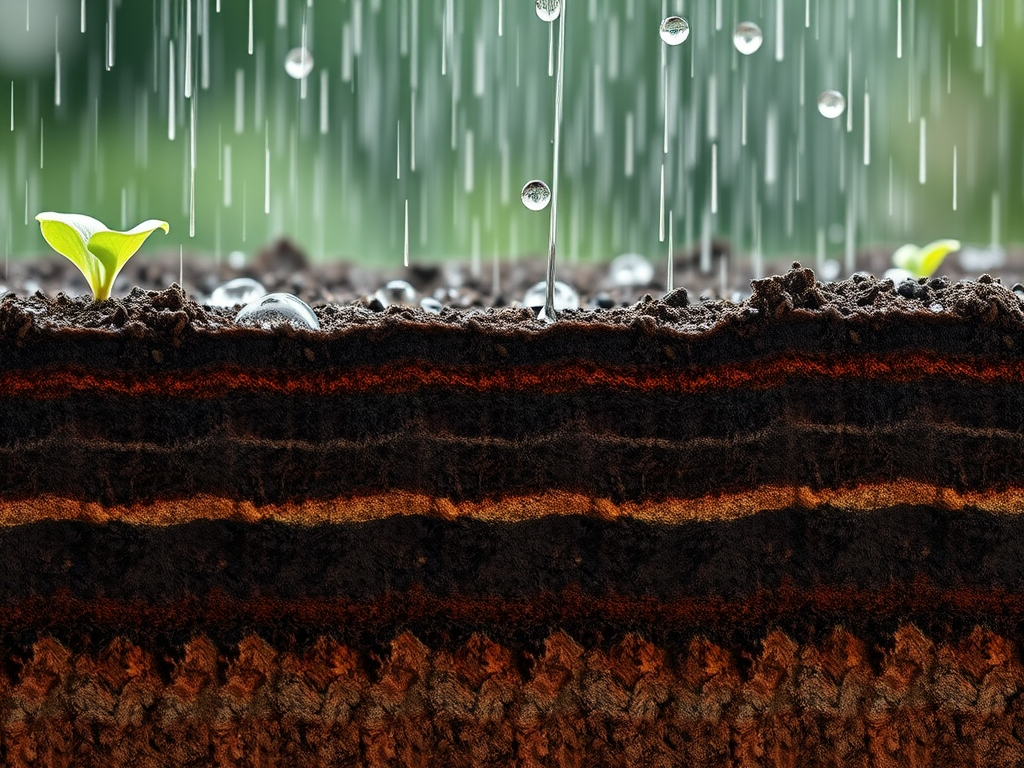
BiocharBiochar is a carbon-rich material created from biomass decomposition in low-oxygen conditions. It has important applications in environmental remediation, soil improvement, agriculture, carbon sequestration, energy storage, and sustainable materials, promoting efficiency and reducing waste in various contexts while addressing climate change challenges. More is widely recognized for its potential in carbon sequestration and environmental remediation. However, a portion of biochar can transform into dissolved organic matter (DOM), which is highly mobile and can migrate through soil, potentially altering the transport of pollutants. Understanding how this DOM behaves under different environmental conditions, such as rainfall, is crucial for improving its effectiveness for long-term carbon storage in soil. A recent study published in the journal Biochar, authored by Fangfang Li, Xizhao Duan, and others, investigated this phenomenon using simulated soil columns under varying rainfall intensities. The researchers found that rainfall intensity and mineral composition play a critical role in controlling the vertical movement of biochar-derived DOM.
The study, which utilized pristine and aged corn biochar in simulated soil columns, compared the effects of low- and high-intensity rainfall on DOM migration. The findings revealed a significant difference in how DOM behaves under these two conditions. Under low-intensity rainfall, the concentration of DOM in the column effluents gradually increased with the number of rainfall events. This trend facilitated the adsorption of DOM onto minerals within the soil, promoting retention. Conversely, under high-intensity rainfall, the DOM concentration sharply decreased, which led to the desorption of previously adsorbed DOM from the minerals and enhanced its migration. This demonstrates that slower DOM release is more conducive to its adsorption by minerals, thereby inhibiting its movement through the soil.
The study also highlighted the vital role of soil mineral composition in retaining DOM. Two common soil minerals, montmorillonite and hematite, were tested for their ability to inhibit DOM migration. Results showed that montmorillonite was particularly effective, reducing DOM migration by over 80% compared to a pure quartz sand system and by 50% compared to a hematite/quartz system. The adsorption contribution of minerals to dissolved organic carbon (DOC) ranged from 32.21% to 76.81% for hematite and from 39.77% to 96.9% for montmorillonite.
The researchers also analyzed the composition of the DOM, identifying two main components: polycyclic aromatic-like and humic-like substances. While polycyclic aromatic-like substances were more abundant in the released DOM, the minerals, especially montmorillonite, preferentially adsorbed the humic-like substances. This is attributed to the larger molecular weight and higher number of functional groups in humic-like substances, which lead to stronger interactions with mineral surfaces via hydrophobic interactions and ligand exchange. This selective adsorption further contributes to the long-term stabilization of soil organic carbon and improved soil fertility.
In conclusion, this research provides a scientific foundation for understanding how biochar-derived DOM behaves in soils. The findings suggest that in soils rich in clay minerals like montmorillonite, biochar can be more effective for long-term carbon sequestration, especially under conditions of low-intensity rainfall, which promotes DOM retention and inhibits its vertical migration.
Source: Li, F., Duan, X., Zhou, J., Feng, S., Du, W., He, X., Peng, H., Li, H., Ahmad, S., & Pan, B. (2025). Inhibited vertical mobility of biochar-derived dissolved organic matter under low-intensity rainfall: role of mineral retention.Biochar, 7(99).





Leave a Reply