
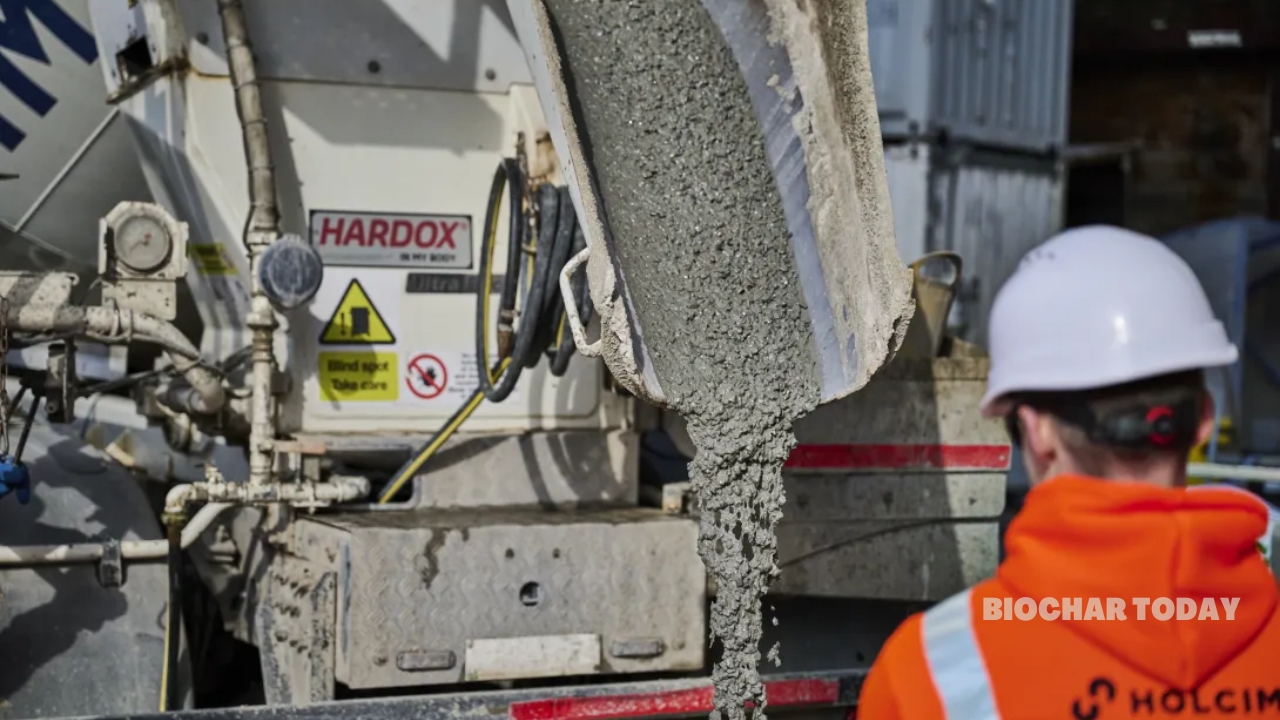
In a landmark collaboration within the United Kingdom’s construction sector, Holcim UK has partnered with the Canary Wharf Group (CWG) and a consortium of leading engineering consultancies to develop a net zero concrete. This initiative involved a series of intensive research and development trials over six months, resulting in ultra-low carbon concrete mixes that utilize alternative materials, most notably biocharBiochar is a carbon-rich material created from biomass decomposition in low-oxygen conditions. It has important applications in environmental remediation, soil improvement, agriculture, carbon sequestration, energy storage, and sustainable materials, promoting efficiency and reducing waste in various contexts while addressing climate change challenges. More. By conducting full-scale test pours at Canary Wharf’s Wood Wharf and Bank Street sites, the partnership has demonstrated the commercial and structural viability of using carbon-sequestering additives in high-density urban development.
The primary challenge addressed by this project is the significant carbon footprint of traditional concrete, specifically the high embodied emissions associated with Portland Cement (CEM I). The construction industry is under immense pressure to decarbonize, yet it struggles to find materials that offer high performance while achieving net zero or carbon-negative ratings. Previous attempts to lower emissions often relied on incremental improvements that could not fully offset the fossil emissions produced during manufacturing. Furthermore, there is often a lack of real-world, verified data to give contractors the confidence to move away from standard CEM I mixes in structural applications.
The solution implemented by Holcim UK and CWG involves a specialized concrete mix that incorporates biochar derived from two distinct waste streams: UK-sourced coppiced hardwoods and spent coffee grounds collected from Canary Wharf retailers. This biochar acts as a permanent carbon sink within the concrete matrix, locking in CO2 that was previously absorbed by plants during their growth. By optimizing the ratio of this biochar-coffee mix, the team developed a product that maintains the required strength and durability for deep raft slabs while significantly lowering the Global Warming Potential (GWP). The inclusion of graphene in secondary trials further enhanced durability, potentially reducing the overall volume of concrete required for reinforcement.
The outcomes of these trials represent a significant advancement for the biochar industry’s integration into the built environment. Initial tests of the biochar-coffee mix achieved an 80 percent reduction in net GWP compared to traditional concrete. Subsequent optimizations led to a projected net GWP of -14 kgCO2e/m3 when accounting for biogenic carbon storage, marking the first time Holcim has achieved a net zero concrete. These materials are now undergoing a two-year monitoring phase by experts from Queen’s University Belfast and the University of Cambridge to verify long-term performance. This project proves that circular economy principles can transform buildings into long-term carbon stores, keeping CO2 out of the atmosphere for the duration of the structure’s life.



Leave a Reply