
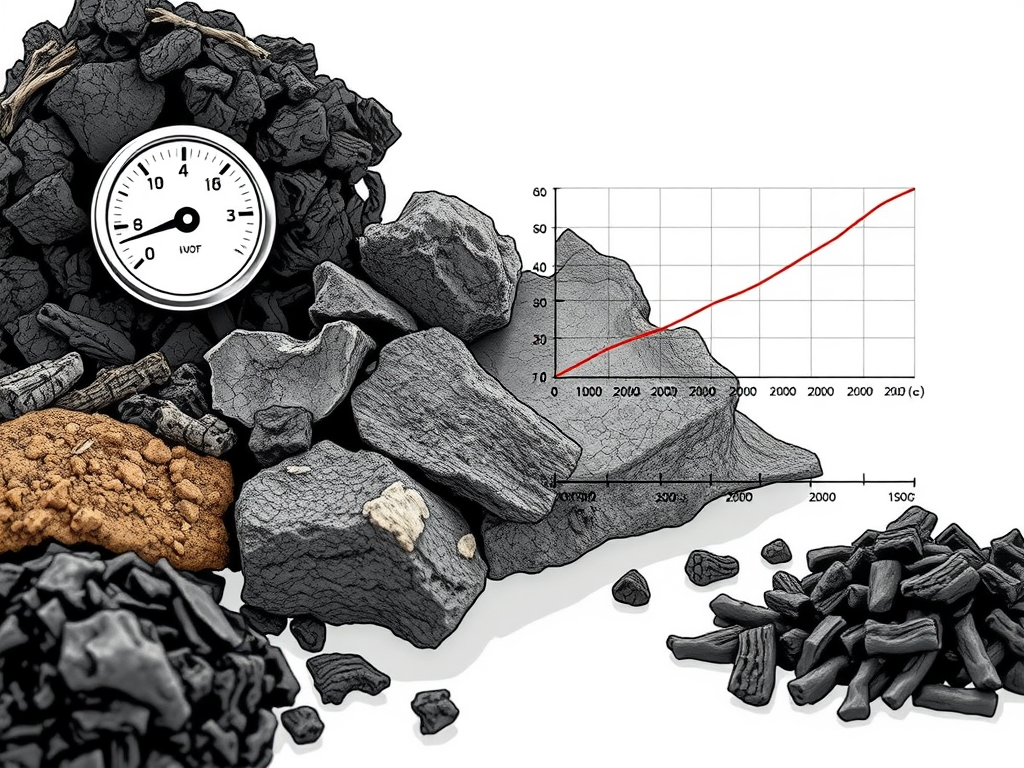
An elevated release of hazardous volatile organic compounds (HVOCs) from biocharBiochar is a carbon-rich material created from biomass decomposition in low-oxygen conditions. It has important applications in environmental remediation, soil improvement, agriculture, carbon sequestration, energy storage, and sustainable materials, promoting efficiency and reducing waste in various contexts while addressing climate change challenges. More has been linked to two key factors: low pyrolysisPyrolysis is a thermochemical process that converts waste biomass into bio-char, bio-oil, and pyro-gas. It offers significant advantages in waste valorization, turning low-value materials into economically valuable resources. Its versatility allows for tailored products based on operational conditions, presenting itself as a cost-effective and efficient More temperatures (<325∘C) and high carbon-relative molar mass (CRMM) values, a finding with significant implications for environmental safety and production practices. A new study by Ewa Syguła, Kamila Piasecka, Jacek Łyczko, and Andrzej Białowiec, published in the journal Science of the Total Environment, introduces a novel approach using decision tree regression to model HVOC release from biochar. This method effectively captures the nonlinear relationships between HVOC release, pyrolysis temperature (HTT), and biomassBiomass is a complex biological organic or non-organic solid product derived from living or recently living organism and available naturally. Various types of wastes such as animal manure, waste paper, sludge and many industrial wastes are also treated as biomass because like natural biomass these More composition, as characterized by the CRMM index. The research aims to fill a critical gap in biochar quality standards, as current regulatory frameworks for biochar, like the European Biochar Certificate, do not yet include quantitative limits for VOCs.
The study investigated 204 biochar samples produced from pure biomass components—lignin, cellulose, and hemicellulose—and their mixtures. The samples were subjected to pyrolysis at temperatures ranging from 200∘C to 600∘C. The researchers found that no VOCs were detected in biochar produced above 425∘C. The study identified 10 HVOCs, including furfural, styrene, and benzaldehyde, which are classified as hazardous to human health or the environment by the European Union Regulation EC No. 1272/2008.
Traditional linear models, such as stepwise multiple regression, were initially used to analyze the data. While these models showed that higher temperatures and CRMM values correlated with a lower number of detected VOCs, they proved inadequate for predicting the magnitude of the release. The linear models had weak predictive performance for the quantitative analysis, with a low R² value of 0.27 for HVOCs. This revealed that the relationship between production parameters and HVOC release is not a simple linear one, prompting the researchers to turn to more advanced methods.
The researchers then applied decision tree regression, a machine learning method well-suited for identifying thresholds and nonlinear patterns in data. This analysis confirmed that the release of HVOCs is governed by a series of complex thresholds. The most significant finding was that the highest average HVOC release, at approximately 306.01 mg⋅kg−1, occurred in biochars with a high CRMM value, specifically greater than 34 g⋅mol−1. For biochars with a CRMM less than or equal to 34 g⋅mol−1, temperature became the primary differentiating factor.
The study’s decision tree model also pinpointed specific temperature ranges associated with high and low HVOC release. The data showed that lower pyrolysis temperatures, ranging from 200∘C to 325∘C, resulted in a high average release of HVOCs, around 76.70 mg⋅kg−1. The highest concentration of HVOCs, an average of 134.04 mg⋅kg−1, was observed at these low temperatures when combined with low CRMM values (<22.86 g⋅mol−1). In contrast, the lowest HVOC release occurred at higher temperatures, between 350∘C and 425∘C, resulting in a minimal average release of just 2.08 mg⋅kg−1.
The results of the decision tree model offer a clear, actionable guide for biochar producers. It highlights the importance of controlling both the pyrolysis temperature and the biomass feedstock’s composition to minimize the risk of HVOC release. While the study was conducted under controlled laboratory conditions, its findings provide a crucial framework for predicting HVOC emissions and could inform the development of future regulatory standards for biochar quality and safety. This innovative use of decision trees marks a significant step forward in ensuring the safe and responsible application of biochar for environmental and agricultural purposes.
SOURCE: Syguła, E., Piasecka, K., Łyczko, J., & Białowiec, A. (2025). The potential of decision tree application in threshold analysis of hazardous volatile organic compound release from biochar: Implications for environmental risk assessment. Science of the Total Environment, 998, 180252.


![Eucalyptus Wood Waste-Derived Biochar Achieves a Ninety-Eight Percent Removal Efficiency for Benzo[ghi]perylene in Vehicle-Wash Wastewater](https://biochartoday.com/wp-content/uploads/2026/10/SCIENCE-BLOGS-2026-2026-10-19T160523.703.jpg)

Leave a Reply