
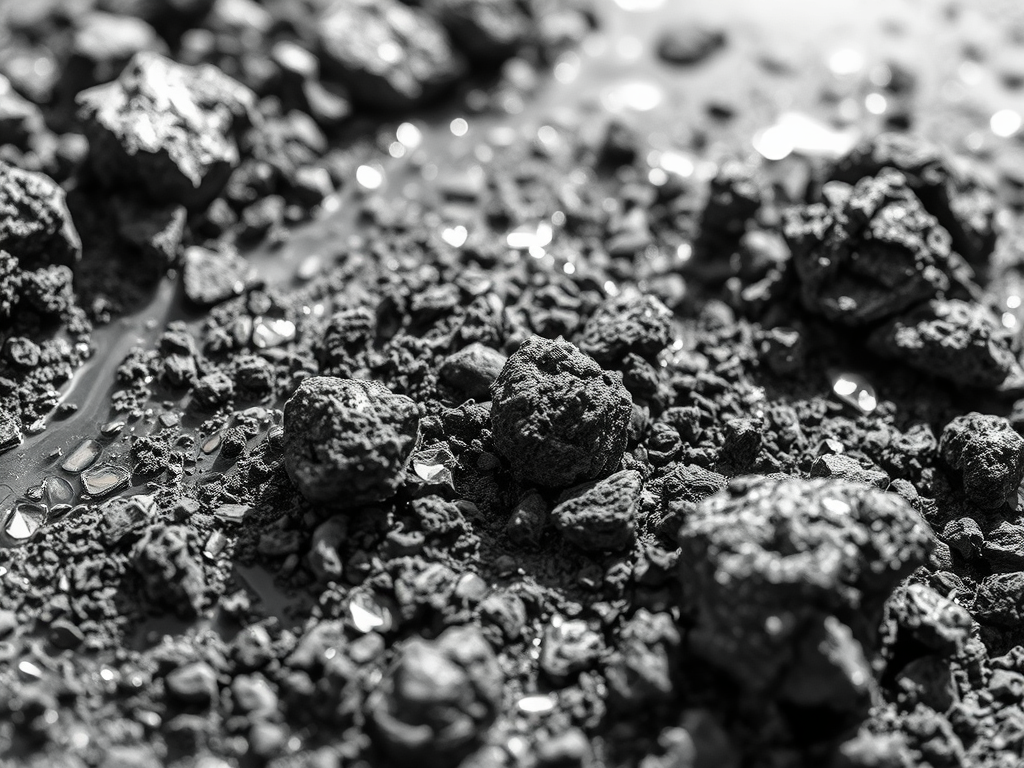
Sediment plays a crucial role in the global carbon cycle, acting as a significant natural reservoir. Researchers are constantly seeking effective ways to enhance this carbon storage, especially in the face of increasing global carbon emissions. A recent study published in the Journal of Soils and Sediments by Hongjiao Li, Jilai Gong, Meng Qin, Siqun Tang, and Biao Song explores the combined application of biocharBiochar is a carbon-rich material created from biomass decomposition in low-oxygen conditions. It has important applications in environmental remediation, soil improvement, agriculture, carbon sequestration, energy storage, and sustainable materials, promoting efficiency and reducing waste in various contexts while addressing climate change challenges. More and organic fertilizer to improve carbon sequestration in river sediments. Their findings indicate a promising approach to increase carbon content and improve sediment stability.
Traditionally, individual effects of biochar and organic fertilizer on carbon sequestration have been studied, but their combined impact on sediments has remained less explored. This research specifically investigated how different ratios of these amendments influence the physical, chemical, and biological properties of sediments from the Xiangjiang River, with a focus on their role in carbon sequestration.
The study involved a control group and six experimental groups, each treated with varying proportions of biochar and organic fertilizer. Samples were collected over 90 days to monitor changes in sediment properties, including aggregate stability, aggregate size, and microbial community structure.
The results were compelling. The addition of biochar and organic fertilizer significantly improved the stability of sediment aggregates, leading to a greater abundance of larger aggregates. For instance, the mean weight diameter (MWD) and geometric mean diameter (GMD) of the treated sediment increased by 1.01-1.19 and 1.14-1.62 times, respectively, compared to the control group. The content of large macroaggregates also saw a notable increase of 0.24-4.23%. More importantly, the sediment organic carbon (SOC) content, a direct indicator of carbon sequestration, rose by 3.47-6.81%.
These amendments also profoundly impacted the microbial communities within the sediment. While the overall alpha diversity of organisms decreased, a key observation was the 3.93% reduction in the abundance of Gemmatimonadetes, a phylum known for decomposing recalcitrant organic carbon. This suggests that the amendments might be promoting the preservation of more stable forms of carbon. Furthermore, the abundance of Firmicutes significantly increased, almost 6.6 times that of the control group. Firmicutes are known for their high microbial carbon use efficiency and their role in promoting aggregate formation and fixing atmospheric carbon dioxide.
Among all the tested combinations, the application of 100% biochar demonstrated the most pronounced positive effects on sediment properties and carbon sequestration. This suggests that biochar, with its porous structure, large surface area, and chemical stability, provides an ideal environment for microorganisms that contribute to carbon fixation and the formation of stable aggregates.
In conclusion, the combined application of biochar and organic fertilizer offers a viable strategy for enhancing carbon sequestration in river sediments. The study highlights how these amendments not only alter the physicochemical properties of the sediment but also foster the formation of larger, more stable aggregates and positively influence microbial communities, ultimately leading to increased carbon storage.
Source: Li, H., Gong, J., Qin, M., Tang, S., & Song, B. (2025). Effects of biochar and organic fertilizer on microorganisms and aggregates and their carbon sequestration in sediment. Journal of Soils and Sediments





Leave a Reply