

Kenya is grappling with a significant wastewater management crisis, a challenge exacerbated by rapid urbanization, a burgeoning population, and insufficient investment in treatment infrastructure. Conventional wastewater treatment systems often prove to be costly, centralized, and inadequately enforced, leaving many communities, particularly in rural and peri-urban areas, without safe and sustainable sanitation solutions. However, a promising, low-cost alternative is emerging: biocharBiochar is a carbon-rich material created from biomass decomposition in low-oxygen conditions. It has important applications in environmental remediation, soil improvement, agriculture, carbon sequestration, energy storage, and sustainable materials, promoting efficiency and reducing waste in various contexts while addressing climate change challenges. More. A recent review published in the Journal of Environmental Ecology by James Kamau Mbugua, Mary Nyambura Mbugua, Lucy Mumbua Mbugua, and Gabriel Waswa Andati delves into the pivotal role biochar can play in transforming Kenya’s wastewater management landscape.
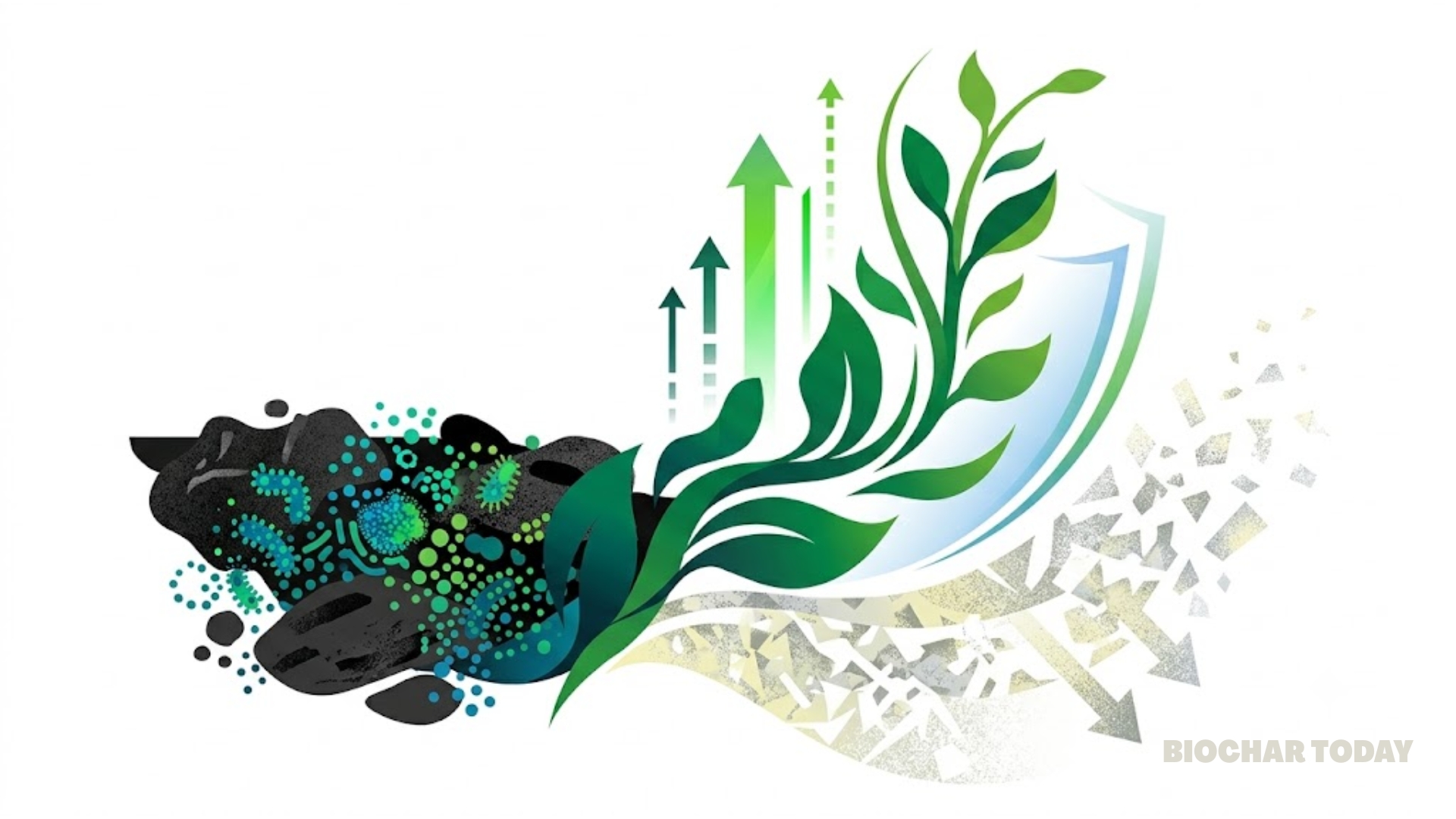
Biochar has garnered global attention for its remarkable capacity to enhance wastewater treatment. Its effectiveness stems from its unique physicochemical properties, including a high surface area (often exceeding 100 m2/g) and numerous active sites for adsorption. This allows biochar to effectively capture heavy metals like lead (Pb2+), cadmium (Cd2+), and arsenic (As3+), as well as vital nutrients such as ammonium (NH4+) and phosphate (PO43−). These nutrients, if discharged untreated, contribute to eutrophication, a process that harms aquatic ecosystems. Beyond inorganic contaminants, biochar is also adept at removing a wide array of organic pollutants, including pesticides, dyes, and pharmaceutical residues.
One of biochar’s key advantages in the Kenyan context is the abundance of readily available agricultural feedstocks for its production. A recent study highlighted that biochar produced from these local materials effectively removed heavy metals and nutrients in both soil and water systems. This not only offers a cost-effective solution but also aligns perfectly with circular economy principles by repurposing agricultural waste into a valuable environmental asset.
While the application of biochar in Kenya’s wastewater treatment is still in its early stages, pilot projects and academic research show incredibly promising results. Universities and non-governmental organizations (NGOs) are at the forefront of these initiatives, integrating biochar into systems like constructed wetlands and sand filtration units. These biochar-integrated systems are particularly beneficial for rural and peri-urban areas where centralized sewer systems are often unavailable. Pilot projects in western and central Kenya have already showcased the power of biochar, revealing reductions of over 70% in nitrogen and phosphorus concentrations, and significantly lowering heavy metal levels in domestic greywater. The low operational costs and ease of production further solidify biochar as a practical and affordable option for communities seeking sustainable wastewater solutions.
Despite its immense potential, several challenges currently hinder the widespread adoption of biochar-based wastewater treatment in Kenya. These include inconsistencies in biochar quality due to varying feedstocks and production methods, a lack of standardized production frameworks, and limited local production infrastructure. Economic factors, such as the initial production costs and the absence of financial incentives or a well-established market for biochar products, also pose significant hurdles. Furthermore, current institutional and policy frameworks in Kenya do not explicitly incorporate biochar-based solutions, creating a regulatory gap. Finally, limited public and institutional awareness, coupled with a scarcity of training opportunities, means that knowledge about biochar’s potential and its effective management is not yet widespread.
To fully unlock biochar’s potential, concerted efforts are needed in research, policy development, community engagement, and cross-sector collaboration. Increased investment in research can optimize production processes and enhance contaminant removal. Scaling up community-based and low-tech biochar systems through capacity-building initiatives and demonstration projects can foster wider adoption. Policy integration, where biochar is formally recognized in national water and sanitation strategies, is crucial for mainstreaming this technology. Moreover, fostering public-private partnerships can leverage resources and expertise for biochar production and distribution. By addressing these challenges and embracing biochar technologies, Kenya can make significant strides towards achieving Sustainable Development Goal 6: Clean Water and Sanitation, contributing to a more sustainable and resilient water sector.
Source: Mbugua, J. K., Mbugua, M. N., Mbugua, L. M., & Andati, G. W. (2025). The Role of Biochar in Sustainable Wastewater Management in Kenya: Current Practices, Challenges, and Future Prospects. Journal of Environmental Ecology.



Leave a Reply