
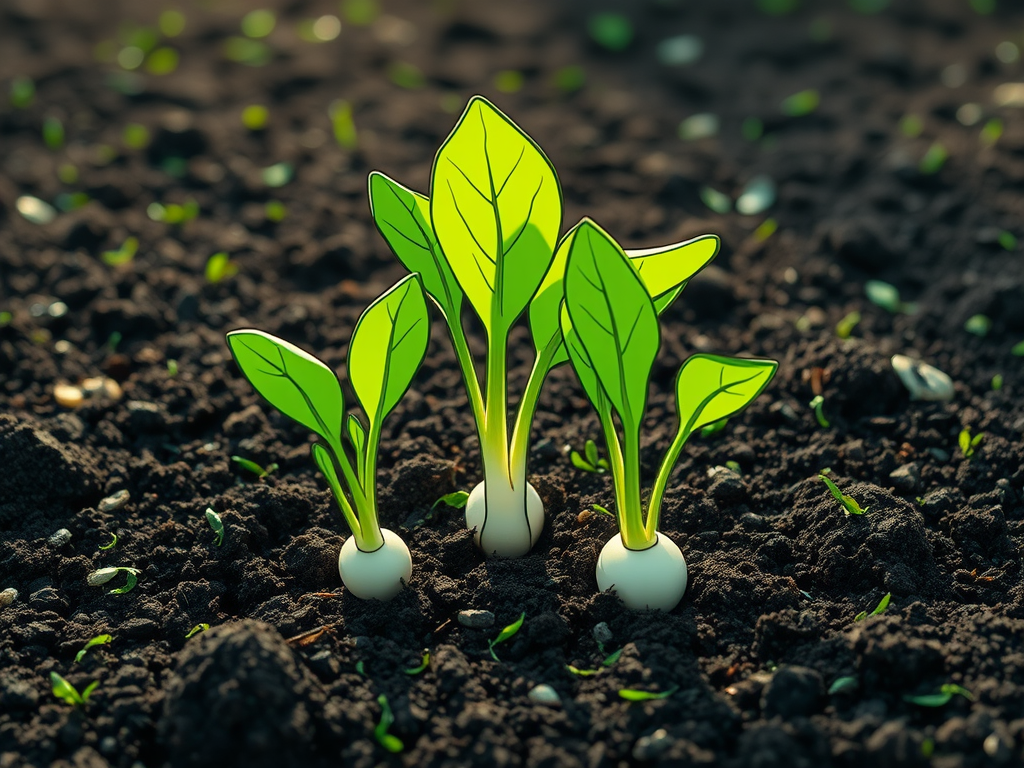
In a recent study published in Scientific Reports, Karolina Dziosa and Monika Makowska explore the potential of biocharBiochar is a carbon-rich material created from biomass decomposition in low-oxygen conditions. It has important applications in environmental remediation, soil improvement, agriculture, carbon sequestration, energy storage, and sustainable materials, promoting efficiency and reducing waste in various contexts while addressing climate change challenges. More derived from Chlorella sp. algae as a plant growth activator, specifically focusing on radish seed germination. Their research offers a compelling look into sustainable agricultural practices, moving away from conventional chemical stimulants and towards environmentally friendly solutions. The core of their work revolves around understanding how this algal biochar influences key aspects of plant development, from initial germination to chlorophyll production.
Modern agriculture faces the dual challenge of increasing food production while minimizing environmental impact. The European Green Deal policy, for instance, emphasizes the development of a resource-efficient bioeconomy to counteract biodiversity loss and reduce pollution. BiomassBiomass is a complex biological organic or non-organic solid product derived from living or recently living organism and available naturally. Various types of wastes such as animal manure, waste paper, sludge and many industrial wastes are also treated as biomass because like natural biomass these More, defined as biodegradable organic matter, is increasingly utilized in this progressive bioeconomy. Among various thermochemical methods for converting microalgae biomass, pyrolysisPyrolysis is a thermochemical process that converts waste biomass into bio-char, bio-oil, and pyro-gas. It offers significant advantages in waste valorization, turning low-value materials into economically valuable resources. Its versatility allows for tailored products based on operational conditions, presenting itself as a cost-effective and efficient More stands out as a highly advantageous process. It produces safe biochar with a high carbon content and a porous structure, which is crucial for its application in agriculture.
The biochar used in this study was produced through pyrolysis at 400∘C, resulting in a material characterized by a porous structure and specific functional groups. These characteristics are vital for biochar’s ability to improve soil quality. Unlike biochar sourced from lignocellulosic plants, algal biochar boasts a higher nitrogen and phosphorus content due to the rich protein composition of algal biomass. This makes it an excellent source of essential micro- and macronutrients (N, P, K, Mg, Fe), readily available to plants even at the crucial germination stage. Physically, biochar’s porous structure enhances water storage and adsorption of inorganic ions, significantly improving moisture and nutrient retention, especially in lighter soils deficient in humus. Chemically, functional groups like hydroxyl and carbonyl promote ion complexation and buffer pHpH is a measure of how acidic or alkaline a substance is. A pH of 7 is neutral, while lower pH values indicate acidity and higher values indicate alkalinity. Biochars are normally alkaline and can influence soil pH, often increasing it, which can be beneficial More changes, enabling biochar to act as a cation exchanger, thereby reducing nutrient loss and increasing availability for plant roots.
The study employed radish seeds, chosen for their rapid germination, uniform size, and responsiveness to changes in humidity, pH, and nutrients, which allowed for precise measurement of growth parameters. The experiment compared radish seed growth in a control group (without biochar) against a test group treated with Chlorella sp. algal biochar. The results were compelling: the average germination time for seeds treated with biochar was 1.12 days, significantly faster than the 1.87 days for the control sample. Germination energy for the biochar-treated group was 93% compared to 88% in the control, and germination capacity was 97% versus 92%.
One of the most notable findings was the impact on chlorophyll content. Chlorophyll ‘a’ and ‘b’ levels were higher in the biochar-treated seedlings (17.28 and 6.05, respectively) compared to the control (15.76 and 5.89). This 9.6% increase in chlorophyll ‘a’ in the biochar sample indicates a better physiological condition of the plants and a greater potential for efficient photosynthesis. Biochar contributes to this by improving soil physicochemical properties, such as structure, water retention, and nutrient availability—all essential for chlorophyll synthesis. The stable ratio of chlorophyll ‘a’ to ‘b’ (around 2.8:1 in the biochar sample and 2.6:1 in the control) further suggests that biochar supports overall plant health without disrupting the natural balance of pigments.
The study unequivocally demonstrates that biochar from Chlorella sp. biomass can serve as an effective stimulant for seed growth. This not only represents an innovative application but also offers a potential solution for sustainable agriculture and environmental protection. Future research will explore the long-term effects of algal biochar on different soil types and its interactions with soil microbiota under real greenhouse conditions, aiming for an even deeper understanding of its agricultural potential.
Source: Dziosa, K., & Makowska, M. (2025). Biochar from Chlorella sp. algae as a plant growth activator. Scientific Reports, 15(1), 20700.




Leave a Reply