
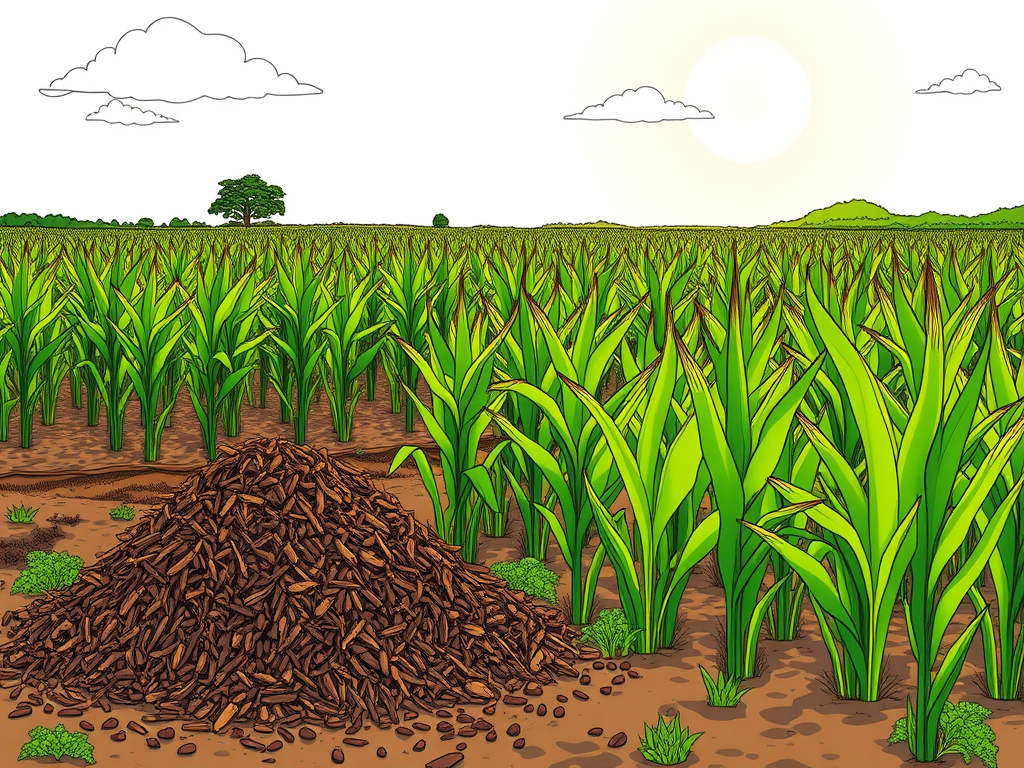
A new study published on Research Square by Abdul-Aziz et al. (pre-print) reveals that biocharBiochar is a carbon-rich material created from biomass decomposition in low-oxygen conditions. It has important applications in environmental remediation, soil improvement, agriculture, carbon sequestration, energy storage, and sustainable materials, promoting efficiency and reducing waste in various contexts while addressing climate change challenges. More, a charcoal-like substance made from agricultural waste, can substantially improve soil fertility and maize production in Northern Ghana. The research specifically examined how different types of biochar and varying application rates affect soil and maize.
The authors of the study, Abdul-Aziz et al., focused on biochar produced from three common agricultural wastes: rice husk, groundnut husk, and sawdust. They tested five different application rates of these biochars in field experiments conducted over two cropping seasons. The researchers carefully monitored soil chemistry, including pHpH is a measure of how acidic or alkaline a substance is. A pH of 7 is neutral, while lower pH values indicate acidity and higher values indicate alkalinity. Biochars are normally alkaline and can influence soil pH, often increasing it, which can be beneficial More, organic matter, and nutrient levels, and also measured maize growth and yield.
Their key finding is that groundnut husk biochar stood out as the most effective in improving soil fertility and increasing maize yield. The most significant yield increases occurred when biochar was applied at a rate of 8 tons per hectare. This application rate led to a dramatic 218.2% increase in maize grain yield in 2022 and a 106.3% increase in 2023.
The study also reports substantial improvements in soil health. Soil organic matter content, a critical indicator of soil fertility, increased significantly, ranging from 89.6% to 343.4%. The availability of nitrogen, an essential nutrient for plant growth, also saw a boost, peaking at a 220% increase in 2022 and a 70% increase in 2023. Furthermore, the researchers found a strong positive relationship between maize yield and the enhanced chemical properties of the soil.
These results suggest that biochar, particularly from groundnut husks, has the potential to be a valuable tool for sustainable agriculture in regions facing soil degradation and low crop productivity.
SOURCE: Abdul-Latif Abdul-Aziz, Issah Alidu Abukari, Moustapha Mahamane Galadima, Abdulai Haruna, Mutari Abubakari, & Rashidatu Abdulai. (2024). Biochar Effects on Soil Properties and Yield of Maize in Northern Region, Ghana. Research Square




Leave a Reply