
Key Takeaways
- Cleaning soil isn’t just about degradation; it’s about detoxification: One fungus (P. lilacinum) was poor at breaking down atrazine (46% degradation) but was the only one to remove 100% of the toxicity. Others broke down the pesticide well (63-68%) but left behind byproducts that were still highly toxic.
- Teamwork makes the dream work: The fungal consortium (the bio-inoculant) working with the native microbes in non-sterilized soil led to a 66% reduction in atrazine. This was nearly double the 34% reduction seen in sterilized soil, proving synergy is key.
- The biocharBiochar is a carbon-rich material created from biomass decomposition in low-oxygen conditions. It has important applications in environmental remediation, soil improvement, agriculture, carbon sequestration, energy storage, and sustainable materials, promoting efficiency and reducing waste in various contexts while addressing climate change challenges. More base was crucial for growth: Preparing the fungal consortium by pre-cultivating it with biochar (the IT2 method) resulted in an 85% increase in fungal biomassBiomass is a complex biological organic or non-organic solid product derived from living or recently living organism and available naturally. Various types of wastes such as animal manure, waste paper, sludge and many industrial wastes are also treated as biomass because like natural biomass these More.
- The inoculant also fertilizes: The bio-inoculant didn’t just remove the pesticide; it improved soil quality. It significantly increased available phosphorus (a key plant nutrient) and reduced soil acidity, making the soil more fertile.
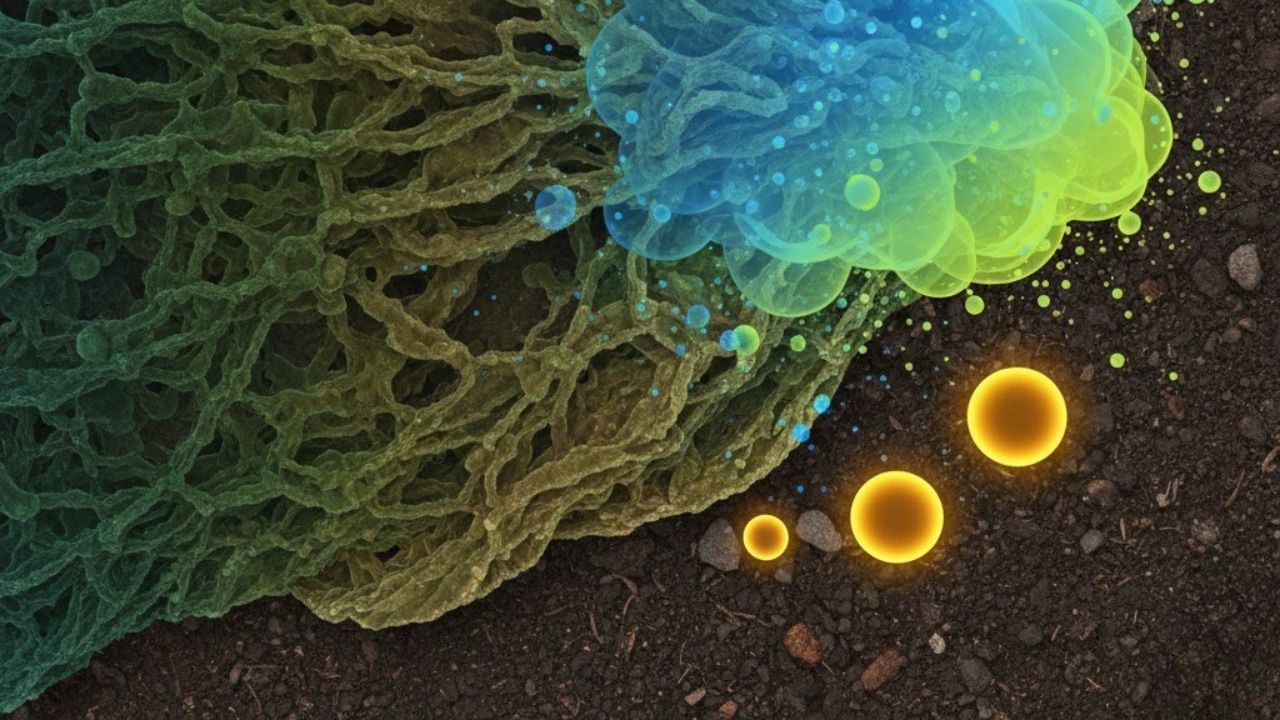
Modern agriculture relies heavily on pesticides, but this efficiency comes at a cost to soil health. A widely used herbicide, atrazine, is known to degrade soil properties and contaminate water sources. A new preprint study by Adriana Heiss Siqueira, Rafaella Costa Bonugli-Santos, and colleagues, posted on the Research Square server, tackles this problem with an innovative solution: a living “bio-blanket”. Researchers developed a bio-inoculant by combining three specialized fungi on a biochar base. Their goal was to see if this consortium could not only clean up the atrazine but also help restore the soil’s fertility.
The research team selected a trio of fungi for the job: Clonostachys rosea, Purpureocillium lilacinum, and Bjerkandera sp.. Before combining them, they tested each fungus individually, which led to a critical insight. Two of the fungi, C. rosea and Bjerkandera sp., were excellent at degrading atrazine, removing 67.7% and 62.7% of the pesticide, respectively. However, the chemical soup they left behind was still highly toxic to cucumber seedlings, inhibiting their growth by 81-85%. This suggests their metabolic byproducts were also harmful. Surprisingly, the third fungus, P. lilacinum, was less effective at degrading the atrazine (only 46.2% removal) but was a master detoxifier. The liquid it left behind showed a 100% reduction in toxicity, allowing the seedlings to grow perfectly. This finding highlights that simply degrading a pollutant isn’t enough. The study justified combining the fungi to get the best of all worlds: degradation, detoxification, and (in the case of C. rosea) a known agent for biological control against plant pathogens.
With the team assembled, the next step was creating the bio-inoculant. The fungi were “immobilized” on biochar, giving them a stable, nutrient-rich home. The researchers found that pre-cultivating the fungi with biochar before mixing them into the final consortium (a treatment dubbed IT2) was key. This method increased the final fungal biomass by 85% and, crucially, was the only condition that triggered the production of lignin peroxidase (LiP), an important enzyme linked to atrazine degradation. This optimized bio-inoculant was then put to the test in soil “microcosms”—trays of real agricultural soil contaminated with atrazine.
The results were impressive. In sterilized soil, where the inoculant had to work alone, it reduced the atrazine concentration by 34% after 24 days. But in non-sterilized soil, which contained its own native microbial community, the inoculant achieved a 66% reduction in atrazine. This demonstrates a powerful synergistic effect: the bio-inoculant works with the existing soil microbes to dramatically accelerate the cleanup process.
Most importantly, the treatment went beyond just decontamination. This is a key novelty of the study, as most bio-inoculants don’t also focus on restoring the soil. The soil treated with the fungal-biochar consortium showed significant improvements in fertility. Available phosphorus, a critical nutrient for plant energy, increased dramatically—in one soil, it jumped from 1.4 to 6 mg/dm³. The inoculant also reduced potential acidity and improved base saturation (a measure of nutrient availability), both strong indicators of healthier, more fertile soil. This study presents a promising, dual-action strategy: a fungal-biochar system that simultaneously detoxifies pesticides and actively rebuilds soil health.
Source: Siqueira, A. H., Bonassa, G. R., Andretta, A., Colaço, D. L., & Bonugli-Santos, R. C. (2025). Biochar-immobilized fungal consortia for enhanced soil bioremediation [Preprint]. Research Square.




Leave a Reply